Fire Safety Insights
Understanding Fire Dynamics in High-Rise Buildings
Key takeaways
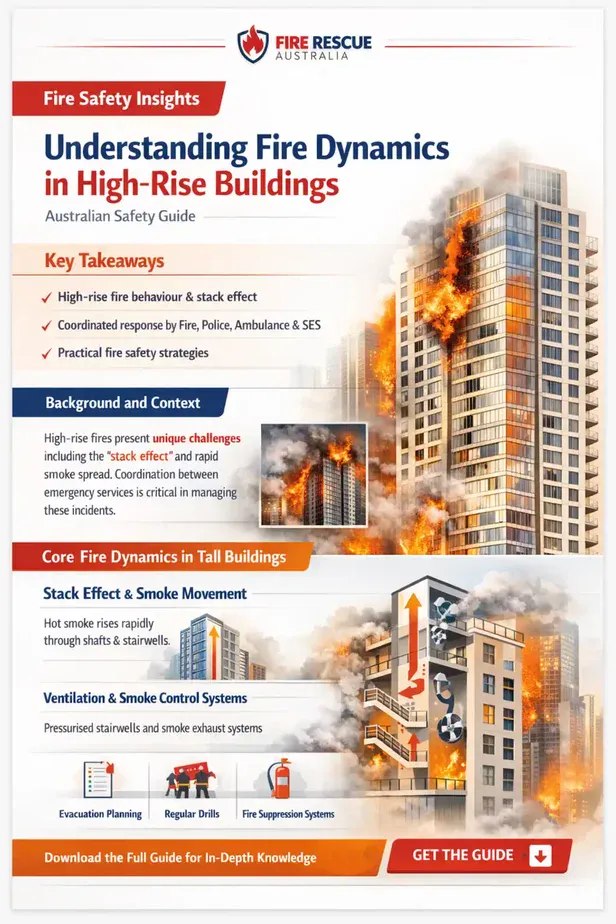
High-rise fires behave differently from those in low-rise buildings due to factors such as vertical air movement, stack effect, and complex ventilation pathways. Understanding these fire dynamics is essential for effective emergency response and occupant safety.
Emergency services in Australia coordinate closely during high-rise incidents, with Fire/Rescue leading fire suppression and evacuation, Police managing scene security and traffic, Ambulance providing medical care, and the SES assisting with rescues and structural safety.
Practical fire safety in high-rise buildings involves clear evacuation planning, regular drills, reliable fire detection and suppression systems, and awareness of how fire and smoke can spread vertically and horizontally through shafts, stairwells, and service ducts.
Background and Context
High-rise buildings present unique challenges when it comes to fire safety and emergency management. Unlike single-level or low-rise structures, fires in tall buildings are influenced heavily by vertical dynamics—how heat, smoke, and air move upward through the building’s shafts, stairwells, and ventilation systems. This phenomenon, often described as the “stack effect,” can cause rapid smoke spread and complicate evacuation efforts.
In Australia, the increasing density of urban living means that more occupants reside in high-rise apartments and offices. This trend demands a clear understanding of fire behaviour specific to these environments, with research-backed insights guiding building design, fire protection engineering, and emergency response protocols.
Moreover, the architectural complexity of modern high-rise buildings, which often include mixed-use spaces, underground parking, and interconnected podium areas, adds layers of complexity to fire dynamics. These features can create unexpected pathways for smoke and heat, affecting both the speed and direction of fire spread. As such, fire safety strategies must be tailored to the unique design and function of each building.
Core Fire Dynamics in Tall Buildings
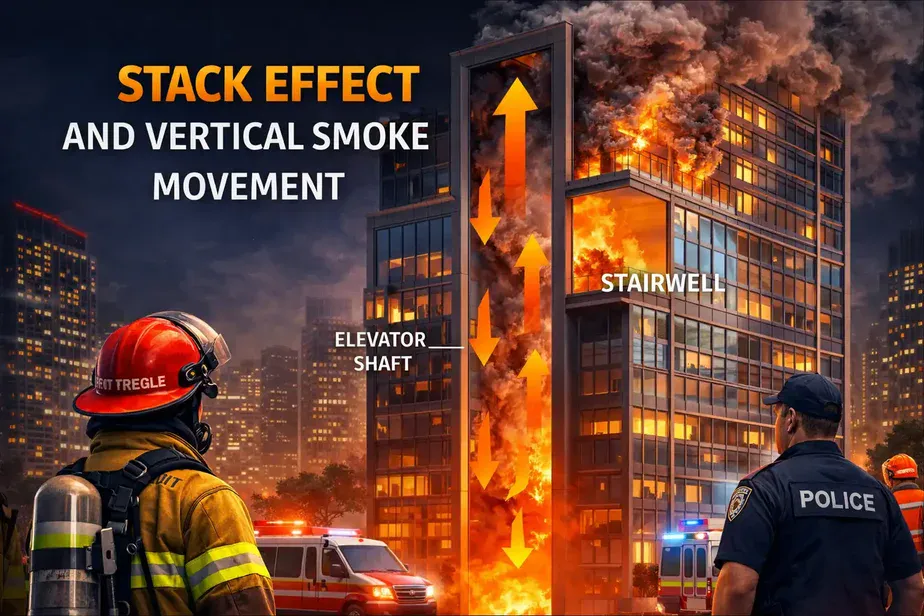
Stack Effect and Vertical Smoke Movement
The stack effect is a natural air movement phenomenon driven by temperature differences between the inside and outside of a building. In a fire scenario, hot gases and smoke generated by the fire rise quickly through vertical shafts, stairwells, elevator shafts, and other openings. This movement can spread smoke and toxic gases to floors well above the initial fire location, endangering occupants and complicating firefighting efforts.
This vertical movement is further intensified by the height of the building and the external weather conditions, such as wind speed and temperature gradients. The chimney-like effect can cause smoke to infiltrate areas thought to be safe, making upper floors hazardous even if the fire is confined to a lower level. Firefighters must anticipate this behaviour when planning entry points and ventilation tactics.
Ventilation and Smoke Control Systems
Modern high-rise buildings incorporate ventilation and smoke control systems designed to manage fire-induced smoke movement and maintain tenable conditions for evacuation and firefighting. These systems include pressurisation of stairwells to prevent smoke ingress, smoke curtains to compartmentalise areas, and mechanical exhaust to remove smoke from critical zones. Understanding how these systems interact with fire dynamics is crucial for both design and operational response.
In addition, the integration of smart building technologies is enhancing smoke control capabilities. Sensors and automated systems can adjust ventilation settings in real-time, responding dynamically to the fire’s progression. This not only improves occupant safety by maintaining breathable air in escape routes but also aids firefighters by controlling smoke layers and visibility within the building.
Emergency Response Considerations
Who to Call and Initial Actions
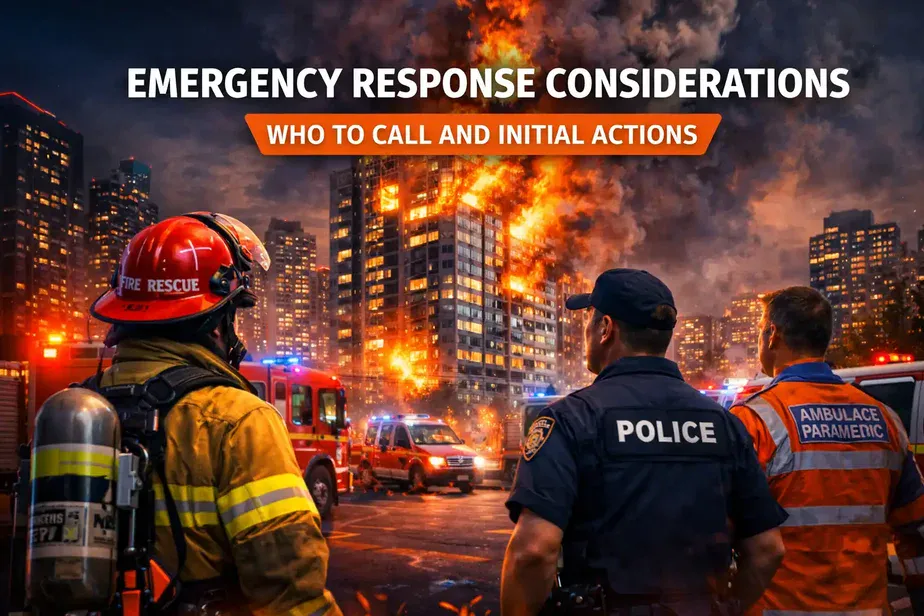
In the event of a fire in a high-rise building anywhere in Australia, the first and most important step is to call Triple Zero (000) immediately. This connects you to Fire/Rescue, Ambulance, and Police services. Fire/Rescue is the lead agency for firefighting and evacuation management, while Police support scene safety, crowd control, and investigation. Ambulance services provide medical care to injured occupants. The State Emergency Service (SES) may also become involved in rescue operations or structural safety assessments.
Timely and accurate information provided by occupants during the initial call can significantly impact the efficiency of the emergency response. Details such as the fire’s location, visible smoke, number of people trapped, and any hazards like gas leaks or electrical failures help responders prepare appropriate resources and strategies before arrival.
Coordination Between Agencies
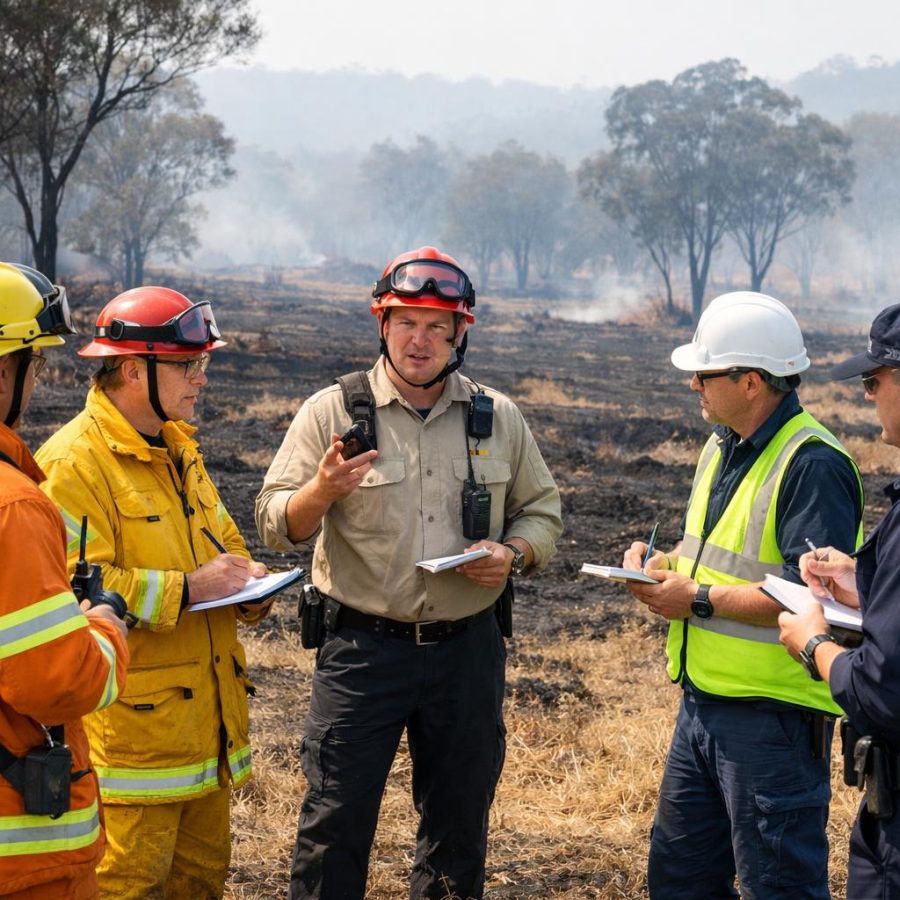
High-rise fire incidents require close coordination between multiple emergency services to manage complex challenges such as evacuation logistics, smoke control, medical triage, and public communication. Fire/Rescue leads fire suppression and search-and-rescue operations. Police officers secure access points and manage traffic to ensure emergency vehicles can operate efficiently. Ambulance teams establish casualty collection points and provide life-saving treatment on site or en route to hospital. The SES supports technical rescues and assists when building stability is compromised.
Joint training exercises and established communication protocols between these agencies are critical to overcoming the challenges posed by high-rise fires. Such collaboration ensures that all responders have a unified understanding of the building layout, fire status, and evacuation progress, which helps avoid duplication of efforts and enhances overall incident management.
Practical Implications for Building Occupants and Managers
For occupants of high-rise buildings, understanding basic fire dynamics can help in making safer decisions during an emergency. Being aware that smoke can travel rapidly through stairwells and ventilation shafts highlights the importance of following official evacuation routes and not using lifts during a fire. Regular participation in fire drills and familiarity with emergency exits can save lives.
Building managers and safety officers should ensure that fire detection and suppression systems are maintained to the highest standards. Smoke control systems must be regularly tested to confirm they function as intended during a fire. Clear communication plans and training for occupants on what to do in a fire scenario are vital components of fire safety strategy.
Incorporating lessons from fire dynamics research into building design and operational procedures can reduce risk and improve outcomes. This includes fire-resistant construction materials, compartmentation to limit fire spread, and engineered smoke management systems tailored to the building’s unique features.
Furthermore, occupant education programs should emphasize the importance of early fire detection and reporting, as well as the dangers of smoke inhalation. Understanding that smoke can be more deadly than flames encourages occupants to act quickly and avoid re-entering the building once evacuated. Fire safety signage, emergency lighting, and audible alarms also play critical roles in guiding occupants to safety during low-visibility conditions.
From a management perspective, regular risk assessments that consider changes in building use, occupancy levels, and new fire hazards are essential. These assessments inform updates to emergency plans and ensure that all systems comply with evolving fire safety codes and standards. Engaging with local fire authorities and participating in community fire safety initiatives further strengthens preparedness and resilience.
Conclusion
Fire dynamics in high-rise buildings are complex and require a multidisciplinary approach to safety. By understanding how fire behaves vertically and horizontally within these structures, emergency services can respond more effectively, and occupants can be better prepared to protect themselves. Ongoing education, strict adherence to fire safety standards, and coordinated emergency response remain the cornerstones of managing fire risk in Australia’s growing high-rise environments.
As urban landscapes continue to evolve, integrating advanced fire modelling and simulation tools into building design and emergency planning will become increasingly important. These technologies allow stakeholders to anticipate fire behaviour under various conditions and develop targeted mitigation strategies, ultimately saving lives and reducing property damage.
Remember, in any fire emergency, call 000 immediately and follow the instructions of emergency personnel to ensure the best possible outcome.
FireRescue Training Hub
Access practical fire and emergency study support resources, downloads, checklists, audio guides, and member-only course content.
- Course library
- PDF downloads
- Audio guides
- Checklists
Study support only. Not accredited training or a replacement for workplace procedures.
About the author and safety review
Ken Walker
Former Station Officer and fire service educator
Former career firefighter with extensive career and volunteer fire service experience.
Qualifications: Associate Diploma of Applied Science in Fire Technology; Institute of Fire Engineers studies.
Author profilehttps://www.firerescue.com.au/about-us/