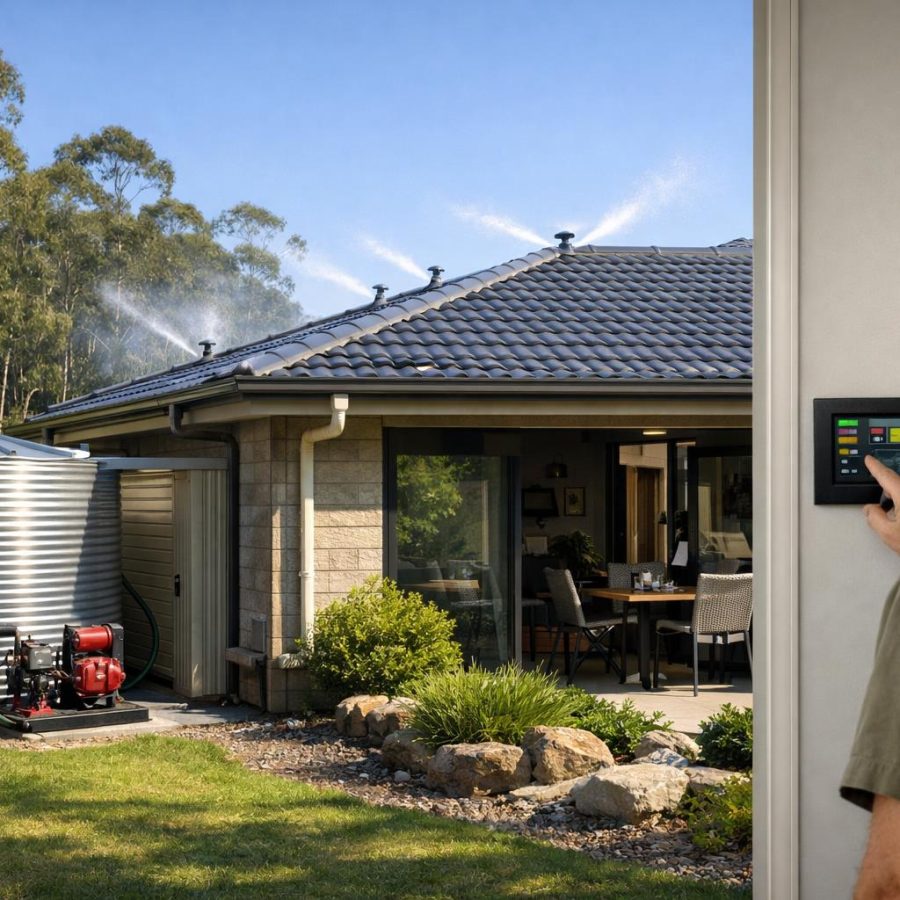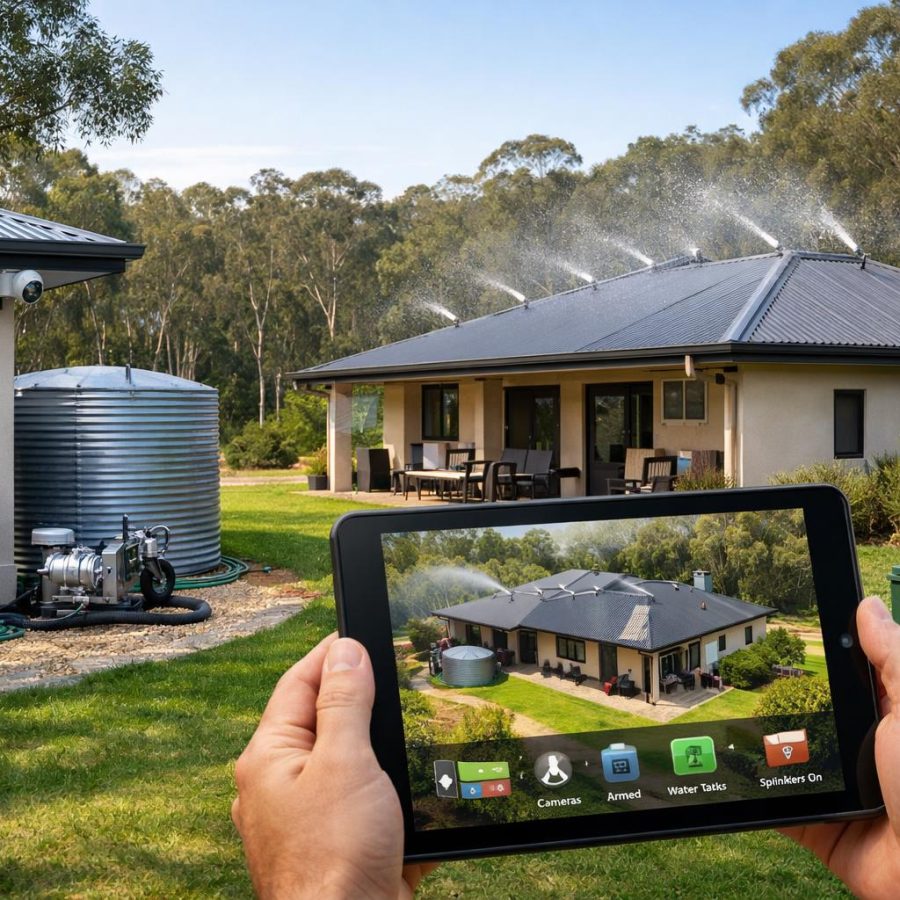
Bushfire protection is not one product, one building material or one fire plan. It is a layered system that starts with understanding your risk, then reducing fuel and ember entry, improving the building where practical, keeping access and water in mind, and making early decisions when dangerous conditions are forecast.
No house can be made bushfire-proof. Good preparation can reduce risk and improve resilience, but it cannot guarantee that a building or its occupants will survive a severe fire.
Building: AS 3959:2018 remains current
Reviewed: October 2026
Life safety comes before property protection
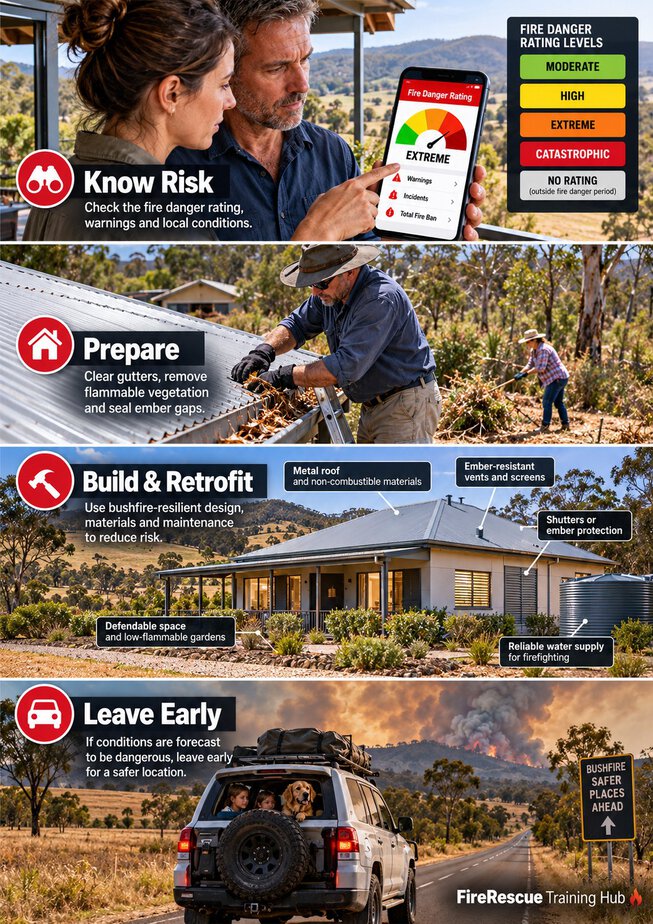
Property preparation is important even if your plan is to leave early. But on dangerous fire days, preparation must not become a reason to delay leaving. Follow your state or territory fire authority and emergency warnings. If life is in immediate danger, call Triple Zero (000).
Start with the current Fire Danger Rating
Australia now uses one national public rating system. The current rating levels are Moderate, High, Extreme and Catastrophic. On minimal-risk days, a No Rating may be issued.
| Rating | Public action |
|---|---|
| No Rating | Minimal fire risk. No public rating is issued. |
| Moderate | Plan and prepare. |
| High | Be ready to act. |
| Extreme | Take action now to protect your life and property. |
| Catastrophic | For your survival, leave bushfire-risk areas. |
A Fire Danger Period, Bush Fire Danger Period or similar declared restriction period is a separate concept. The name and dates vary by jurisdiction. Outside those periods, No Rating is common when risk is minimal, but you should still check the daily rating and local restrictions rather than assume there is no risk.
Older material may refer to the Forest Fire Danger Index or Grassland Fire Danger Index. Those indices still have scientific and historical uses, but they are not the current public rating ladder.
How a bushfire attacks a home
A house can be damaged by more than a wall of flame. Bushfire attack can involve embers, radiant heat, direct flame contact, wind, smoke and falling debris. Several mechanisms can occur at the same time.
Ember attack
Windborne embers can enter gaps, collect in corners and ignite leaves, timber, furnishings or building cavities.
Radiant heat
High radiant heat can damage materials, break glazing and make exposed areas unsafe for people.
Flame contact
Buildings close to unmanaged vegetation or other burning fuel can be directly exposed to flame.
Wind and debris
Strong winds can damage roofs, fences and trees and can push embers into small openings.
This is why useful bushfire protection focuses on the whole property rather than buying one item and assuming the problem is solved.
Understand your property’s risk
Bushfire risk is site specific. Important factors include surrounding vegetation, how close that vegetation is to the building, slope, the wider landscape, local fire weather, access, neighbouring structures and the ability to reach a safer place.
A rural forest property, a house beside grassland and a suburban home several streets back from bushland do not have the same exposure. Ember attack can also affect homes beyond the immediate bush edge.
For planning or building work, use the official mapping and assessment process in your jurisdiction. Where a formal BAL assessment is required, a suitably competent bushfire practitioner, building professional or relevant authority can help determine the correct pathway.
Bushfire Attack Level (BAL): the six categories
A Bushfire Attack Level describes the predicted level of bushfire attack at a building site. It is used to determine construction requirements where the planning and building system requires it.
| BAL | General exposure |
|---|---|
| BAL-LOW | Very low predicted bushfire attack; no specific AS 3959 construction requirements for bushfire attack. |
| BAL-12.5 | Primarily ember attack with low radiant-heat exposure. |
| BAL-19 | Increasing ember attack and radiant heat. |
| BAL-29 | High exposure to embers and increasing radiant heat. |
| BAL-40 | Very high exposure, with increased likelihood of flame contact as well as embers and radiant heat. |
| BAL-FZ | Flame Zone: direct flame exposure may occur in addition to severe ember and radiant-heat exposure. |
AS 3959:2018 remains the current published Australian Standard for construction of buildings in bushfire-prone areas. Standards Australia says a revision has been through two rounds of public consultation and is progressing through the final stages of development.
In May 2026, Standards Australia also released new practitioner and homeowner bushfire-construction handbooks. The homeowner handbook is available free online and is useful for understanding maintenance, design and construction principles without replacing the legal requirements that apply to a particular project.
Victoria changed in 2026
From 1 May 2026, Victoria removed Regulation 157. Standards Australia states that a Victorian site assessed as BAL-LOW no longer automatically has to meet BAL-12.5 requirements. Victoria also updated its bushfire planning provisions through Amendment VC248 in May 2026. Always check the current Victorian building and planning pathway for the actual site.
Prepare the house for ember attack
Even if your plan is to leave early, improving the house can reduce the chance that a small ember becomes a structure fire. The exact work should suit the building and local requirements.
- Keep gutters, roof valleys and decks free of leaves, bark and other combustible debris.
- Repair damaged roofing, cladding and obvious gaps where embers may enter.
- Use appropriate metal mesh or screens on vulnerable openings where required by your building standard or retrofit plan.
- Check doors, windows, vents, subfloors and roof spaces for ember-entry pathways.
- Move combustible furniture, doormats, firewood and loose materials away from the building on dangerous days.
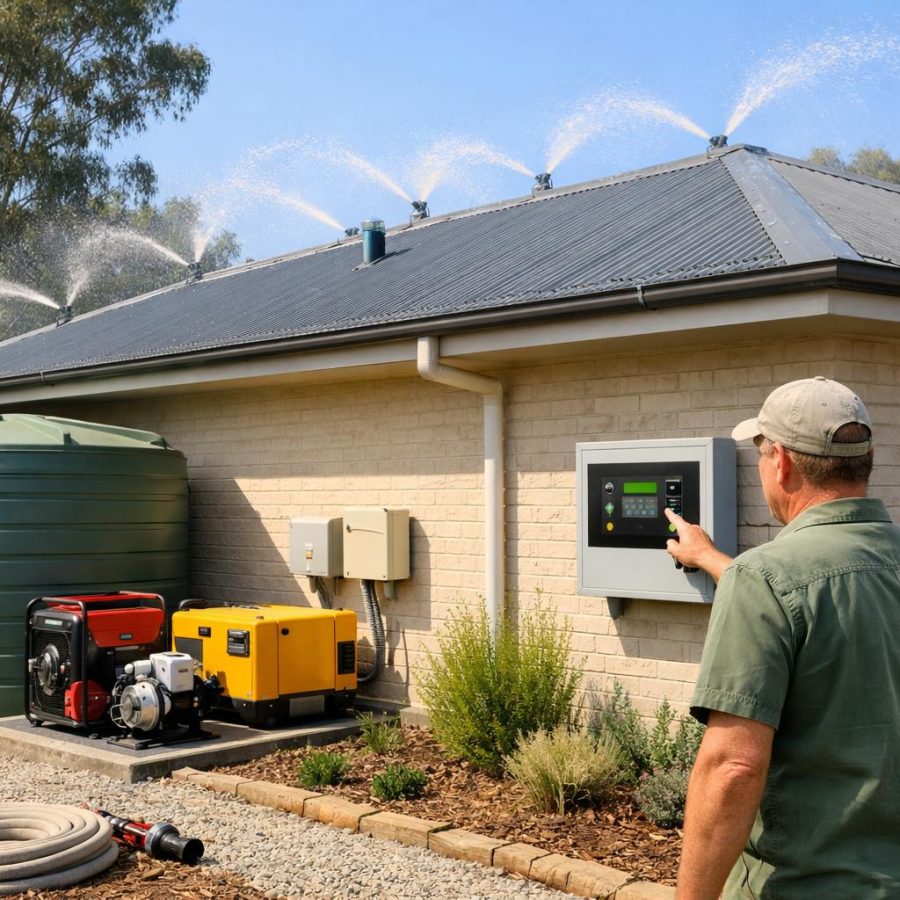
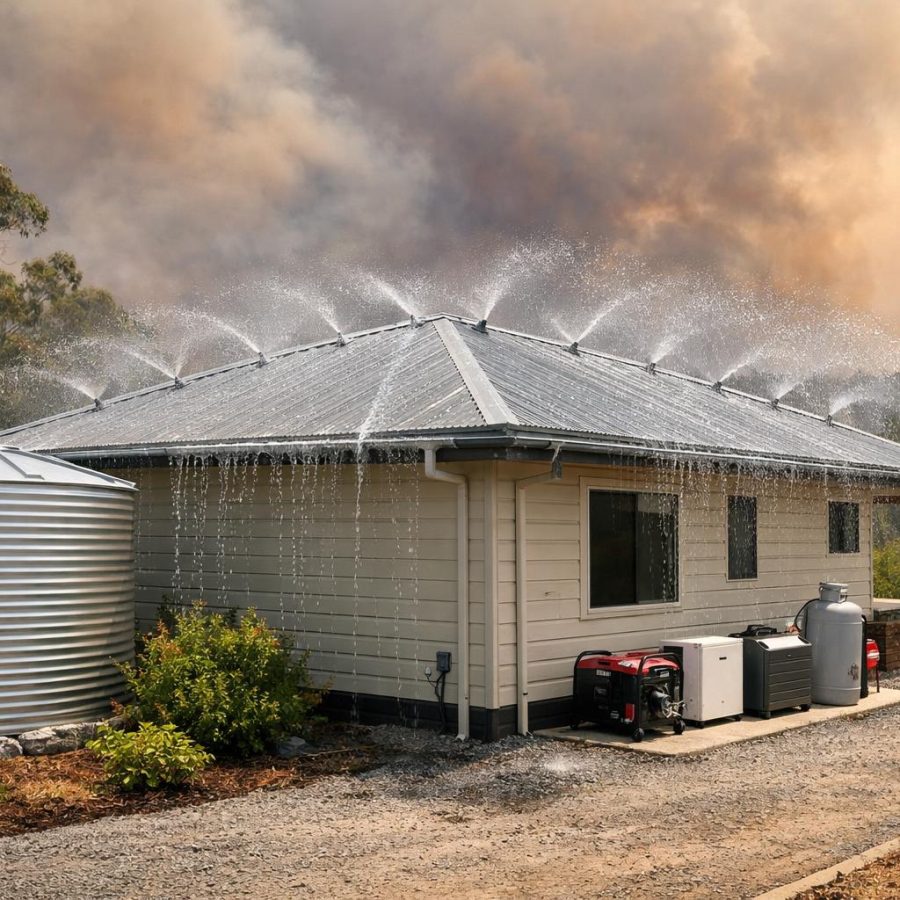
- Maintain any shutters, pumps, tanks, hoses, sprinklers or other systems so they work when needed.
Retrofitting can improve resilience, but products should be selected as part of a coherent design. A screen, sprinkler, shutter or gutter guard on its own does not make a house safe.
Vegetation and the space around the home
Property preparation is about breaking up fuel and reducing the things that can ignite close to the building. It does not mean removing every tree or creating a bare block.
- Keep grass maintained and remove accumulated leaf litter and dead vegetation.
- Prune vegetation where it creates continuous fuel close to the building, subject to local vegetation rules.
- Avoid storing fuel, timber or other highly combustible material against the house.
- Consider the location of sheds, fences, decks and outbuildings because they can become additional fuel.
- Use lower-flammability landscape design where suitable, but remember there is no fireproof plant.
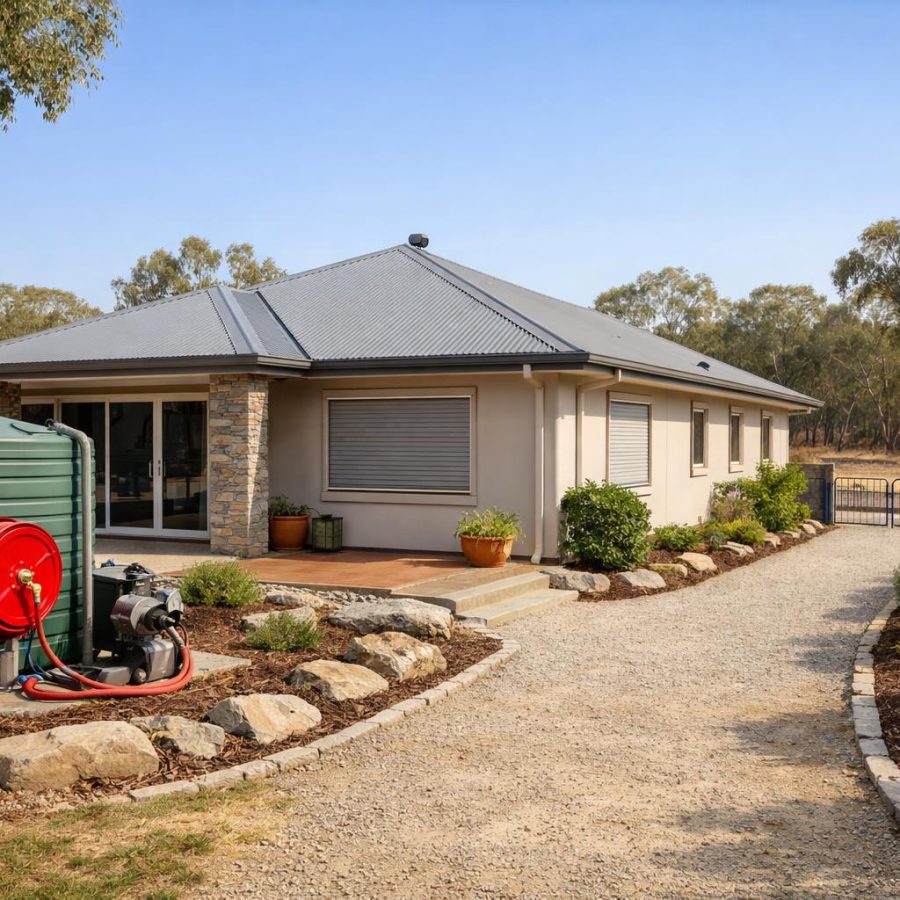
- Keep driveways, gates and access routes maintained so occupants and emergency vehicles can move safely where conditions allow.
Water, pumps and access
Mains water and electricity can fail during a major fire. If your property or local planning requirements rely on dedicated firefighting water, the system needs to be designed and maintained for that purpose.
Firefighters also need practical access. Long narrow driveways, weak bridges, locked gates, low branches, poor turning areas and unclear property numbering can all reduce the ability of a crew to reach or leave a property safely.
Do not assume a fire truck will be available to protect a home. On major fire days, crews may be committed to life safety, evacuations, community protection and multiple incidents at once.
A prepared home still needs a survival plan
Bushfire-resistant construction and property preparation support a survival plan; they do not replace one. CFA states that the best chance of survival is to leave the night before or early in the morning on days of Extreme or Catastrophic Fire Danger and says never plan to defend a property on a Catastrophic day.
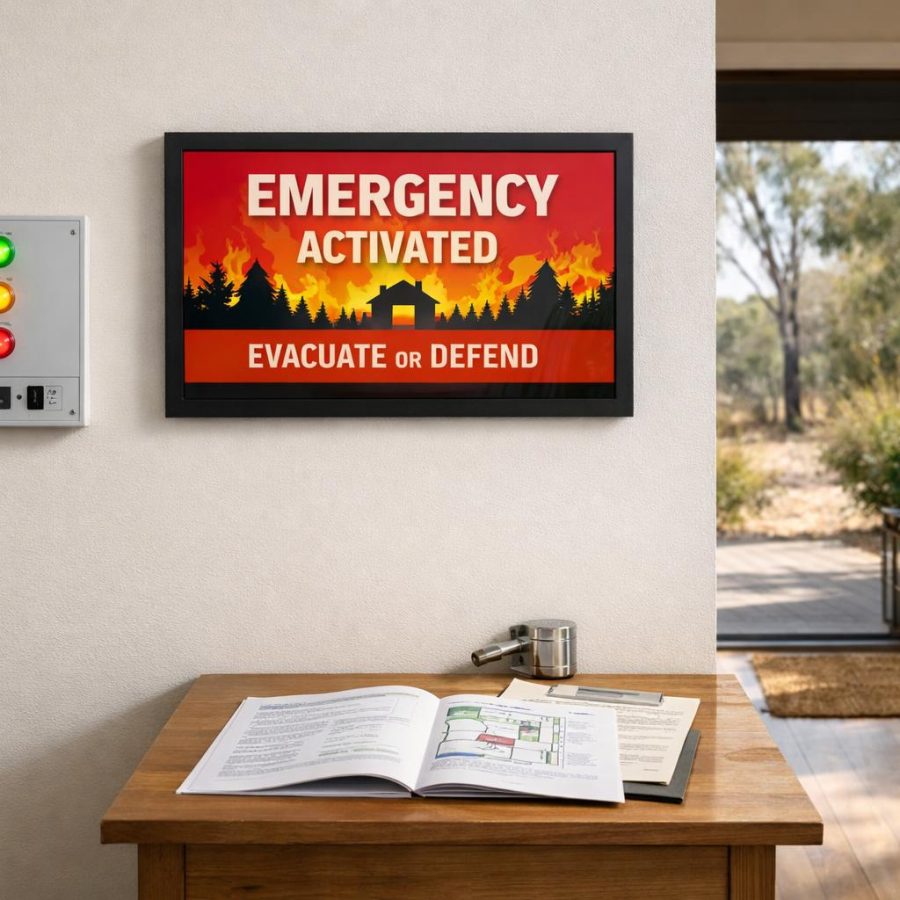
Your plan should identify the rating or other trigger that makes you act, where you will go, when you will leave, how you will transport children, older people, people with disability and animals, and what you will do if the preferred road is unavailable.
For a practical public guide to leaving early and what to do if you become trapped, see Bushfire Safety in Australia: When to Leave Early and What to Do if You’re Trapped.
Climate and long-term bushfire risk
CSIRO and the Bureau of Meteorology’s State of the Climate 2024 reports that extreme fire weather has increased and fire seasons have lengthened across large parts of Australia since the 1950s.
The effect is not identical everywhere. In southern and eastern forest regions, hot, dry and windy conditions are major contributors to dangerous fire weather. In northern and inland regions, wet periods can create large grass fuel loads that later dry and support extensive grassfires.
That reinforces the need for local risk assessment rather than assuming one bushfire-protection formula suits every part of Australia.
Operational perspective
From a firefighting perspective, the best-prepared properties are usually the ones where risk reduction has been treated as a system. The driveway is usable. The address is visible. Fuel has been managed. The house has fewer obvious ember-entry points. Water arrangements are understood. The occupants know their trigger and are not waiting for a fire truck to make the decision for them.
The opposite is also true. A high BAL construction standard cannot compensate for every hazard around a property, and a beautifully cleared property cannot guarantee safe evacuation if the only road is blocked.
The practical goal is not perfection. It is to remove avoidable weaknesses before a severe fire day exposes them.
Bushfire protection checklist
- Check whether the property is in bushfire-prone land or a planning overlay.
- Know the current Fire Danger Rating and your action trigger.
- Understand your BAL where it applies.
- Clean gutters and remove combustible debris.
- Check gaps, vents, screens, windows, decks and roof spaces for ember vulnerability.
- Manage vegetation and combustible storage close to buildings.
- Maintain water, pumps and hoses that form part of your plan.
- Keep driveways, gates and property identification usable.
- Plan for loss of mains power, mobile coverage and water.
- Leave early when your plan or official guidance says it is time to go.
Frequently asked questions
What are the current Australian Fire Danger Ratings?
Moderate, High, Extreme and Catastrophic. On minimal-risk days, No Rating may be issued. Older public levels such as Very High and Severe are no longer part of the current national rating system.
Is Fire Danger Period the same as the Fire Danger Rating?
No. A Fire Danger Period or Bush Fire Danger Period is a declared restriction period under state or territory rules. The Fire Danger Rating is the daily assessment of how dangerous a fire could be if one starts.
What are the six BAL categories?
BAL-LOW, BAL-12.5, BAL-19, BAL-29, BAL-40 and BAL-FZ.
Does a high BAL mean a home is safe in a bushfire?
No. BAL informs construction requirements for predicted exposure. It does not guarantee survival of the building or occupants under actual fire conditions.
Should I still prepare my house if I plan to leave early?
Yes. A well-prepared home is more likely to survive ember attack and is less likely to contribute fire to neighbouring properties. Preparation should support leaving early, not delay it.
The key message
Know the risk. Prepare the property. Use the right building standard. Maintain access, water and equipment. Make a realistic survival plan. And when dangerous conditions are forecast, act early.
- CFA — Fire Danger Ratings
- NSW RFS — Fire Danger Ratings
- CFA — Preparing outside your home
- NSW RFS — Prepare your home
- NSW RFS — Bushfire Attack Levels
- Standards Australia — 2026 Bushfire Construction Handbooks
- Planning Victoria — 2026 bushfire planning provisions
- CSIRO and Bureau of Meteorology — State of the Climate 2024
Ken Walker — former Station Officer and fire-service educator with career and volunteer firefighting experience.
This article combines current public guidance, building and planning references and bushfire science with an operational firefighting perspective. It is general education and does not replace a site-specific BAL assessment, building approval, planning permit or official emergency advice.
Safety disclaimer
Bushfire behaviour can exceed design assumptions and conditions can change rapidly. No building, product, landscape treatment or fire plan can guarantee survival. Always follow current advice from your state or territory fire service, planning authority, building regulator and emergency agencies.
FireRescue Training Hub
Access practical fire and emergency study support resources, downloads, checklists, audio guides, and member-only course content.
- Course library
- PDF downloads
- Audio guides
- Checklists
Study support only. Not accredited training or a replacement for workplace procedures.
About the author and safety review
Ken Walker
Former Station Officer and fire service educator
Former career firefighter with extensive career and volunteer fire service experience.
Qualifications: Associate Diploma of Applied Science in Fire Technology; Institute of Fire Engineers studies.
Author profilehttps://www.firerescue.com.au/about-us/