Fire Resilience in Australia: FEMA-Inspired Strategies, Local Wisdom, and Community Action
Australia’s approach to fire safety keeps evolving. By learning from FEMA’s structured frameworks and
blending them with Australian experience, we can build resilient communities—from city fringes to rural townships—
that prepare early, react calmly, and recover faster.
- fire resilience Australia
- FEMA-inspired planning
- community fire preparedness
- bushfire risk reduction
1. Foundations: What We Learn from FEMA
FEMA’s value lies in structure: consistent planning templates, common terminology, incident command systems,
and a culture of continuous improvement. For Australia, the lesson is not to transplant US solutions as-is, but to
adopt the mindset: define <a href="https://www.firerescue.com.au/why-every-traveller-needs-a-caravan-park-emergency-evacuation-plan/”>roles clearly, train routinely, test assumptions with exercises, and communicate using
plain language. This foundation cuts confusion, reduces duplicated effort, and helps responders and communities
act in sync when every minute matters.
Another practical lesson is documentation. Checklists, maps, communications trees, and resource lists sound simple,
yet they are powerful under pressure. FEMA’s habit of publishing playbooks and after-action reviews encourages a
feedback loop: what worked, what failed, and how to fix it before the next season. Australia benefits by creating
equally clear, locally relevant references that households and brigades can use the moment a watch and act alert
appears.
2. Adapting to Australia’s Unique Landscape
Australia’s fuels, topography, and weather patterns create distinct fire behaviour. Eucalypt oils, long drought
cycles, sudden wind changes, and vast rural distances demand local tailoring. Learning from FEMA means embracing
the process: start with structured frameworks, then calibrate to the Australian bush, grassland, and peri-urban
edge. A farm on the Victorian plains faces different ignition and access issues than a coastal town in New South
Wales or a suburban street near bush reserves in Western Australia. Plans should name these differences explicitly,
not just generically.
Local adaptation also includes community culture. Volunteerism is strong in Australia; that’s a strength to
nurture with training, recognition, and flexible roles. Preparedness campaigns should reflect local speech,
local landmarks, and local history—so messages land with clarity and trust. When people recognise themselves in
the plan, participation rises and last-minute panic falls.
3. Building Resilient Communities
Resilience starts at the letterbox and scales to the neighbourhood. Households clear gutters, trim vegetation,
choose ember-resistant materials, and prepare a written survival plan. Streets form buddy systems, swap phone
numbers, share gear like spare hoses, and check on older residents. Towns align community centres, halls, and
evacuation routes with realistic travel times and accessible signage. This layered model—home, street, town—keeps
decisions human-sized but mutually reinforcing.
Drills are the difference between “we’ve read the leaflet” and “we can do this under stress.” Schedule short,
repeatable drills: five-minute household checks on the first Sunday of each month; quarterly street-by-street
practice messages; a yearly community exercise that tests a full scenario from warning to regroup. Short, regular
practice outperforms one long seminar people forget the next day.
4. Integrating FEMA’s Strategies into Local Planning
Translate FEMA’s incident command clarity into local roles: who calls neighbours, who moves livestock, who
monitors official apps, who closes street gas valves (if applicable), and who keeps a simple log of actions taken.
Give each role a short card: responsibilities, thresholds for escalation, and backup contacts. Plans should be
visible and editable—laminated cards on the fridge are as useful as a PDF in the cloud when the power blinks.
Planning should also pre-decide communication channels. Choose your official sources (state fire service apps,
ABC Emergency, council SMS), then practice confirmations between households. If phone towers are unreliable, agree
on fallback meeting points and visible signals (e.g., a coloured ribbon on the letterbox for “we’ve evacuated”).
5. Community Involvement & Shared Responsibility
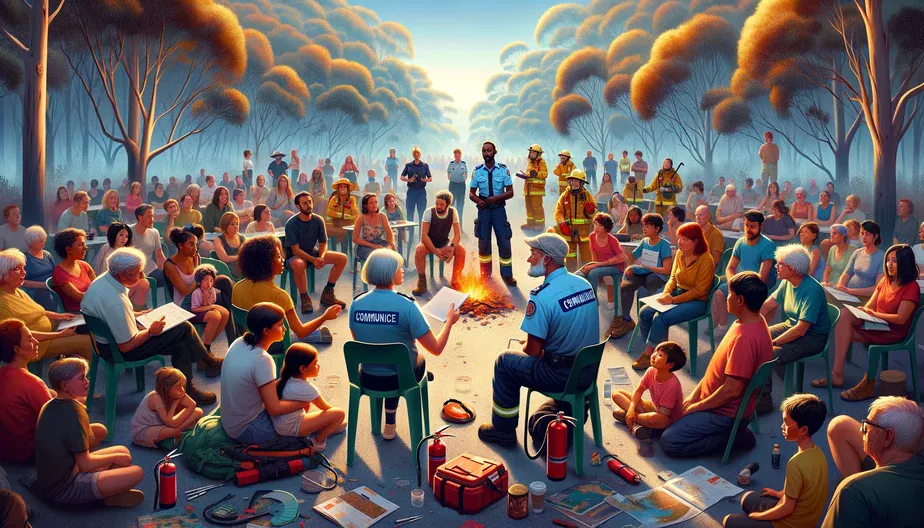
Effective programs are co-created, not imposed. Invite residents to map local assets (water points, CFA brigades,
tractors, first-aiders) and risks (dead-end streets, overgrown gullies, sheds with gas bottles). When locals
contribute to the plan, they notice blind spots and volunteer micro-solutions—a trailer pump here, a shared rake-hoe
set there—that improve readiness without big budgets.
Engagement grows when events feel useful and respectful. Keep sessions short, include hands-on demos (hose
couplings, gutter guards, mask fitting), and always finish with a “do-now” list people can complete in an
afternoon. Celebrate the wins—clean-up days, grant applications, and the neighbour who helped three houses fix
their address numbers so emergency crews can find them at night.
6. Climate Reality: Heat, Wind, and Long Seasons
Australia’s fire weather can shift rapidly. A safe plan assumes hot, dry, windy days with ember attack ahead of
the front. Prepare shade-stored drinking water, masks rated for smoke, battery-powered radios, and spare power for
phones and pumps. Reduce flammables around the home: timber stacks, leaf litter, and plastic furniture near
windows. Choose plantings with lower flammability and maintain a defendable space that suits your property type.
Early warnings matter. Install official apps, enable notifications, and agree on trigger points—e.g., “Watch and
Act in our district = we leave now.” Evacuation before the heat of the day is a safer habit than last-minute
gambles on road access.
7. Emergency Management in Practice
Borrow from FEMA’s playbooks: clarify chains of command, maintain a simple situation board (time, wind, alerts,
who’s where), and use standard check-ins. During an incident, brevity and repetition keep everyone aligned.
Afterward, hold a short debrief: what surprised us, what worked, and what small change makes a big difference
before next weekend. Document outcomes in plain English.
8. Strengthening Response Capability
Capability is people, training, and equipment. Keep gear serviceable and labelled. Practice hose runs, pump
starts, and safe approach to spot fires. Align with local brigades on safe volunteer tasks, and never freelance
beyond your training. For households, the best “equipment” is a realistic decision time: leave early if you are
not prepared to actively defend.
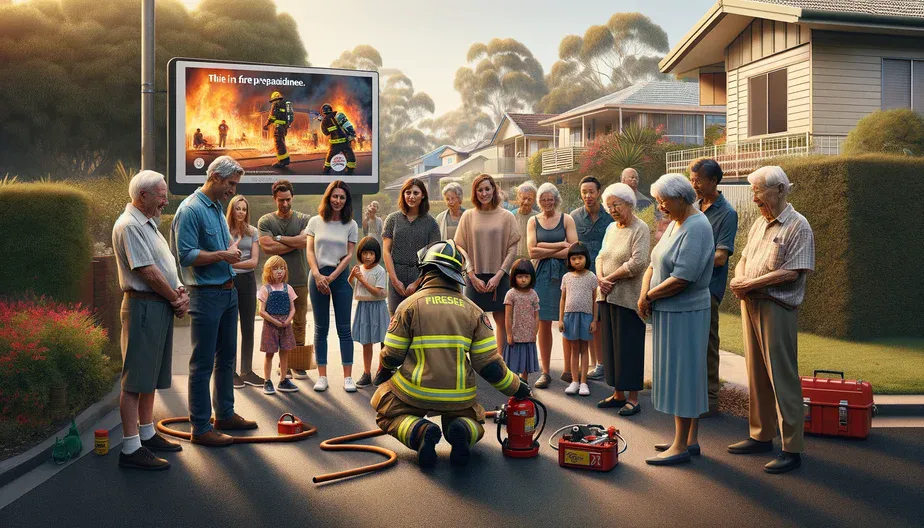
9. Preparedness that Saves Lives
Preparedness is a rhythm, not a one-off. Use seasonal calendars: spring for gutters and garden trimming, summer
for carry-kits and animal plans, autumn for fuel-load clean-ups, and winter for equipment servicing. Keep
evacuation routes familiar for kids and visitors: write them, walk them, and test timing in daylight and after
dusk. The best time to discover a locked gate or confusing sign is during a practice stroll, not with smoke on the
horizon.
10. Innovation: Tools, Research, and Training
Innovation is practical when it reduces confusion. Simple wins include QR codes linking to local fire maps,
neighbourhood WhatsApp or radio protocols, and printable “first five moves” cards on fridges. On the tech side,
satellite imagery, predictive risk models, and AI-assisted summaries can help brief volunteers and residents—so
long as they supplement, not replace, official information and on-the-ground judgement.
11. Collaboration Across Agencies and Neighbours
Better outcomes come from shared language, shared maps, and shared practice. Councils, brigades, land managers,
schools, and businesses can align on signage standards, fuel-reduction priorities, and safe refuge sites. Street
captains—informal local points of contact—help spread verified updates and reduce mixed messages.
12. Proactive Risk Reduction
Proactive means acting before smoke appears: tidy perimeters, remove ladder fuels, store flammables safely,
maintain address visibility, and plan animal moves. Consider micro-grants or equipment pools for shared tools like
rakes, blowers, or portable pumps. The modest effort of a Saturday morning working bee can remove a surprising
amount of risk from a single streetscape.
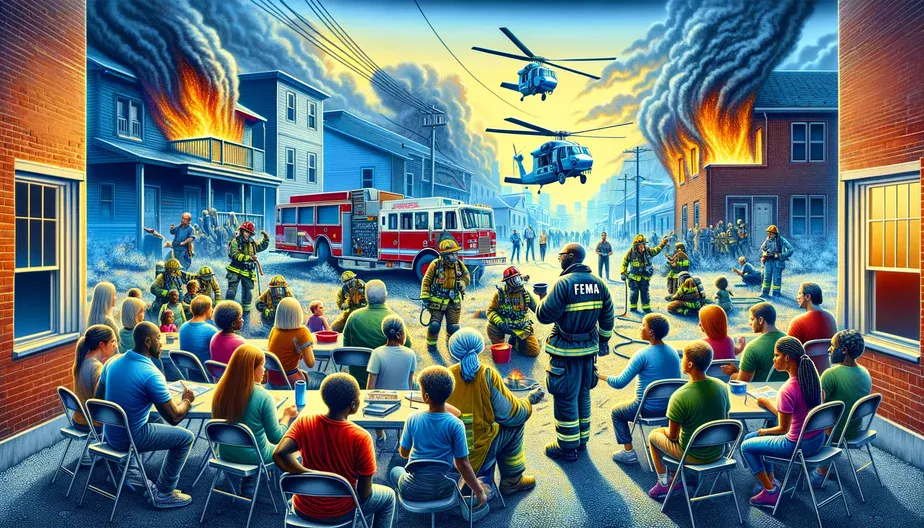
13. Strategy vs. Reality: Overcoming Challenges
Common barriers include time, budget, and complacency. Tackle them with bite-size steps: ten-minute tidy tasks,
one-page plans, and visible progress boards at community halls. Recognise that not everyone can stay to defend:
normalise early, safe evacuation as a smart choice. Celebrate households that choose a “leave early” plan; it’s a
courageous, community-minded decision.
14. Policy Bridges: FEMA Influence in the Aussie Context
Policy should translate global lessons into local rules that are simple to follow. Encourage ember-resistant design,
maintain access for appliances, and integrate drills into community calendars. Treat after-action reviews as gifts:
each season teaches the next. Where FEMA offers templates, Australia can localise language, examples, and photos to
match our streets, bush, and paddocks.
15. Future-Proofing with Scenario Planning
Future-proofing means rehearsing “what if” events: simultaneous grass and bush fires, road closures, smoke days,
power outages, and tourist peaks. Pre-assign roles, test backups, and keep copies of plans both online and on
paper. The goal is humble confidence: we can’t control the weather, but we can control our readiness together.
16. Quick Home & Street Checklist
Tick items you’ve done; your progress bar will update. Share this with neighbours to multiply impact.
0% complete
17. Frequently Asked Questions
What’s the single most important step for households?
How do we keep neighbours aligned without information overload?
Can technology replace local knowledge?
Where do FEMA lessons fit in Australia?
Executive Summary (Copy-Ready)
Australia can boost fire resilience by pairing FEMA-style structure with local realities: define roles, drill
regularly, simplify communications, and act early on high-risk days. Build from home to street to town; keep plans
short, visible, and practiced. Tidy fuel loads, maintain equipment, and normalise early evacuation for those not
defending. Debrief after each season and update your plan. Humble, steady readiness wins.
FireRescue Training Hub
Access practical fire and emergency study support resources, downloads, checklists, audio guides, and member-only course content.
- Course library
- PDF downloads
- Audio guides
- Checklists
Study support only. Not accredited training or a replacement for workplace procedures.
About the author and safety review
Ken Walker
Former Station Officer and fire service educator
Former career firefighter with extensive career and volunteer fire service experience.
Qualifications: Associate Diploma of Applied Science in Fire Technology; Institute of Fire Engineers studies.
Author profilehttps://www.firerescue.com.au/about-us/