After a bushfire, many rural households worry about the rainwater tank. Ash, soot, debris, dead animals, firefighting water, foam and aerial retardant can all affect water quality in different ways, and it is not always possible to tell by looking alone whether the water is safe to drink.
What can contaminate a rainwater tank after a bushfire?
A bushfire can affect a rainwater tank even if the tank itself was never burnt. The main issue is often what lands on the roof and is washed into the tank when rain falls again. Ash and soot can collect on roofing, gutters and downpipes. Firefighting operations can also leave behind chemicals, foam or water-bombing residue. In some cases, dead birds, possums or other animals may fall into or near the catchment area and contaminate the water.
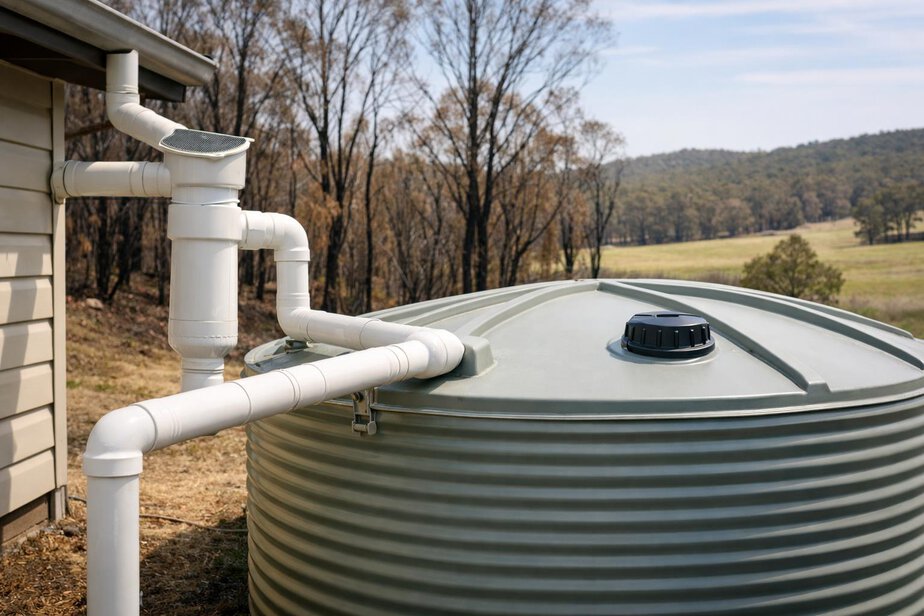
Damage to the roof catchment system is another concern. Heat can warp roof sheets, crack seals, damage tank lids, split pipes or weaken pumps and filters. If the roof, gutters or plumbing have been affected, dirty water can keep entering the tank long after the fire has passed.
Ash and debris are often more likely to change the colour, smell and taste of water than cause a serious health risk on their own. Even so, you should not assume that water is safe just because it looks clear. Contamination can be invisible, especially when firefighting chemicals or other pollutants are involved.
Warning signs that your tank water may not be safe
The first clues are often simple. If the water looks smoky, cloudy, dirty or has visible ash or debris, stop using it for drinking until it has been checked and the source of contamination dealt with. A strong smoky smell, chemical smell, oily sheen or unusual taste are also warning signs.
Do not ignore changes in the water after firefighting activity nearby. Water-bombing, foam use or retardant drops can leave material on the roof and around the tank catchment. If the fire was close enough to affect the house, the water supply should be treated with caution even if there is no obvious damage.
Also check for practical signs of contamination or damage:
- ash or soot on the roof, in gutters or around tank openings
- dead birds, possums, frogs or other animals in the catchment area
- broken roof sheets, cracked seals or loose tank lids
- damaged downpipes or disconnected plumbing
- blocked leaf screens, gutters or first-flush devices
- unusual stains, sludge or floating material in the tank water
If the water smells or tastes unusual, do not drink it or use it for pets or livestock until it has been assessed. That is the safest default for rural households after a fire.
When to stop using the water
You should stop using tank water for drinking as soon as there is a credible chance it has been contaminated by ash, debris, firewater, foam or retardant. That means acting early, not waiting until someone becomes unwell. If the water is visibly contaminated, or if the smell or taste changes, treat it as unsafe until proven otherwise.
The safest response is to switch immediately to an alternative source for any task where water quality matters. That includes drinking, cooking, brushing teeth, washing fruit and vegetables, making ice and preparing infant formula. It is also sensible to avoid giving questionable tank water to pets or livestock.
Boiling is not a complete solution. Boiling can kill many microorganisms, but it does not remove fire retardant, fuel, chemicals, heavy metals or other chemical contamination. If there is any chance that chemicals are involved, boiling does not make the water safe for drinking.
If you are unsure whether the water was exposed to chemicals or only to ash, err on the side of caution. Ask your local council, environmental health officer, state health department or a licensed tank-cleaning professional for advice before using the water again.
| Water use | Use tank water? | Safer approach after bushfire contamination |
|---|---|---|
| Drinking | No, if unusual | Use bottled water or another safe supply |
| Cooking and ice | No, if unusual | Use safe drinking water only |
| Tooth brushing | No, if unusual | Use safe supply |
| Baby formula | No, if unusual | Use safe supply and follow formula instructions |
| Washing and cleaning | Sometimes | Use care if water has ash, odour or chemical residue |
Safe alternative water supplies for the household
When tank water is not safe, use another trusted supply until the tank has been assessed, cleaned and refilled. Bottled water is the simplest option for short periods. If bottled water is not practical, another approved safe supply may be available through your council, local emergency arrangements or a neighbour’s trusted system. The important point is that the alternative supply should be suitable for drinking and food preparation.
For households with babies, the stakes are higher. Safe water is needed for preparing baby formula and for cleaning items used by infants. If you are not sure whether your water supply is safe, do not guess. Use a confirmed safe source and follow the formula instructions carefully.
Do not rely on taste alone to decide whether water is safe. Chemical contamination can occur without a strong smell, and ash contamination may settle at the bottom of the tank or stay trapped in plumbing. If contamination is suspected, continue using the alternative supply until the system has been properly checked.
When in doubt, treat the tank water as unsuitable for drinking and food preparation until a qualified assessment has been made.
If you have elderly family members, people with weakened immune systems or anyone with ongoing health concerns in the house, be extra cautious. A conservative approach is the safest one after a bushfire.
What to inspect around the roof, tank and plumbing
Before using the tank again, inspect the full rainwater system from the roof catchment to the taps. Only do this if it is safe to do so. Do not climb onto a damaged roof. If the roof or surrounding area is unstable, keep away and arrange professional help.
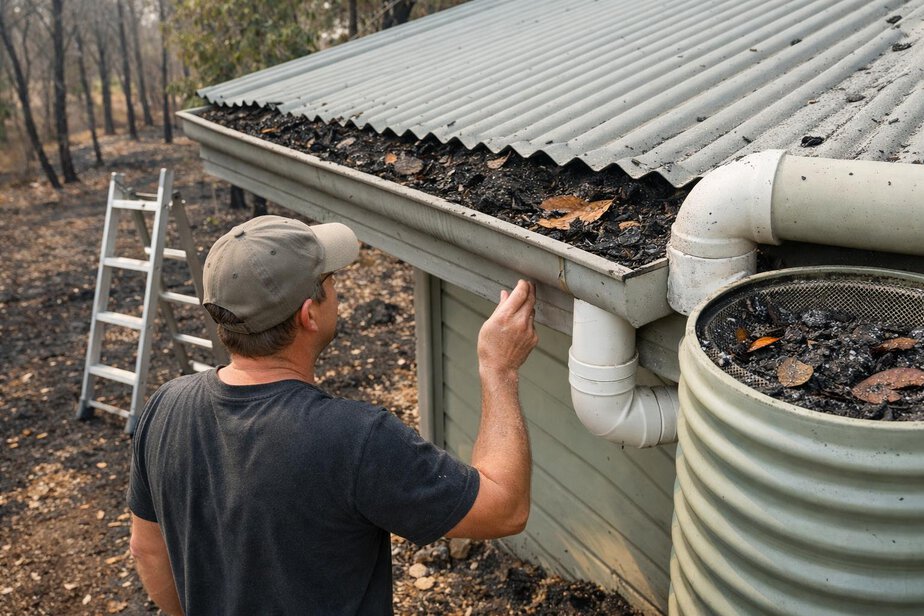
Start with the roof and gutters. Look for ash, leaves, dead animals, burned material and any visible damage. Check that gutters are not blocked and that downpipes are still connected. If the roof has heat damage, cracked tiles, broken sheets or damaged seals, the catchment may continue to be a problem even after the first clean-up.
Then check the tank itself. Look at the outside for signs of scorching, dents, melting, cracked fittings or a shifted lid. If the tank liner, lid or inlet screens have been damaged, dirty water or contaminants may enter more easily. Do the same for pumps, filters and exposed plumbing around the tank.
Inside the house, check whether taps, pressure pumps and filters are working normally. If water quality has changed or if there is any sign of contamination in the supply line, assume the whole system may need flushing after the tank is cleaned.
Important items to inspect include:
- roof surface and roof catchment area
- gutters, valleys and leaf guards
- downpipes and pipe joints
- tank lid, screens, inlets and overflows
- tank liner and outer shell
- pump, filters and any visible plumbing
Cleaning the roof, gutters and first rainfall runoff
If it is safe, clean the roof and gutters before letting rainwater back into the tank. This step matters because ash and debris sitting on the catchment can wash straight into the tank at the next rainfall. Clean-up should be done carefully and only when there is no danger from heat, unstable structures, falling debris or slippery surfaces.
Do not climb onto a damaged roof. If there is any doubt about safety, leave the work to a qualified tradesperson or roof-cleaning professional. A damaged roof can be hazardous even when it looks stable from the ground.
Once the roof catchment is clean, divert the first rainfall away from the tank. This is especially important if the roof has not been thoroughly cleaned or if there was heavy ashfall. The first flush can carry a concentrated load of ash, soot and small debris, so letting it bypass the tank helps protect water quality.
If your system has a first-flush diverter, make sure it is working properly and has been emptied or reset as needed. If there is no diverter, temporary diversion methods may be available, but they should be installed in a way that does not create new safety risks or contaminate the system further. When uncertain, ask a professional who understands rainwater systems.
Cleaning the roof and gutters also helps reduce odour and staining in the water. It may not remove every contaminant, especially if firefighting chemicals have reached the catchment, but it is an important part of the recovery process.
How to respond if firefighting water, foam or retardant may be involved
Firefighting water, foam and aerial fire retardant need special caution. These products may be used during bushfires to slow the fire or protect property, but they are not the same as ordinary ash. If they have landed on your roof, gutters or tank catchment, the water should not be assumed safe.
Boiling is not enough in these cases. It may reduce some biological risk, but it does not remove chemical contamination. That includes fire retardant, fuel residues, heavy metals and other chemical compounds that may enter the tank or remain on the catchment surface.
If retardant or foam is suspected, avoid using the water for drinking, food preparation or baby formula until the system has been checked and cleaned. You may also need advice about whether the tank needs to be drained completely, depending on the level of contamination and whether the water has mixed with other runoff.
It is sensible to document what happened. Note the date of the fire, any visible residue on the roof, whether firefighting aircraft or appliances were nearby, and any changes in water colour or smell. This information can help a council officer, environmental health officer or tank-cleaning professional advise you.
If contamination is confirmed or strongly suspected, arrange for the tank to be drained, professionally cleaned and refilled. Do not try to “fix” chemical contamination only by topping up the tank with fresh water, because that can spread the contamination through the system.
When professional tank cleaning is needed
Some tanks can be restored with careful cleaning and flushing, but others need professional work. If dead animals have entered the tank, if ash and sludge are heavy, if chemical contamination is suspected, or if the tank lining or plumbing has been damaged, professional cleaning is usually the safest path.
A professional cleaner can assess whether the tank needs to be drained, washed, disinfected, refilled and flushed through the household plumbing. They can also check for damage that a householder may miss, including hidden problems in inlet screens, seals, pumps and pipework.
Cleaning should be matched to the type of contamination. A tank with mild ashfall may need a different response from one exposed to fire retardant or dead animals. This is why it is wise to seek advice rather than guessing. The wrong cleaning approach can spread contamination or leave residues behind.
After the tank has been cleaned and safe drinking water restored, flush household taps until the water runs clear and any stale water is cleared from the pipes. Replace filters if needed, following the advice of the system installer or cleaner. If there is any unusual smell or taste after refilling, stop using the water for drinking and ask for another check.
As a general rule, if you are not confident you can inspect and clean the system safely, leave the work to a trained professional. That is especially important where there is roof damage, tank damage, slippery surfaces or ongoing smoke exposure.
How to prevent future contamination
Once the immediate fire danger has passed, it is worth improving the system so the next event is easier to manage. Prevention is much cheaper and safer than dealing with contamination after the fact.
Useful measures include first-flush diverters, gutter guards, leaf screens, sealed tank openings and regular maintenance. These features help keep ash, leaves and insects out of the system and make it easier to isolate the first dirty runoff after a fire or heavy smoke event.
Regular upkeep matters too. Clean gutters before the fire season, check that lids and screens fit properly, service pumps and inspect tank plumbing for leaks or cracks. If your property is in a bushfire-prone area, it can also help to review your water-storage plan before summer so you know where to get safe drinking water if the tank is affected.
Another useful habit is to think about catchment protection before a fire reaches the area. If a nearby bushfire may contaminate the roof catchment, disconnect the downpipes when it is safe and practical to do so. This can reduce the amount of contamination entering the tank during the first dirty runoff, but it should only be done when conditions allow and without exposing yourself to danger.
Keep in mind that a system does not need to look badly damaged to be vulnerable. Even a small amount of ash, debris or residue can make maintenance more difficult later. A simple annual inspection by a competent person can help identify problems before they become expensive or unsafe.
Practical checklist for rural households after a bushfire
A calm checklist can make the situation easier to manage. Start with immediate safety, then work through the water system step by step.
- Follow official emergency warnings and stay clear of any unsafe fire area.
- If there is immediate danger to life, call Triple Zero (000).
- Stop using tank water for drinking if it looks, smells or tastes unusual.
- Use bottled water or another safe supply for drinking, cooking, ice, teeth cleaning and baby formula.
- Inspect the roof, gutters, downpipes, tank, pumps and filters for ash, debris or heat damage.
- Do not climb onto a damaged roof and never enter the tank.
- Clean the roof and gutters only when it is safe.
- Divert the first rainfall away from the tank after a fire.
- Seek professional help if retardant, foam, dead animals or chemical contamination is suspected.
- Flush taps after the system has been cleaned and safe drinking water has returned.
These steps do not replace local advice, but they give you a sensible starting point when the water supply has been exposed to bushfire conditions.
Not all contamination is visible. If you are uncertain, choose the safer option and keep the tank water out of the drinking supply until it has been assessed.
Final advice for safe recovery
Bushfire ash in a rainwater tank does not always mean the water is dangerous, but it does mean the water should be treated carefully. The safest approach is to stop drinking it if there is any unusual colour, smell or taste, use a confirmed safe alternative supply, inspect the catchment system, and get expert help when chemicals, dead animals or fire damage may be involved.
Boiling can kill many germs, but it does not remove fire retardant, fuel, chemicals, heavy metals or other chemical contamination. That distinction matters. If contamination is suspected, the tank may need to be drained, professionally cleaned and refilled before the household supply is used again.
For the best result, combine immediate caution with practical prevention. Keep gutters clean, maintain screens and lids, use first-flush protection and review your water plan before the next fire season. And before publishing or acting on any local guidance, verify the facts and check the latest advice from your council, state health department, environmental health officer or licensed tank-cleaning professional.
FireRescue Training Hub
Access practical fire and emergency study support resources, downloads, checklists, audio guides, and member-only course content.
- Course library
- PDF downloads
- Audio guides
- Checklists
Study support only. Not accredited training or a replacement for workplace procedures.
About the author and safety review
Ken Walker
Former Station Officer and fire service educator
Former career firefighter with extensive career and volunteer fire service experience.
Qualifications: Associate Diploma of Applied Science in Fire Technology; Institute of Fire Engineers studies.
Author profilehttps://www.firerescue.com.au/about-us/