Bushfire preparedness is easiest to improve when you stop asking “Are we ready?” and start checking the specific things that can fail: your leave trigger, transport, medicines, property access, emergency kit, communications and backup plans.
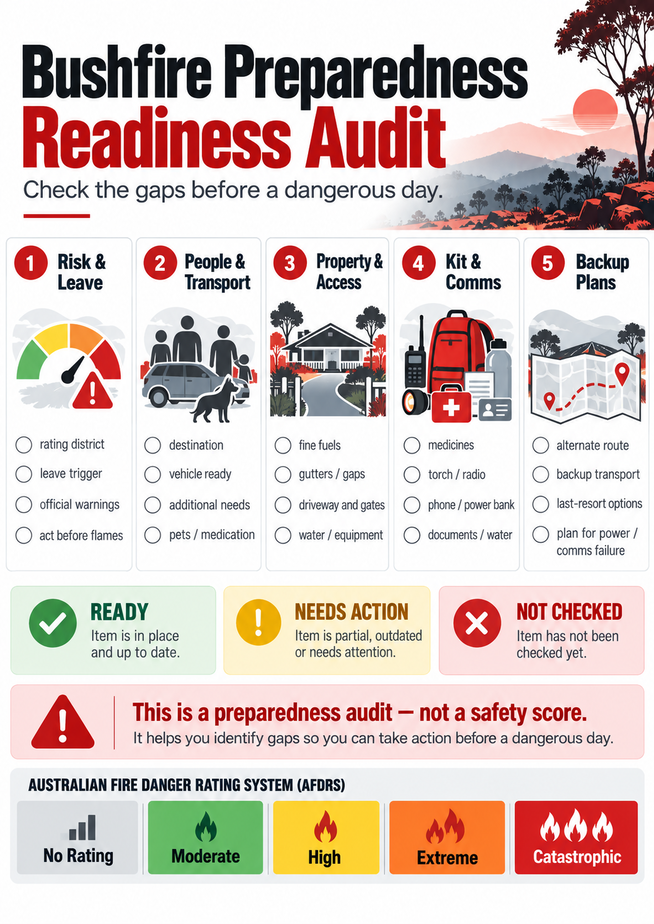
This guide is designed as a practical bushfire preparedness checklist for Australian households, renters, rural properties and people who regularly travel through bushfire-risk areas. It does not give you a “safe” score. Instead, it helps you find gaps before a dangerous day removes your options.
Leaving early is the safest option. Current CFA guidance for high-risk Victorian areas is to leave the night before or by 10 am on days rated Extreme or Catastrophic. The national Catastrophic message is: for your survival, leave bushfire-risk areas. Do not wait for smoke, flames or an official warning before deciding what you will do.
What’s been updated
- Rebuilt this page as a practical readiness audit instead of another general bushfire guide.
- Uses the current AFDRS levels: No Rating, Moderate, High, Extreme and Catastrophic.
- Strengthens leave-early advice and separates last-resort sheltering from planned property defence.
- Removes the unsupported universal “20 metre cleared area” rule.
- Updates first-aid and smoke advice.
- Adds backup-plan checks for road closures, vehicle failure, power loss and people needing extra time.
- Adds one optional affiliate example only where it genuinely supports the emergency-kit section.
How to use this Bushfire Preparedness Readiness Audit
Work through the five areas below. For each check, mark it:
You have checked it recently and everyone affected understands the arrangement.
The plan exists, but something is incomplete, outdated or untested.
You cannot confidently answer the question yet.
Do not add the ticks into a safety score. One serious gap—no transport, expired medication, an unsafe route or an unrealistic leave trigger—can matter more than ten smaller items that are already complete.
Audit 1 — Risk and your decision to leave
Your plan starts with the conditions that will make you act. The Australian Fire Danger Rating System tells you how dangerous a fire could be if one starts.
| Rating | Planning message |
|---|---|
| No Rating | Stay aware. Fires can still occur. |
| Moderate | Plan and prepare. |
| High | Be ready to act. |
| Extreme | Take action now. Leaving bushfire-risk areas early is the safest option. |
| Catastrophic | For your survival, leave bushfire-risk areas. |
Readiness checks
- I know the official Fire Danger Rating district for my location.
- Our household has a clear trigger for leaving before a fire threatens the route.
- Everyone understands that a Fire Danger Rating is different from an incident warning.
- We do not rely on receiving a warning before we act.
- We know the official warning channels for our state or territory.
“Leave when a Watch and Act arrives” is not a strong default trigger. Fires can develop quickly and warnings may not reach everyone in the order expected. Your plan should tell you what to do before that point.
Audit 2 — People, transport and additional needs
A fire plan has to work for the slowest or most dependent person in the household, not just the person who wrote it.
Readiness checks
- Everyone knows where we will go and how we will get there.
- Our vehicle is reliable, fuelled or charged, and can carry the people, animals and essential equipment we plan to take.
- We have a backup if the vehicle fails or the usual driver is unavailable.
- Children, older people, people with disability, medical needs or reduced mobility have enough extra time built into the plan.
- Essential medication and mobility or medical equipment can leave with us quickly.
- Pets have leads, carriers, food, water, medication and identification ready.
- We have told a trusted contact where we intend to go.
If someone needs help to leave, arrange it well before a dangerous day. Do not assume a neighbour, ambulance, fire service or community organisation will be available at the exact time you need transport.
Audit 3 — Property, access and ember exposure
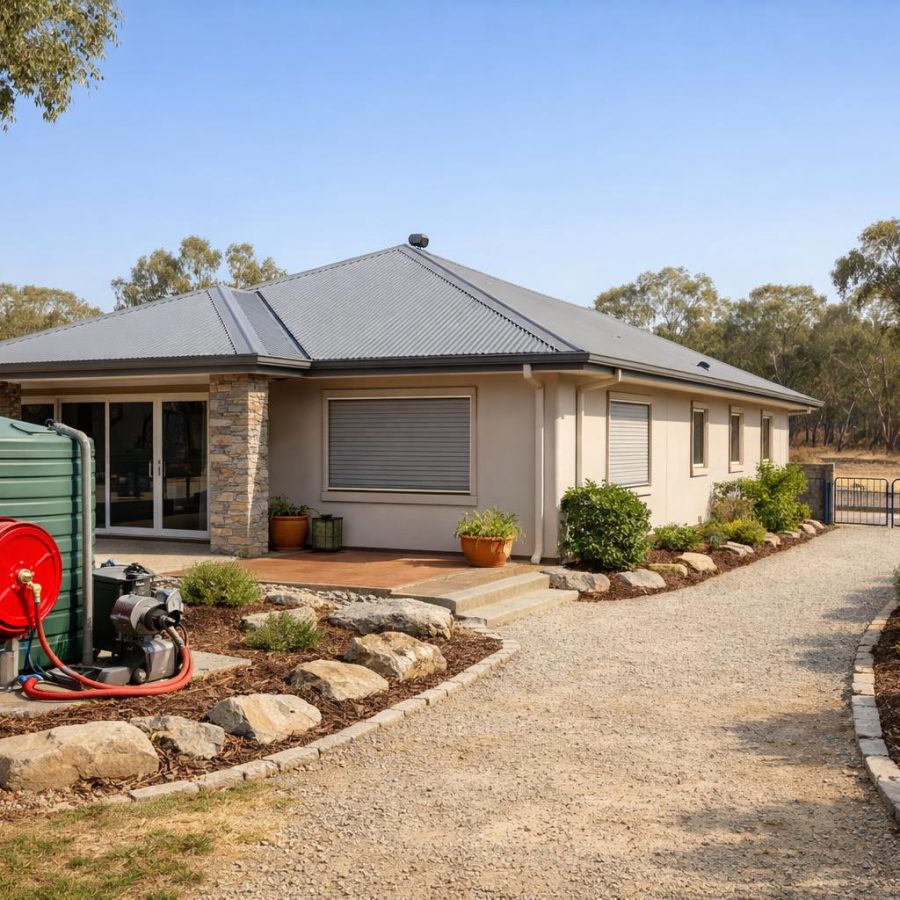
A well-prepared home is more likely to survive bushfire or ember attack, even if your plan is to leave early. Property preparation may also reduce risk to neighbours and make the site safer for firefighters.
Readiness checks
- Grass, leaves, twigs and fine fuels are managed around buildings.
- Gutters are clear where it is safe to clean them.
- Overhanging vegetation and combustible storage near buildings have been reviewed.
- Obvious gaps, damaged roof areas, doors and screens have been maintained.
- Driveways, gates and property identification are usable.
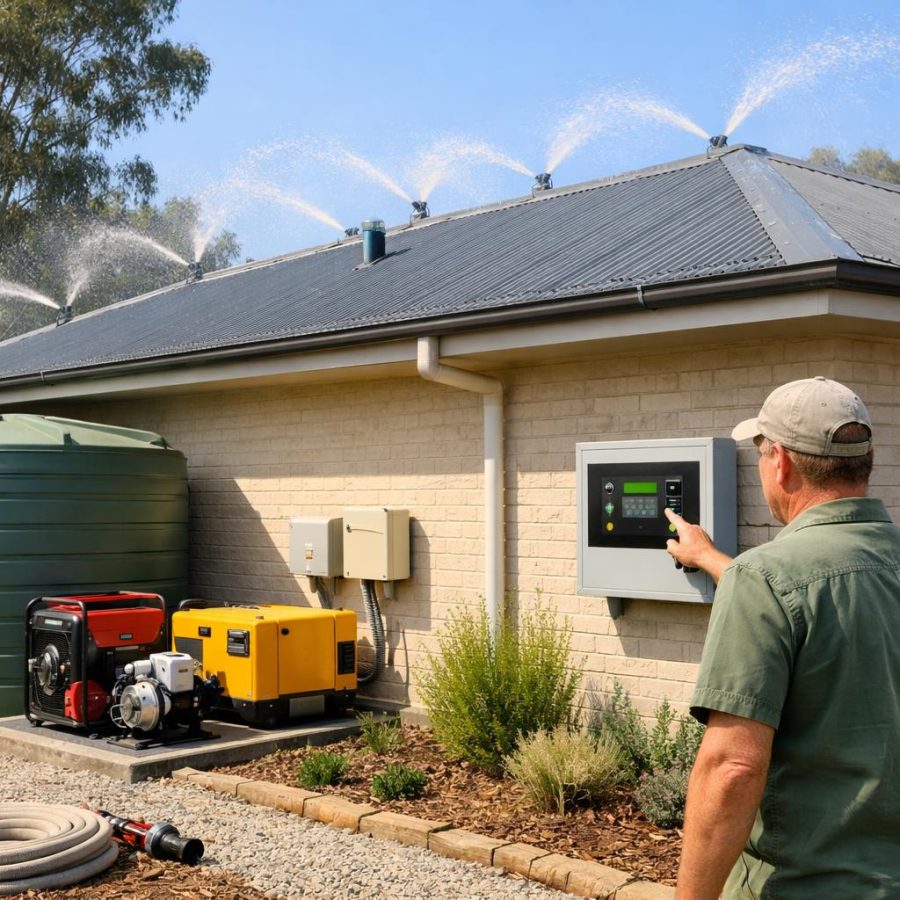
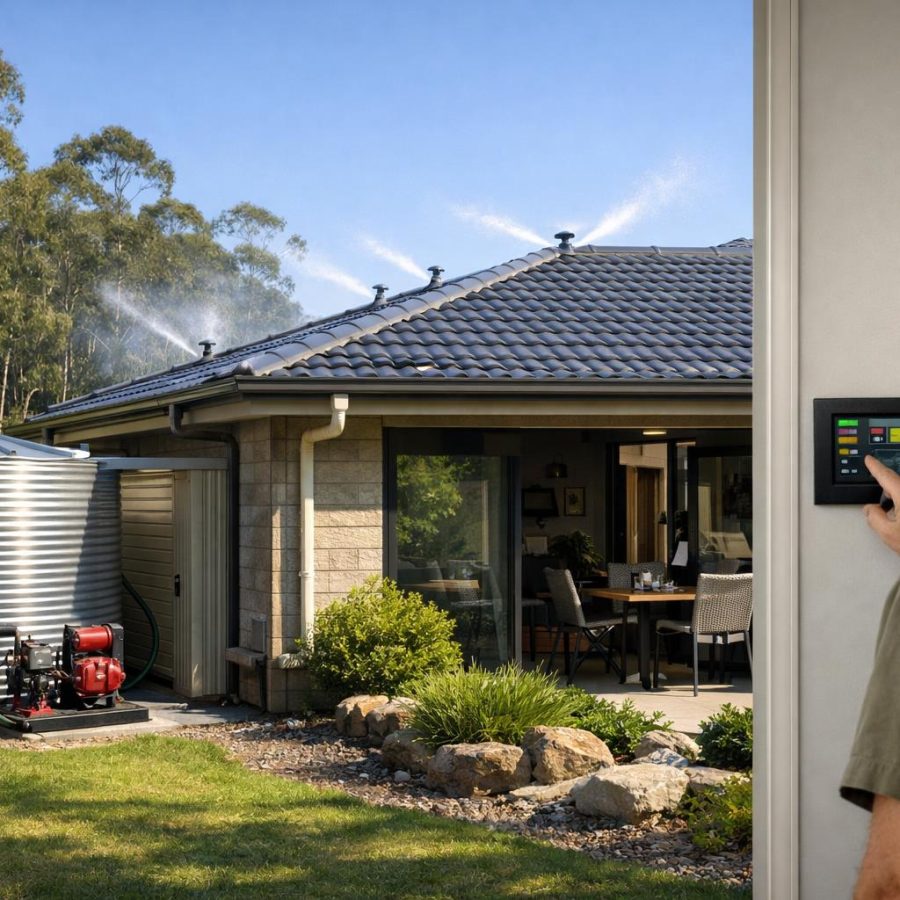
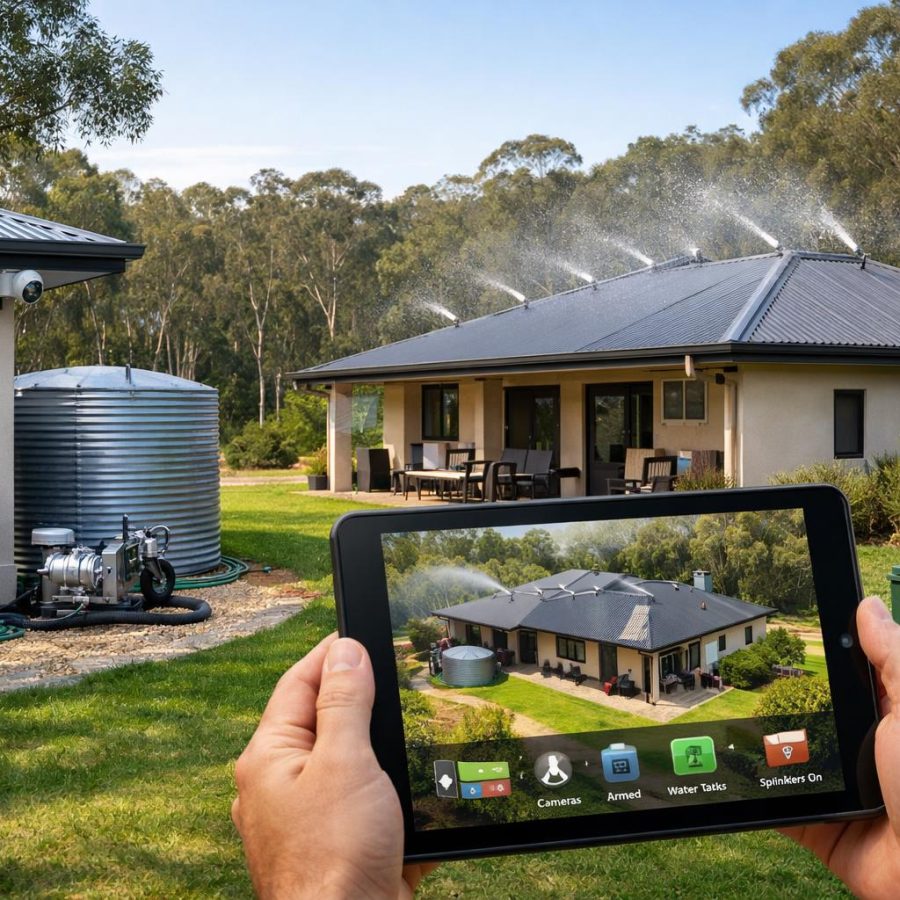
- Hoses, pumps and water supplies used in the property plan are maintained.
- Insurance and important property records are current and accessible.
There is no universal Australian rule that every property should simply clear vegetation for a fixed distance such as 20 metres. Vegetation management and defendable-space requirements depend on location, planning controls, property layout, vegetation and applicable state and local rules.
If you are building, renovating or undertaking major bushfire-resilience work, use current planning and building requirements and seek appropriately qualified advice where needed.
Audit 4 — Emergency kit and communications
NSW RFS currently recommends keeping an emergency survival kit in an easy-to-reach location. Its checklist includes a portable radio, torch, spare batteries, first aid, emergency contacts and a waterproof bag for valuables, with medicines, phone and charger, documents, clothing and drinking water added before leaving.
Readiness checks
- Regular medicines and prescriptions are current.
- We have a primary torch, spare power or batteries and a portable radio.
- Phones, charging cables and a charged power bank are ready.
- Identification, insurance and important contacts are available offline as well as digitally where practical.
- Drinking water, suitable food, clothing and sturdy footwear are ready for the planned destination.
- First-aid supplies are complete and people know where they are.
- The kit is stored somewhere everyone can reach quickly.
Optional secondary light — affiliate example
A small clip-on light can be useful as a secondary hands-free light when checking a kit, loading a vehicle or dealing with a power outage. The current Olight data feed supplied to FireRescue lists the Olight Oclip Pro compact clip light, which offers spotlight, floodlight and red-light modes and can be clipped, hung or magnetically attached.
Important: this is an optional convenience item, not required bushfire equipment and not a replacement for the primary torch and spare power recommended in official emergency-kit guidance. FireRescue may earn a commission if you purchase through the link, at no extra cost to you.
Do not rely on one warning channel
Use the official emergency website or app for your jurisdiction, local radio and other authorised channels. Mobile service and mains power can fail. A written list of important numbers and addresses is still useful.
Audit 5 — Backup plans and last-resort thinking
Bushfire plans fail for ordinary reasons: a car will not start, somebody becomes ill, a road is closed, the power is off, an animal will not load or preparation takes longer than expected. CFA recommends having multiple backup plans because those failures can remove options quickly.
Readiness checks
- We have considered an alternative route if our normal road is blocked or dangerous.
- We have a backup transport arrangement.
- We know what to do if we cannot leave when originally planned.
- We understand local last-resort options and do not confuse them with a planned safe destination.
- Critical devices have a realistic backup-power arrangement where needed.
- Everyone understands that conditions may force the plan to change.
If you become trapped and it is too late to leave safely, sheltering in a suitable building may reduce immediate exposure compared with being caught outside. But CFA describes this as a last resort. It is not a substitute for planning to leave early.
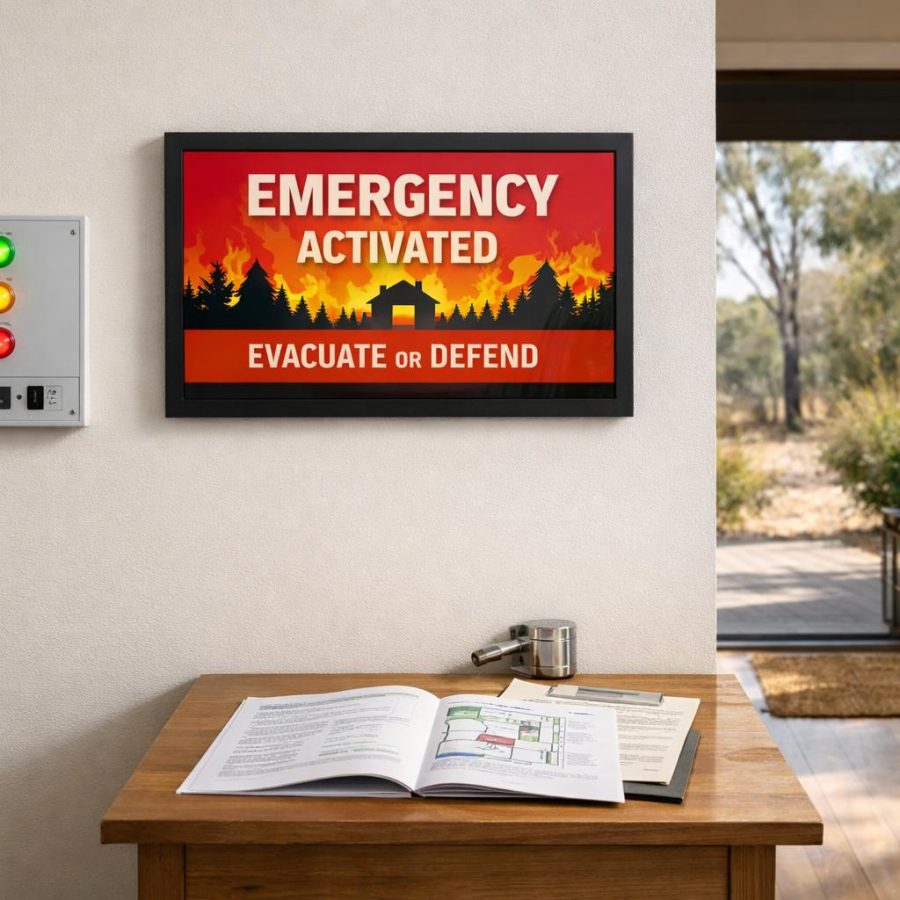
What about staying to defend?
Staying to actively defend a property is physically and mentally demanding and can result in serious injury, trauma or death. CFA says to never plan to defend a property on Catastrophic days and to think very carefully about any defence plan on Extreme days.
Current CFA guidance for people planning to defend also calls for substantial preparation, including at least two fit and determined adults, significant water, protected firefighting equipment, hoses and protective clothing. These requirements show why buying a pump or hose does not by itself make a stay-and-defend plan safe.
This article does not provide household firefighting tactics. Anyone considering active defence must use their own state or territory fire-service guidance and assess the property, people, equipment, water and conditions realistically.
First aid, smoke and health
Burns: current Australian health guidance says to cool a burn under cool running water for at least 20 minutes. Do not apply ice, creams or lotions. Serious burns require urgent medical care; call Triple Zero (000) when appropriate.
Smoke: avoiding smoke is more protective than relying on a mask. A correctly fitted P2 or N95 respirator can reduce exposure to fine particles in some circumstances, but it does not protect against radiant heat, flames or all gases and does not make a fire environment safe.
People with heart or lung conditions, pregnant people, children, older people and others at greater risk from smoke should follow current health advice and seek medical assistance if symptoms develop.
The five gaps I would fix first
- No clear leave trigger: decide before the fire season what conditions make you leave.
- No transport backup: solve this before a dangerous day, especially for anyone who cannot drive independently.
- Medication not ready: keep essential medicines and prescriptions current and portable.
- Only one route or warning source: build redundancy into movement and communications.
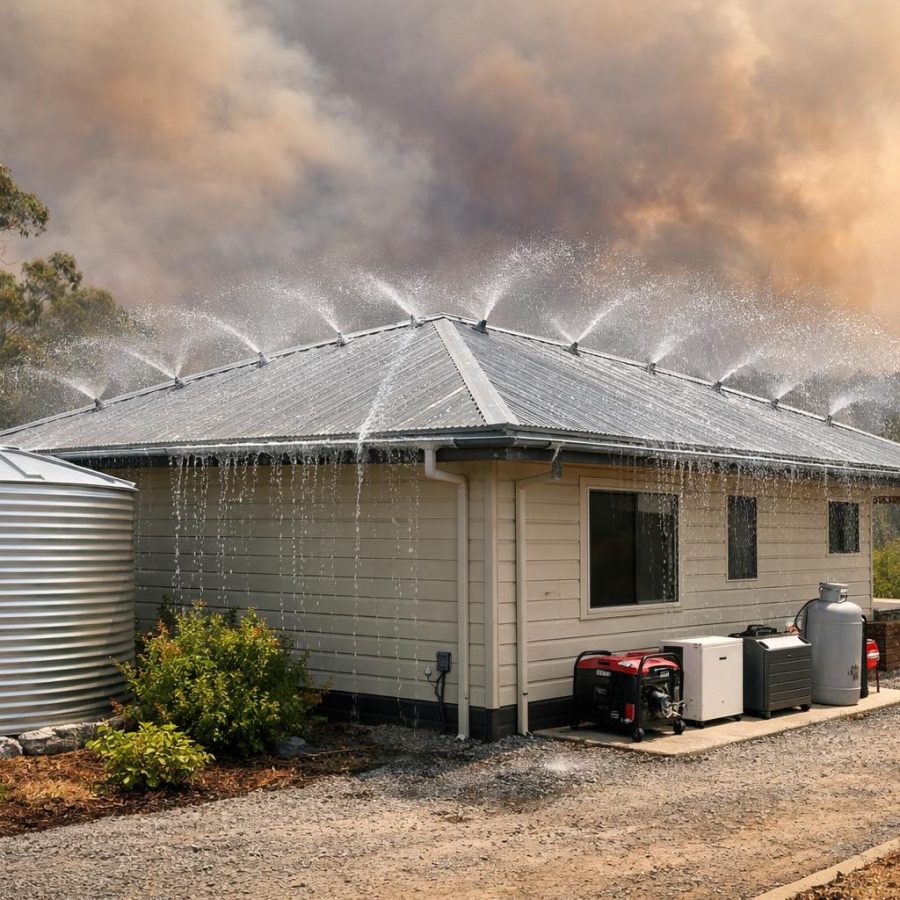
- Property plan depends on firefighting equipment: equipment can fail; your life-safety plan must not depend on a pump, hose or sprinkler working.
For firefighters and emergency-service readers
Public preparedness advice and operational firefighting doctrine should stay separate. Firefighters should follow agency training, tasking, communications, PPE/PPC requirements and incident command arrangements rather than using household guidance as an operational procedure.
From a community-education perspective, the readiness-audit approach can be useful because it exposes practical barriers—transport, medication, pet handling, route assumptions and communication failures—that may otherwise remain hidden until a dangerous day.
Frequently asked questions
Does completing every check mean my home is safe?
No. This is a preparedness audit, not a safety rating or survival guarantee. Bushfire behaviour can exceed property defences and conditions can change rapidly.
Should I wait for a Watch and Act before leaving?
No. Your leave trigger should be decided beforehand. Official warnings are important, but they should not be the only thing that causes you to act.
Do I need three days of supplies?
Your kit should match where you are going and how long services may be disrupted. CFA currently advises people leaving early to take supplies for three days, while NSW RFS recommends at least three litres of drinking water per person per day in its emergency-kit guidance.
Is a generator or portable power station essential?
No. Backup power can be valuable for specific needs, particularly medical or communications equipment, but it introduces cost, capacity and safety considerations. Size and use it for a defined need rather than buying one simply because it appears on an emergency-products list.
How often should I repeat the audit?
At least before each major fire season and whenever your household, health, transport, pets, property, medication or local warning arrangements change.
Practical next steps
- Work through the five audit areas with everyone in the household.
- Fix every item marked Not Checked before spending time on low-priority upgrades.
- Practise loading people, pets and the emergency kit into the vehicle.
- Check the property and access before the hottest part of the season.
- Save your jurisdiction’s official warning source and local ABC frequency.
- Repeat the audit after any major change in your household or property.
Related FireRescue guides
- How to Prepare for a Bushfire: Practical Guide for Australians
- 72-Hour Emergency Kit Australia Guide
- Disability-Inclusive Emergency Plans
Conclusion
Bushfire preparedness is not a one-off job and it is not measured by how much equipment you own. It is measured by whether the people, decisions, transport, property, communications and backup arrangements in your plan can actually work when conditions deteriorate.
Use this audit to find the weak links, fix the most important ones first and then return to your state or territory fire service for the current local guidance that applies to your area.
Official sources checked
- Australian Fire Danger Rating System — current national rating levels
- Country Fire Authority Victoria — fire plans, when to leave, backup plans, defending property and last-resort sheltering
- NSW Rural Fire Service — Bush Fire Survival Plan, emergency survival kit and property preparation
- Healthdirect Australia — current burn first-aid guidance
- Better Health Channel Victoria — current bushfire-smoke and aftermath health guidance
- Olight Australia affiliate data feed supplied by FireRescue — optional Oclip Pro product details and affiliate destination
Ken Walker — former Station Officer and fire-service educator with career and volunteer firefighting experience.
This article provides general educational information for an Australian audience. It does not replace site-specific professional advice, agency procedures or current directions from emergency authorities. The readiness audit is not a safety rating or guarantee. Conditions can change rapidly. During an emergency, follow official warnings and directions.
Corrections and field experience: FireRescue Training Hub welcomes source-backed corrections and useful community or operational experience that improves this audit. Current official guidance always takes priority.
FireRescue Training Hub
Access practical fire and emergency study support resources, downloads, checklists, audio guides, and member-only course content.
- Course library
- PDF downloads
- Audio guides
- Checklists
Study support only. Not accredited training or a replacement for workplace procedures.
About the author and safety review
Ken Walker
Former Station Officer and fire service educator
Former career firefighter with extensive career and volunteer fire service experience.
Qualifications: Associate Diploma of Applied Science in Fire Technology; Institute of Fire Engineers studies.
Author profilehttps://www.firerescue.com.au/about-us/