FIRE SAFETY INSIGHT
Mass timber is gaining popularity in Australian construction for its sustainability and structural benefits. Understanding its fire performance is vital for emergency responders and building managers. Research shows that properly designed mass timber forms char layers that protect inner wood, slowing fire spread.
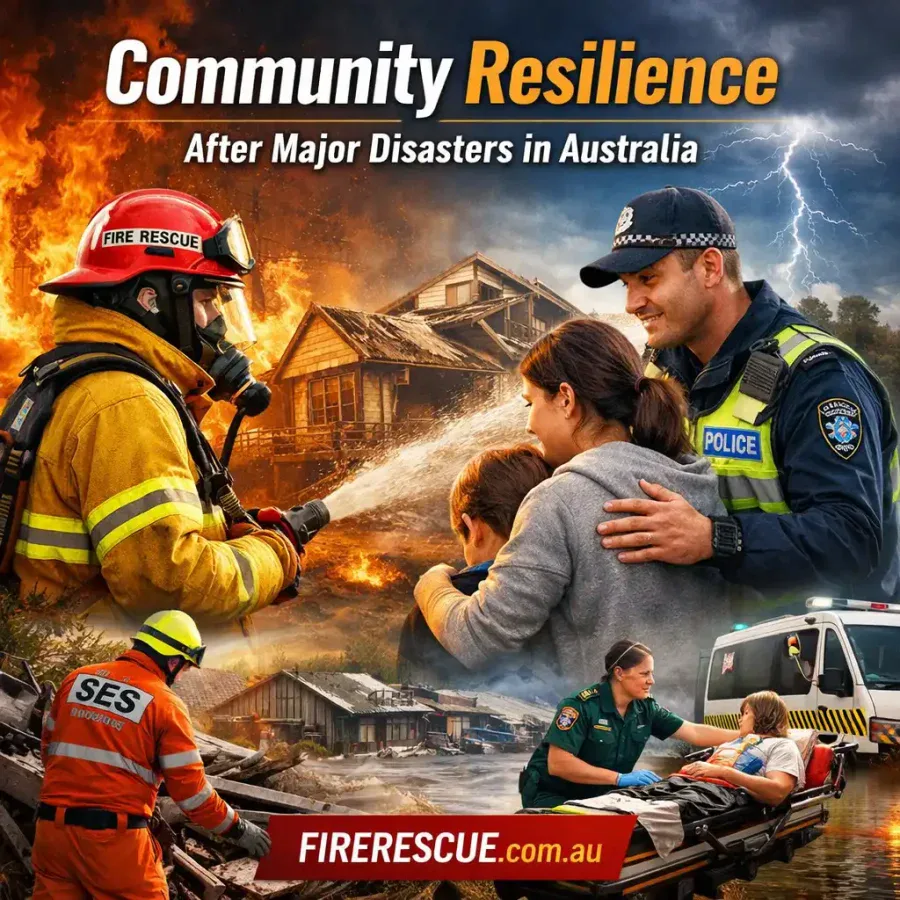
Effective emergency planning must consider the unique behaviour of mass timber in fires. This includes recognising its strength retention under fire and ensuring clear communication between Fire/Rescue, Police, SES, and Ambulance services. Always call 000 for life-threatening emergencies.
Mass Timber Fire Safety Guide
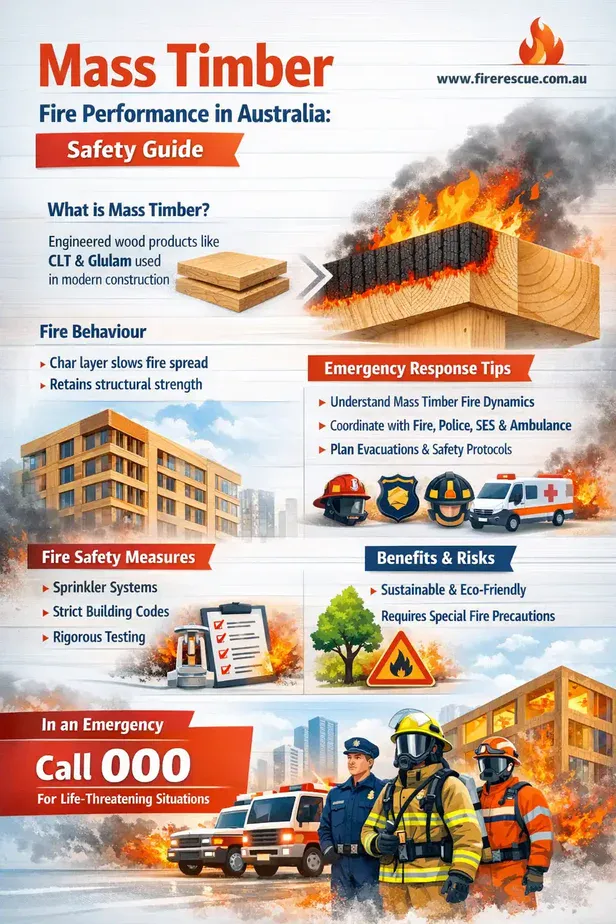
Download this clean, practical PDF guide covering how mass timber performs in fire, what building managers should know, and the key safety points for emergency planning in Australia.
What is Mass Timber and Why Does Fire Performance Matter?
Mass timber refers to structural wood products made by bonding several layers of timber together. Common types include cross-laminated timber (CLT), glue-laminated timber (glulam), and nail-laminated timber. These engineered wood products provide strong, versatile building options, often used in multi-storey buildings and large public structures.
Fire performance of mass timber is critical because timber is combustible by nature. However, the thick layers and large sections of mass timber behave differently from light-frame timber framing. When exposed to fire, the surface chars and forms a protective layer that slows further burning, maintaining structural integrity longer than expected.
This property means mass timber buildings can meet Australian fire safety codes if properly designed and constructed. But a clear understanding of fire risks, response tactics, and evacuation procedures is necessary for safety and effective emergency management.
Moreover, the environmental benefits of mass timber, such as carbon sequestration and reduced embodied energy compared to steel and concrete, make it an attractive building material. However, these sustainability gains must be balanced with rigorous fire safety measures to protect occupants and property. Architects, engineers, and fire safety experts collaborate closely to design mass timber buildings that optimise both performance and safety.
Fire Research and Testing in Australia
Recent fire research in Australia and internationally has expanded our knowledge of mass timber fire performance. Large-scale fire tests simulate real fire conditions to observe how mass timber panels and connections behave under heat and flame. This research helps refine building codes and informs fire service tactics.
Australian standards such as AS 3959 and the National Construction Code include provisions for mass timber, designed to ensure buildings achieve required fire resistance levels. Testing shows that mass timber can meet or exceed these levels when properly protected, sometimes by additional fire-resistant finishes or sprinkler systems.
Firefighters are trained to recognise the differences in fire behaviour with mass timber. These buildings may not develop rapid flashover like lightweight timber structures but can still produce significant heat and smoke. Understanding the fire dynamics of mass timber supports safer, more effective firefighting strategies.
In addition to panel testing, research has focused on the performance of mass timber connections and joints, which are critical for overall structural integrity during a fire. Studies have shown that certain adhesives and mechanical fasteners maintain strength at elevated temperatures longer than others, influencing design decisions. These findings are instrumental in improving fire-resistant detailing in mass timber constructions.
Furthermore, the integration of active fire protection systems such as sprinklers has been extensively evaluated. Sprinkler systems can significantly reduce fire growth and limit damage, complementing the inherent charring protection of mass timber. This combination of passive and active fire protection is becoming the benchmark for safe mass timber building design in Australia.
Operational Considerations for Emergency Responders
Structural Stability and Firefighting
Mass timber’s char layer helps preserve structural strength longer than conventional timber framing, offering firefighters more time to operate safely inside or near the building. However, heavy charring eventually weakens the structure, and collapse remains a risk. Fire crews must monitor structural conditions continuously during operations.
Ventilation tactics may need to be adapted because mass timber buildings can produce dense smoke that impacts visibility and breathing. Coordinated communication with incident controllers and adherence to safety protocols are essential. Firefighters should always wear full protective equipment and breathing apparatus.
Firefighting strategies also need to consider the fire load and fuel contribution of mass timber elements. While mass timber chars and protects itself, other combustible materials within the building, such as furnishings and finishes, may accelerate fire development. This complexity requires responders to assess each incident carefully, combining knowledge of mass timber behaviour with situational awareness.
Thermal imaging cameras and structural monitoring tools are increasingly used during mass timber fire incidents to detect hotspots and structural weaknesses early. These technologies assist incident commanders in making informed decisions about entry, evacuation, and firefighting tactics, enhancing responder safety and operational effectiveness.
Emergency Planning and Evacuation
Building owners and managers must ensure fire safety systems such as alarms, sprinklers, and emergency lighting are fully functional and regularly maintained. Evacuation plans should be clear and regularly practised by occupants, including visitors unfamiliar with mass timber buildings.
Local emergency services like Fire/Rescue NSW, Victoria’s CFA, Queensland Fire and Emergency Services, and others rely on accurate building information to prepare pre-incident plans. These plans improve response times and safety during actual emergencies.
Effective emergency planning also involves integrating mass timber-specific training for first responders, emphasising the unique fire behaviour and structural considerations. This training ensures responders can anticipate challenges and apply appropriate tactics swiftly. Collaborative drills involving all emergency agencies strengthen coordination and communication during real incidents.
From a community perspective, raising public awareness about mass timber fire safety contributes to preparedness. Informational campaigns and clear signage within buildings help occupants understand evacuation procedures and the importance of reporting fire hazards promptly.
If You Only Do Five Things
First, understand that mass timber buildings are designed to slow fire spread through charring, but they are still combustible and require respect for fire safety rules.
Second, keep fire safety equipment like sprinklers and alarms in excellent condition, and ensure occupants are familiar with evacuation routes.
Third, in the event of a fire, call 000 immediately to alert Fire/Rescue and other emergency services.
Fourth, follow official advice from fire authorities and emergency warnings. Do not attempt to fight large fires yourself.
Fifth, for responders, always assess structural integrity carefully and use appropriate protective gear when dealing with mass timber fires.
Who Does What in Australia
Fire/Rescue are the primary agency for firefighting and rescue operations, including fires in mass timber buildings. They manage fire suppression and structural safety.
Police provide incident scene control, manage traffic, and coordinate public information during emergencies.
Ambulance delivers medical care and patient transport on-site and to hospitals.
State Emergency Service (SES) supports with tasks like evacuations, storm damage response, and search and rescue, assisting Fire/Rescue as needed.
Summary
Mass timber fire performance is a key consideration in modern Australian building design and emergency response planning. While these materials offer sustainability and strength advantages, they require a clear understanding of their behaviour under fire conditions. Proper design, maintenance, and coordination between emergency services are essential for safety.
Emergency responders benefit from up-to-date knowledge and pre-incident planning to manage mass timber fires effectively. The public should always follow official warnings and call 000 in emergencies. With proper precautions and cooperation, mass timber buildings can be safe, resilient parts of Australia’s built environment.
Looking ahead, the increasing adoption of mass timber in urban development presents ongoing challenges and opportunities for fire safety innovation. Continued research, technological advances in fire detection and suppression, and robust training programs will be crucial to keep pace with evolving building practices. Collaboration across industry, government, and emergency services will ensure that mass timber remains a sustainable and safe choice for Australia’s future infrastructure.