Fire and Emergency Response Insights
Understanding decontamination effectiveness in chemical incidents is vital for protecting lives and property. Fire and rescue teams, alongside police, ambulance, and SES, rely on sound decontamination practices to reduce harm during chemical emergencies.
This article offers practical guidance for Australian responders and the public. It explains how decontamination works, why timing and methods matter, and what roles each agency plays in managing chemical exposures safely.
What is Decontamination in Chemical Incidents?
Decontamination means removing or neutralising hazardous chemicals from people, equipment, or the environment after a chemical spill, leak, or attack. It aims to prevent further injury, contamination, or spread of dangerous substances. In a chemical incident, effective decontamination can be the difference between minor exposure and serious health consequences.
Fire and Rescue NSW and other state agencies train extensively to apply decontamination techniques safely. This includes managing contaminated clothing, skin, and objects, and dealing with gases, liquids, or solids that pose immediate risks.
Beyond the immediate removal of contaminants, decontamination also involves preventing secondary contamination. This means ensuring that chemicals do not transfer from contaminated victims or equipment to responders, other individuals, or clean areas. The protocols in place are designed to maintain strict control over the movement of people and materials within the incident area, minimising the risk of cross-contamination.
Key Factors Influencing Decontamination Effectiveness
Several factors affect how well decontamination works in a chemical incident. Understanding these helps emergency teams and the public respond appropriately.
Type of Chemical Involved
The nature of the chemical—whether it’s acidic, alkaline, oily, volatile, or persistent—determines the best decontamination approach. Some chemicals react badly with water, while others need special absorbents or neutralisers. Firefighters use Material Safety Data Sheets (MSDS) and chemical databases to guide their actions.
For example, hydrofluoric acid requires specialised calcium-based neutralisers, whereas substances like chlorine gas may need ventilation and respiratory protection rather than water-based cleansing. Understanding the chemical’s physical state—gas, liquid, or solid—also influences response tactics, as gases can disperse rapidly and solids may adhere strongly to surfaces.
Timing of Decontamination
Removing contaminants quickly after exposure reduces harm significantly. Delays can allow chemicals to penetrate skin or clothing, causing deeper injury or spreading contamination. Emergency responders strive to start decontamination as soon as it is safe to do so.
In some cases, the window for effective decontamination can be very narrow. Early intervention can prevent chemicals from binding to tissues or being absorbed into the bloodstream, which is critical for reducing toxic effects. Conversely, prolonged exposure before decontamination increases the risk of systemic poisoning and long-term health problems.
Method Used
Decontamination methods include dry removal, water rinsing, chemical neutralisation, and specialised foam or absorbents. The chosen method depends on the chemical’s properties and the incident conditions. For example, water is often the first choice but may not suit all substances.
Dry decontamination, such as brushing off powders or using absorbent materials, is preferred when water could exacerbate the hazard. In contrast, aqueous solutions can dilute or wash away many soluble chemicals effectively. Chemical neutralisation involves applying agents that chemically react with the contaminant to render it harmless, a technique often used for acids or bases.
Specialised foams can encapsulate and contain volatile chemicals, reducing vapour release and exposure risk. These advanced methods require precise knowledge and equipment, highlighting the importance of trained personnel and proper resources on scene.
Training and Equipment of Responders
Fire and Rescue teams across Australia receive training in chemical hazard response and use personal protective equipment (PPE) suitable for the situation. Proper PPE protects responders and allows safe, effective decontamination. Without correct gear or training, decontamination risks can increase.
Training also covers incident command systems, hazard identification, and communication protocols, ensuring responders can coordinate efficiently during complex chemical emergencies. Equipment ranges from chemical-resistant suits and gloves to decontamination showers, containment barriers, and detection devices that identify hazardous substances in real time.
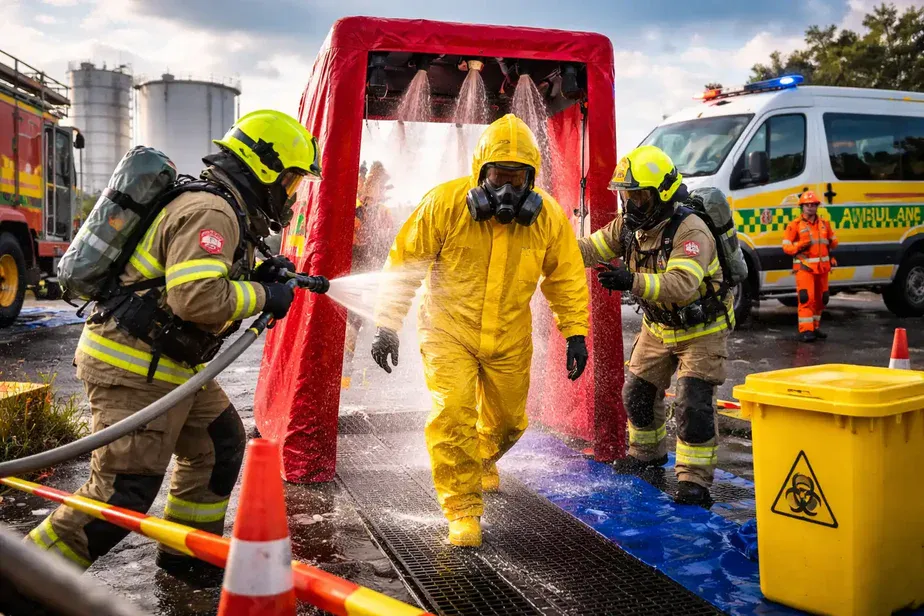
Decontamination Procedures in an Australian Context
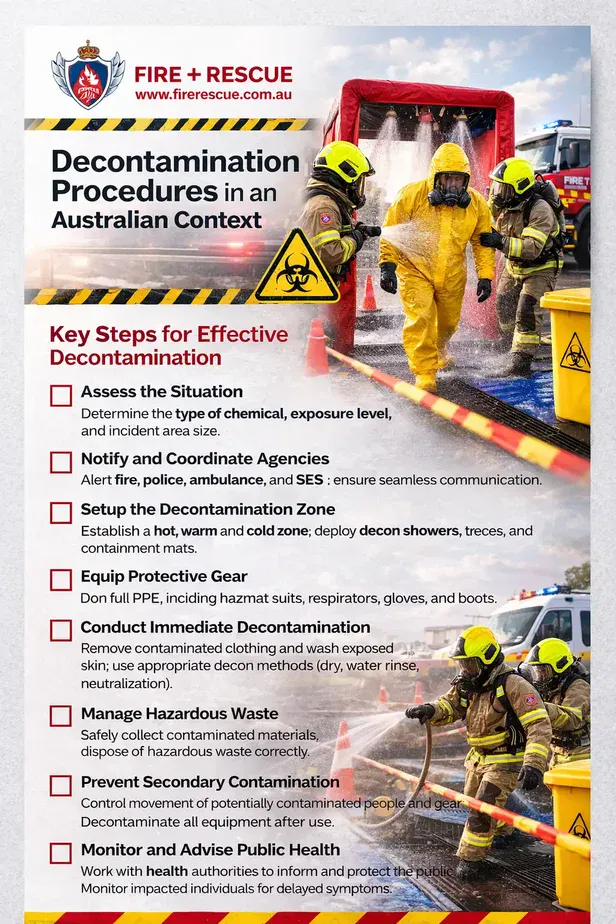
In Australia, chemical incident management involves coordinated efforts between Fire/Rescue services, Police, Ambulance, and the State Emergency Service (SES). Typical decontamination procedures follow clear steps designed to protect both victims and responders.
Fire and Rescue usually lead the on-scene decontamination process. They set up decontamination zones, establish safety perimeters, and perform the initial removal of chemical contaminants. Ambulance paramedics assess and treat affected people, working closely with Fire/Rescue to ensure safe patient handling.
SES teams often assist with managing safety zones, public warnings, and evacuation support. Police handle securing the area and investigating any criminal aspects. This teamwork ensures decontamination is effective and community safety is maintained.
The decontamination process typically involves an initial gross decontamination stage, where large amounts of contaminants are removed quickly, followed by a more thorough secondary decontamination to cleanse remaining residues. These stages are vital to reduce the chemical load on affected individuals and prevent contamination of medical facilities.
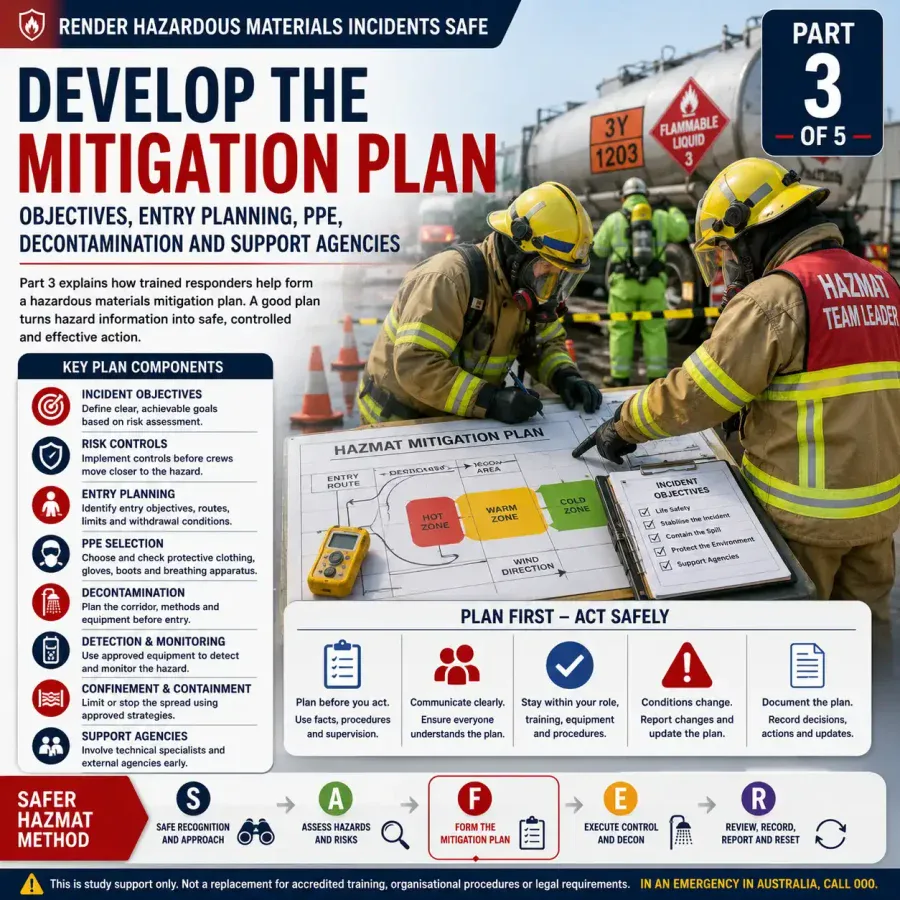
Decontamination zones are carefully designed to separate contaminated, transitional, and clean areas, with clear signage and physical barriers. This zoning prevents cross-contamination and maintains an organised flow of victims and responders. Additionally, waste generated during decontamination is handled as hazardous material and disposed of according to environmental regulations.
Challenges to Decontamination Effectiveness
Real-world chemical incidents present several challenges that can impact decontamination success. These include variable weather conditions such as wind or rain, which can spread chemicals or dilute cleaning agents. Limited water supply or access to contaminated zones may also slow response times.
Another challenge is the unpredictability of chemical mixtures, where compounds combine and react unexpectedly. Responders must remain vigilant and adaptable, continuously monitoring air quality and chemical levels with specialised detection equipment.
Additionally, psychological stress on victims and responders can complicate decontamination. Panic or confusion may hinder cooperation, while responders must manage their own safety concerns. Effective communication, clear instructions, and mental health support are integral to overcoming these barriers.
Environmental factors, such as terrain and urban infrastructure, can also affect decontamination logistics. Remote locations may lack immediate access to equipment or water supplies, requiring alternative plans and resourcefulness. Urban settings might present challenges related to population density and infrastructure complexity, necessitating rapid coordination and public information management.
If You Only Do Five Things in a Chemical Incident
First, call 000 immediately if there are life-threatening injuries or if you suspect dangerous exposure. Provide clear information about the incident location and nature.
Second, move away from the source of the chemical if it is safe to do so, and avoid contact with any spills or vapours.
Third, remove contaminated clothing carefully to prevent chemical spread, and rinse exposed skin with clean water for at least 15 minutes, following official emergency instructions.
Fourth, wait for trained responders to arrive and follow their instructions exactly, including moving to designated decontamination zones if instructed.
Fifth, do not attempt to clean chemicals using solvents or home remedies, as this can worsen exposure. Always rely on professional decontamination and medical treatment.
Who Does What in Australia
Police secure the scene, manage public safety, and investigate.
Ambulance paramedics provide emergency medical care and patient transport.
SES supports with logistics, community warnings, and evacuation assistance.
Together, these agencies form a coordinated response to chemical emergencies.
Decontamination effectiveness in chemical incidents depends on quick, informed action and teamwork. By understanding basic principles and following official advice, Australian communities can reduce risks and support emergency responders in keeping everyone safe.
Continued investment in training, equipment upgrades, and inter-agency exercises ensures that Australia remains prepared for chemical emergencies. Public education campaigns also play a crucial role in raising awareness about chemical hazards and appropriate responses, empowering individuals to act safely and confidently.
Looking ahead, advances in technology such as drone reconnaissance, real-time chemical sensors, and improved decontamination materials promise to enhance response capabilities further. However, the foundation of effective decontamination will always rest on sound procedures, well-trained personnel, and community cooperation.
FireRescue Training Hub
Access practical fire and emergency study support resources, downloads, checklists, audio guides, and member-only course content.
- Course library
- PDF downloads
- Audio guides
- Checklists
Study support only. Not accredited training or a replacement for workplace procedures.
About the author and safety review
Ken Walker
Former Station Officer and fire service educator
Former career firefighter with extensive career and volunteer fire service experience.
Qualifications: Associate Diploma of Applied Science in Fire Technology; Institute of Fire Engineers studies.
Author profilehttps://www.firerescue.com.au/about-us/