
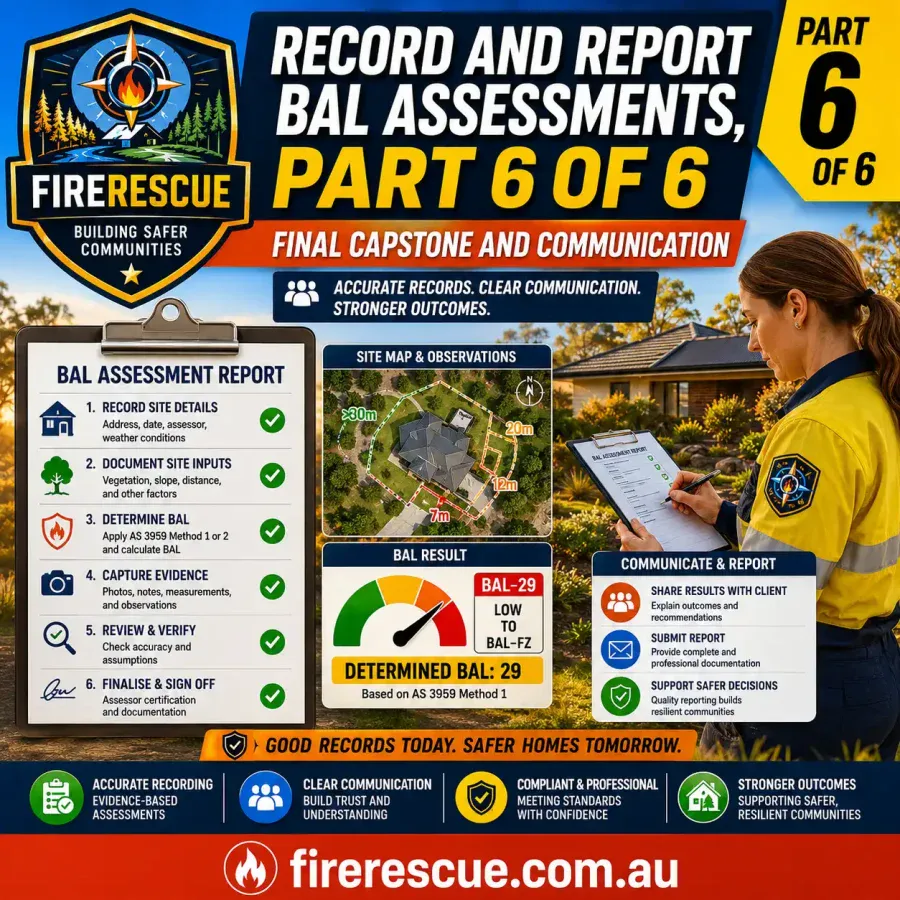
Record and Report BAL Assessments, Part 6 of 6.
Part 6 explains how to record and report BAL assessments, communicate findings clearly and complete the final capstone process.
Home Bushfire Attack Level (BAL) assessment
0 posts in this category.
Part 6 explains how to record and report BAL assessments, communicate findings clearly and complete the final capstone process.
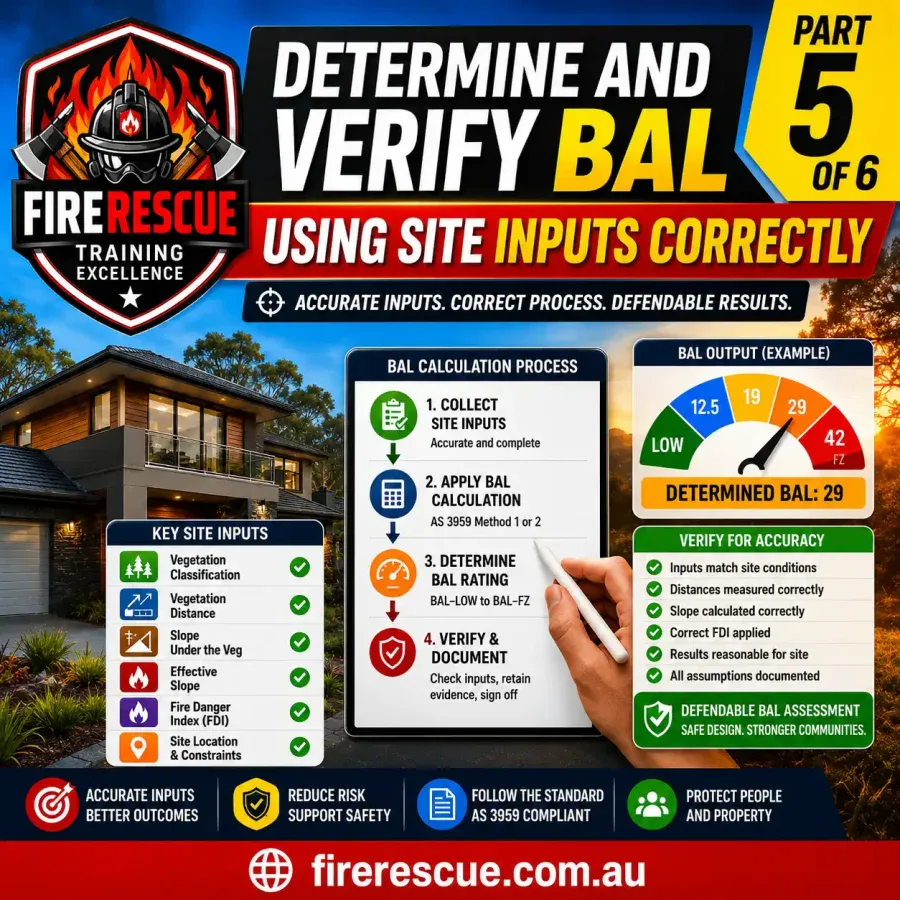
Part 5 explains how to determine and verify BAL using fire danger inputs, vegetation classification, distance, slope and clear assessment checks.
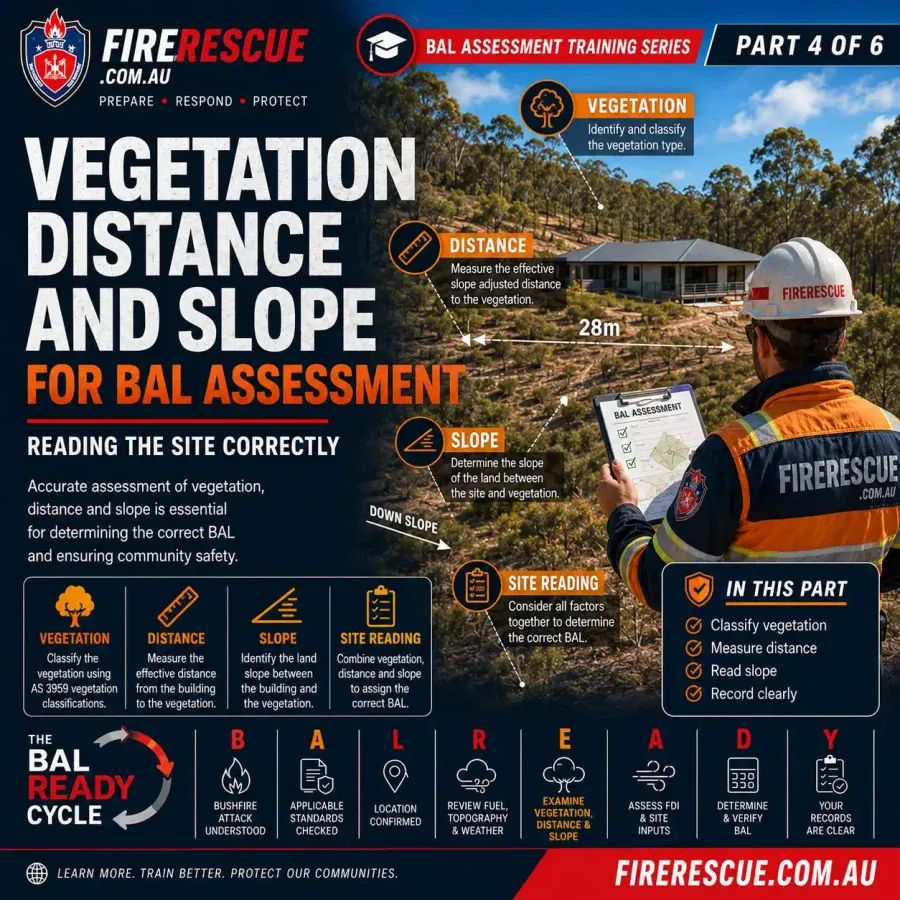
Part 4 explains vegetation distance and slope for BAL assessment, including classification, vegetation type, height, exclusions, site measurement and clear records.
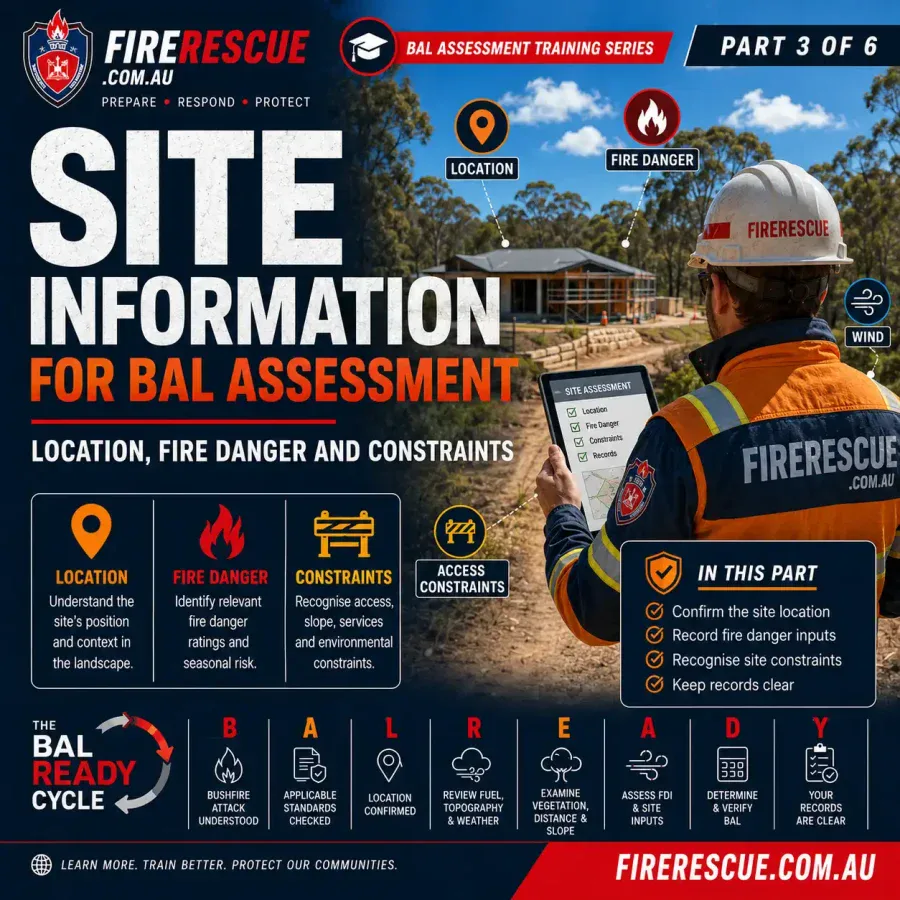
Part 3 explains how to gather site information for BAL assessment, including site location, Fire Danger Index or wind speed, constraints, limitations…
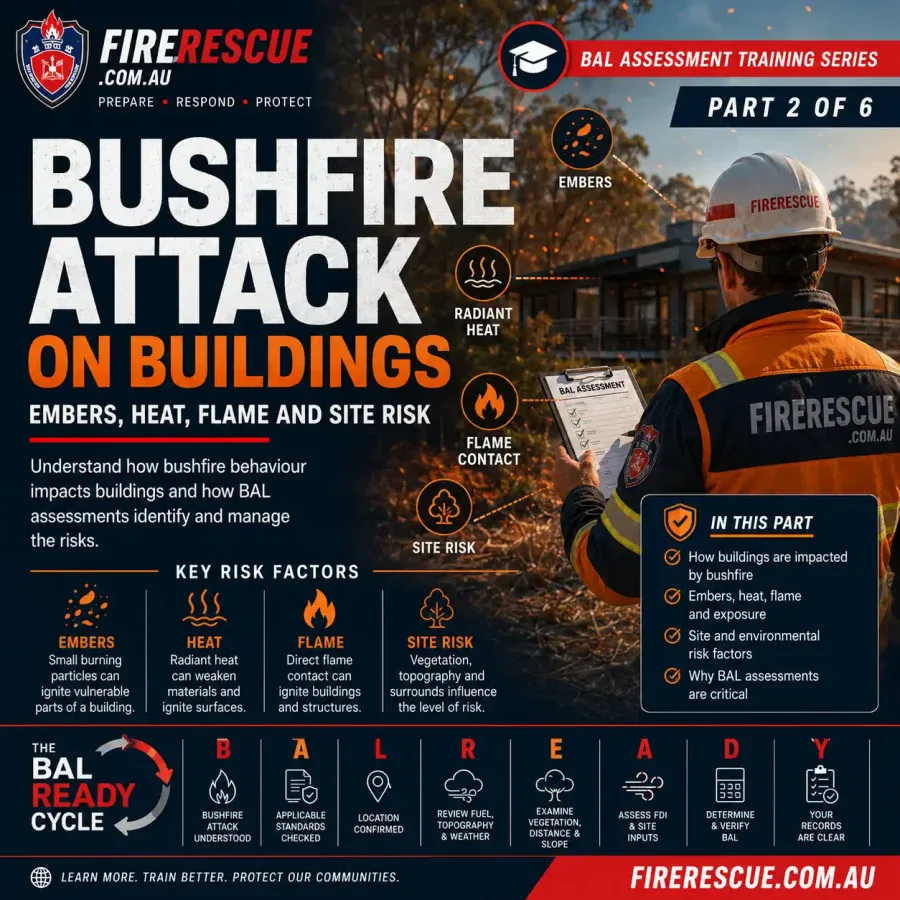
Part 2 explains how bushfire attack on buildings can occur through embers, radiant heat, flame contact, fuel, topography, weather and nearby sources…
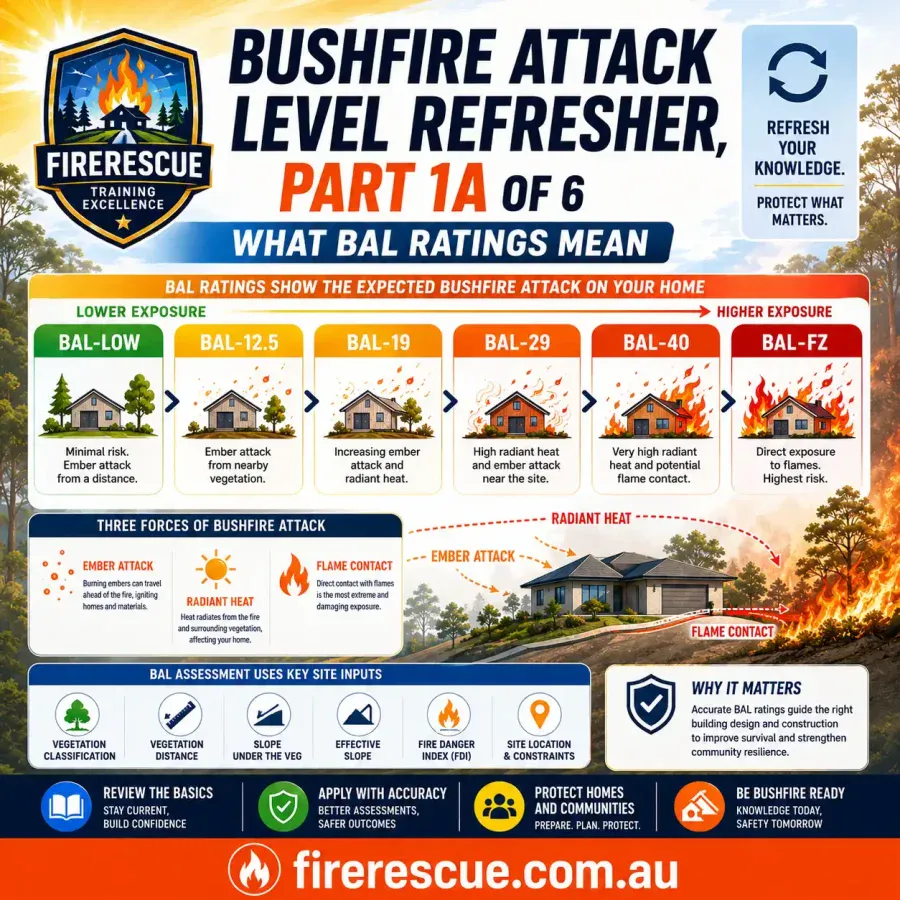
Part 1A explains what BAL ratings mean, how they work, and why vegetation, distance, slope and fire danger inputs matter.
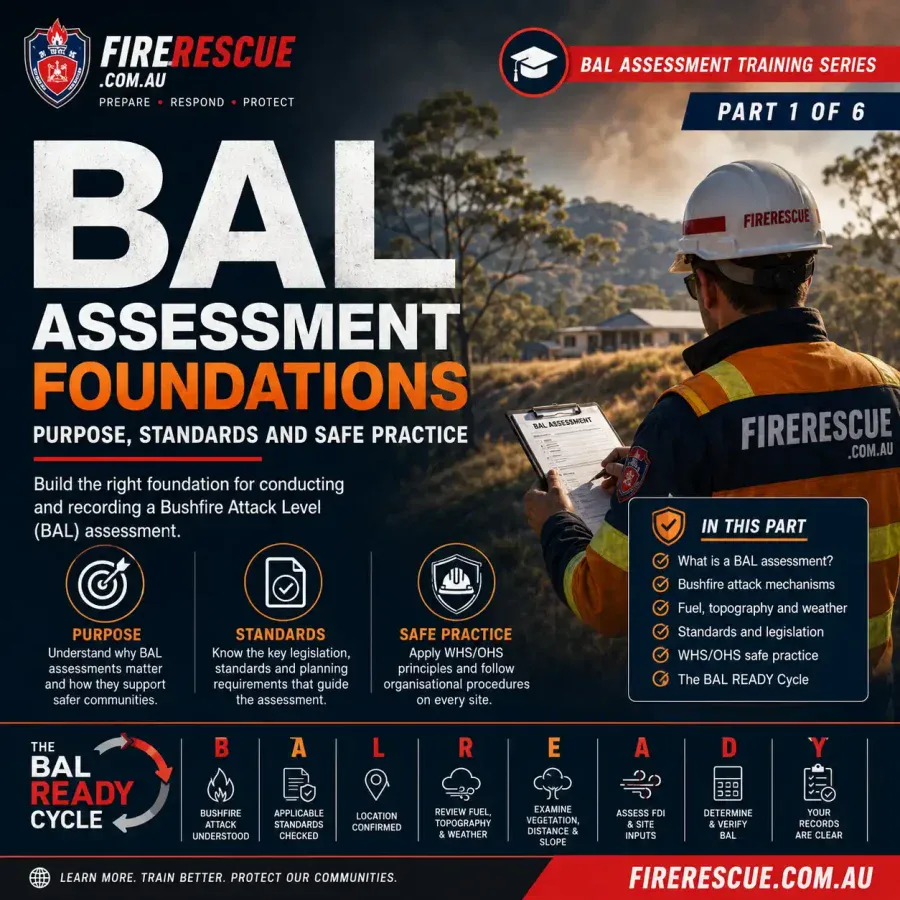
Learn the foundations of conducting and recording a Bushfire Attack Level assessment, including purpose, standards, WHS/OHS, bushfire attack mechanisms and safe site…