Emergency Preparedness
How to Prepare Your Home and Family for Emergencies in Australia
Emergencies can happen at any time, whether it’s a bushfire, storm, or a household accident. Being prepared helps protect your family, property, and peace of mind. This guide offers practical steps for Australian households to improve fire safety, basic first aid readiness, and overall emergency management.
Key takeaways
Start by making a simple emergency plan for your household and know what to do if a fire or other disaster occurs. Prepare a basic emergency kit with water, food, and first aid supplies and keep it accessible.
Understand the roles of Australia’s emergency services: call 000 in any emergency and know when to ask for Fire/Rescue, Police, Ambulance, or the State Emergency Service (SES).
Regularly check smoke alarms, clear bushfire hazards around your home, and encourage all family members to complete formal first aid training for confidence in crisis situations.
Why Emergency Preparedness Matters
Natural disasters like bushfires, floods, and storms affect many Australian communities every year. Household fires and accidents also pose significant risks. Being ready reduces the chance of injury, property loss, and stress during these events. Preparation means understanding hazards, creating plans, and having essential supplies on hand.
Emergency services work tirelessly to protect and assist, but your actions before and during an incident can save lives and help responders focus where they’re most needed. This guide focuses heavily on fire preparedness but also covers broader emergency planning and first aid basics relevant to all Australians.
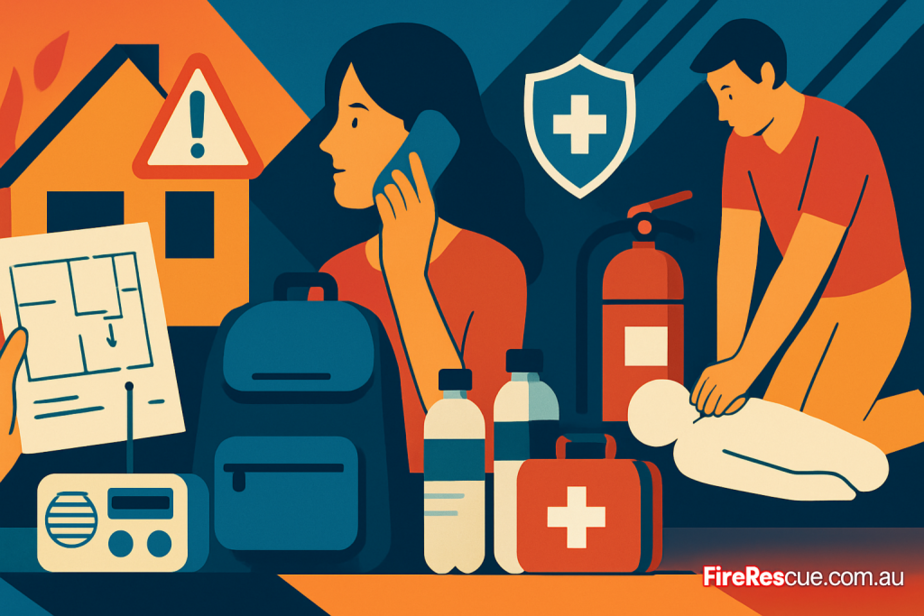
Emergency preparedness is not only about having the right equipment or plans but also about fostering a culture of awareness and resilience within your household. Understanding the nature of risks specific to your region, such as prolonged droughts that increase bushfire risk or coastal flooding due to storms, allows you to tailor your preparations effectively.
Moreover, psychological readiness is equally important. Stress and panic during emergencies can impair decision-making. Regular discussions and drills can help family members remain calm and act decisively when real emergencies occur.
Step 1: Create a Household Emergency Plan
Discuss risks and roles
Gather your family or household members to talk about the types of emergencies most likely in your area. This might include bushfires in rural areas, storms or flooding near waterways, or urban hazards like house fires.
Agree on key roles and responsibilities. Decide who will collect important documents, who will assist children or elderly members, and who handles pets during an evacuation.
It’s also essential to consider the needs of individuals with disabilities or medical conditions. Assign a family member or neighbour to assist them specifically. Include plans for medication management, mobility aids, or communication devices they might require during an emergency.
Australia Preparedness Snapshot
Modern pie chart + readable detail cards for WPCoder
Low national action
Around 10% of people in Australia say they take some form of disaster preparedness action. That leaves a large gap for better household planning.
Hospitalisations
Australia recorded 9,119 extreme-weather injury hospitalisations between July 2012 and June 2022, showing why practical home readiness still matters.
Heat dominates
Extreme heat accounted for 78% of those weather-related injury hospitalisations, making heat planning just as important as fire and storm planning.
First aid gap
Fewer than 5% of Australians are trained in first aid. A basic kit helps, but training gives households a much stronger response in the first critical minutes.
House fire deaths
Fire Rescue Victoria says an average of 18 people lose their lives in house fires in Victoria each year, reinforcing the value of smoke alarms and an escape plan.
Bushfire planning
On Catastrophic bushfire days, the safest option is to leave high-risk areas the night before or early in the morning. Do not wait until conditions worsen.
What this means
This visual shows a clear preparedness pattern: action is possible, but it is still not widespread enough. A modern emergency-ready household should have a simple written plan, working smoke alarms, a grab-and-go emergency kit, basic first aid capability, and a clear decision point for leaving early during severe fire weather. That combination is practical, easy to explain on the page, and highly relevant to Australian households.
Chart note: the pie chart uses an Australian Red Cross preparedness survey snapshot. It is presented here as a preparedness sample view, not a full national household census.
Set communication and meeting plans
Choose a primary and secondary meeting place outside the home and neighbourhood. Make sure all family members know how to contact each other, including an out-of-area contact person in case local mobile networks fail.
Write down important phone numbers, including the emergency services number — 000 — and save them in mobile phones and on a physical list.
In addition, consider using SMS or social media messaging apps that may work even when voice calls are disrupted. Establish a routine check-in time during emergencies to confirm everyone’s safety.
Step 2: Prepare an Emergency Kit
What to include
Your kit should be easy to grab and contain essentials sufficient for at least 72 hours. Pack bottled water, non-perishable food, a torch with fresh batteries, a portable phone charger, and a battery-powered radio. Include copies of identification documents and any necessary medications.
Add basic first aid supplies such as adhesive bandages, sterile dressings, antiseptic wipes, gloves, and pain relief medication. While this kit is not a substitute for formal medical training, it can help manage minor injuries until professional help arrives.
Consider including additional items such as blankets, sturdy shoes, a whistle for signaling, and hygiene supplies like hand sanitiser and sanitary products. If you have infants, pack formula, nappies, and baby food. For pets, include food, water, and any medications they require.
Storage and maintenance
Keep your kit in a clear, waterproof container in a known, accessible location. Review and update it every six months to replace expired items and adjust for seasonal changes or family needs.
Label your kit clearly and inform all household members of its location. If you have multiple residences or frequently travel, consider preparing portable kits for each situation. Regularly check batteries, food expiry dates, and medication supplies to ensure everything remains effective.
Step 3: Fire Safety and Bushfire Readiness
Install and maintain smoke alarms
Smoke alarms save lives by providing early warning of fire. Australian standards require smoke alarms in all homes, ideally interconnected so all alarms sound if one is triggered. Test alarms monthly and replace batteries annually or as needed.
Make sure to install smoke alarms on every level of your home, especially near bedrooms and living areas. Consider using photoelectric smoke alarms, which are more responsive to smouldering fires common in house fires.
Create a defendable space around your home
Clear dry leaves, branches, and other flammable debris from gutters, roof spaces, and around your house. Maintain a green, well-watered garden and remove combustible materials near walls and windows. This reduces the chance of fire spreading to your home.
Regularly prune trees and shrubs to prevent them from touching structures, and consider fire-resistant plants in your landscaping. Ensure that firewood piles and other flammable items are stored at least 10 meters away from your house.
Plan your bushfire survival strategy
Decide if you will stay and defend your home or leave early when there is a bushfire risk. If you stay, be ready with firefighting equipment such as hoses, buckets, and fire retardant. If leaving, do so early to avoid being caught in dangerous conditions.
Monitor official sources like the Bureau of Meteorology and local fire services for warnings and alerts. Always prioritise safety over property.
Develop an evacuation plan that includes multiple routes out of your area, as some roads may be closed during a fire. Practice your evacuation to ensure all household members can leave quickly and safely. Consider what to take with you—prioritise essential documents, medications, emergency kits, and valuables.
Step 4: Basic First Aid Preparation
Get formal first aid training
While keeping a first aid kit is essential, knowing how to use it properly is even more important. Enrol in recognised first aid courses offered by organisations such as St John Ambulance Australia, the Australian Red Cross, or the Australian Resuscitation Council.
These courses teach vital skills such as CPR, managing choking, treating wounds and burns, and recognising signs of medical emergencies like strokes and heart attacks. Having multiple family members trained increases the likelihood of timely and effective assistance during emergencies.
Basic first aid principles
In an emergency, ensure the scene is safe before approaching. Call 000 immediately if someone is seriously injured or unconscious. Provide care only within your level of training. For burns, cool the area with water and cover with a clean dressing. For bleeding, apply firm pressure and elevate if possible.
Remember that first aid is a temporary measure until professional medical help arrives.
It’s also important to familiarise yourself with common emergency scenarios such as asthma attacks, allergic reactions, or heatstroke, which are relevant to Australia’s climate and environment. Knowing how to respond to these conditions can make a critical difference in outcomes.
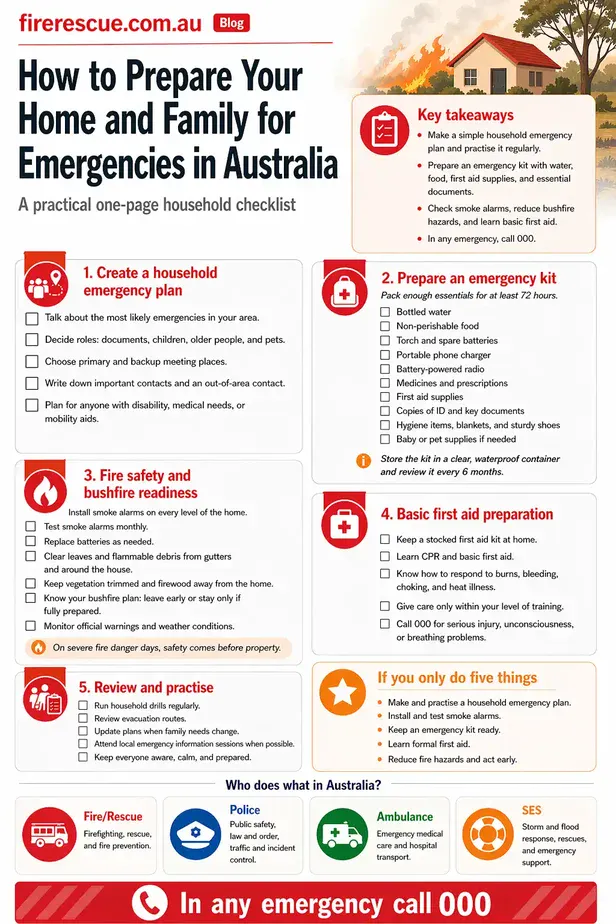
How to Prepare Your Home and Family for Emergencies in Australia
A clean, practical guide covering household emergency planning, emergency kits, smoke alarms, bushfire readiness, first aid basics, and when to call 000.
Prepared for readers who want a straightforward, printable emergency-readiness guide.
Step 5: Regular Review and Community Engagement
Practice your plan
Conduct regular drills with your household to ensure everyone knows what to do and where to go in an emergency. This builds confidence and highlights any gaps in your preparations.
During these drills, simulate different scenarios such as a fire in the kitchen or a sudden storm evacuation. Use these opportunities to review and update your emergency plan as needed.
Engage with local emergency services
Attend community information sessions or open days held by your local Fire/Rescue, Police, Ambulance, or SES units. Understanding their roles and capabilities helps you know when and how to seek assistance.
Volunteering with local emergency services or community groups can deepen your knowledge and contribute to community resilience. These connections can provide valuable support networks before, during, and after emergencies.
If You Only Do Five Things
Make a simple emergency plan with your household and practise it regularly. Know your evacuation routes, safe meeting spots, and keep important phone numbers handy.
Install and maintain smoke alarms in your home, testing them each month and replacing batteries yearly.
Prepare a basic emergency kit with water, food, first aid supplies, and essential documents, and store it where you can access it quickly.
Complete a formal first aid course to better respond to injuries and emergencies with confidence.
Keep your property clear of fire hazards, especially during bushfire season, and monitor official alerts to act early.
Who does what in Australia?
Fire/Rescue services focus on firefighting, rescue operations, and fire prevention education. They respond to bushfires, house fires, vehicle accidents, and other incidents requiring specialised fire and rescue skills.
Police maintain law and order, investigate incidents, and manage public safety during emergencies. They often coordinate traffic and crowd control during major events.
Ambulance provides emergency medical care and transport to hospital. They respond to injuries, medical emergencies, and serious illness.
The State Emergency Service (SES) assists with storm and flood response, road rescues, and emergency support. They often work alongside other emergency services during natural disasters.
In any emergency, always call 000 for immediate assistance and clearly state the nature and location of the incident. Stay calm and follow the instructions provided by emergency operators.
By taking these steps, you not only protect your home and family but also contribute to a safer, more resilient community. Preparedness is a shared responsibility that strengthens our ability to face emergencies together.
FireRescue Training Hub
Access practical fire and emergency study support resources, downloads, checklists, audio guides, and member-only course content.
- Course library
- PDF downloads
- Audio guides
- Checklists
Study support only. Not accredited training or a replacement for workplace procedures.
About the author and safety review
Ken Walker
Former Station Officer and fire service educator
Former career firefighter with extensive career and volunteer fire service experience.
Qualifications: Associate Diploma of Applied Science in Fire Technology; Institute of Fire Engineers studies.
Author profilehttps://www.firerescue.com.au/about-us/