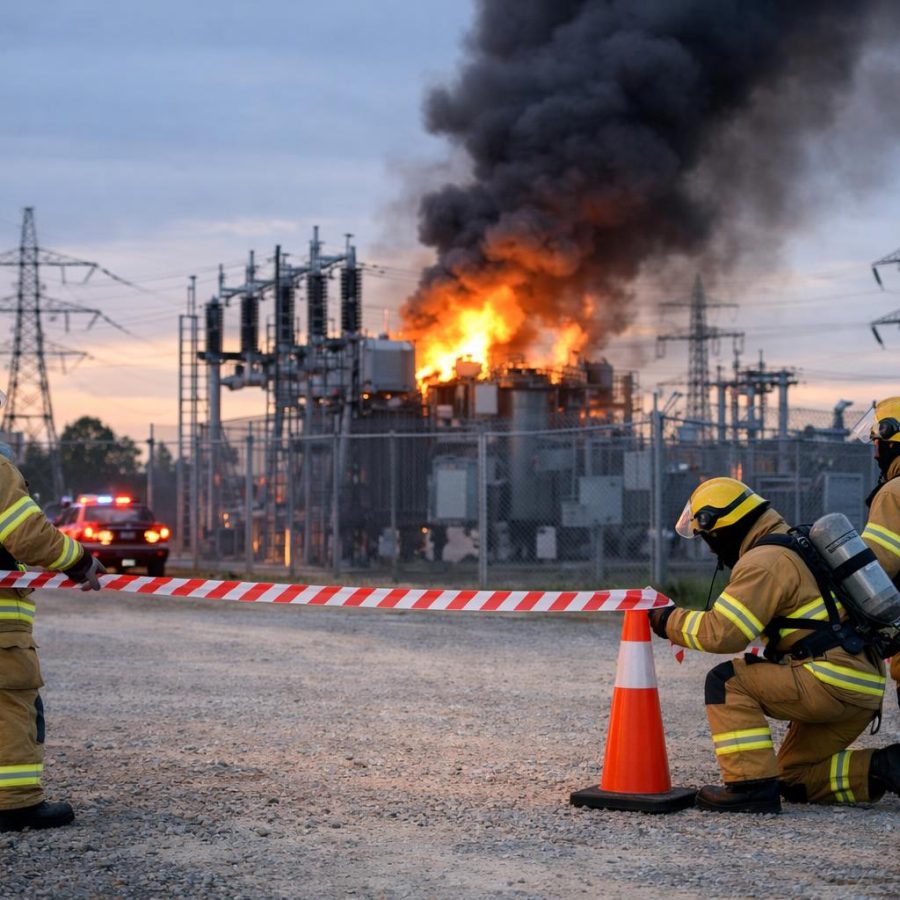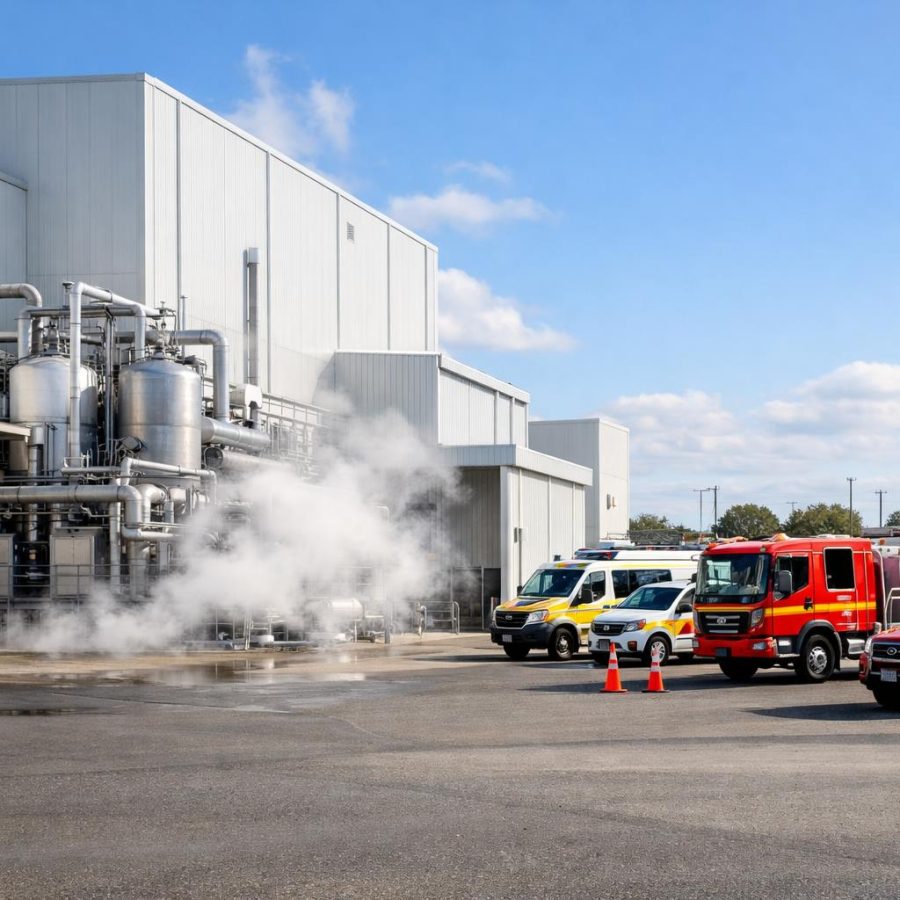
Drones are becoming an essential tool in gathering fireground intelligence, helping firefighters and emergency services understand rapidly changing incidents. They provide an aerial view that improves decision-making, planning, and safety on the fireground.
In Australia, agencies such as Fire and Rescue NSW, Queensland Fire and Emergency Services, and others increasingly use drones alongside traditional methods. These devices aid in managing bushfires, structural fire responses, and complex rescue operations.
This guide explores practical points for drone use in fireground intelligence, including training, planning, and safety, all tailored to the Australian emergency services context.
Drone Fireground Intelligence in Australia
Practical Emergency Guide
- Easy-to-follow practical guide
- Focused on Australian emergency context
- Clear, clean PDF format for quick reading
Clean, practical fire safety content from www.firerescue.com.au.
Understanding Drone Use in Fireground Intelligence
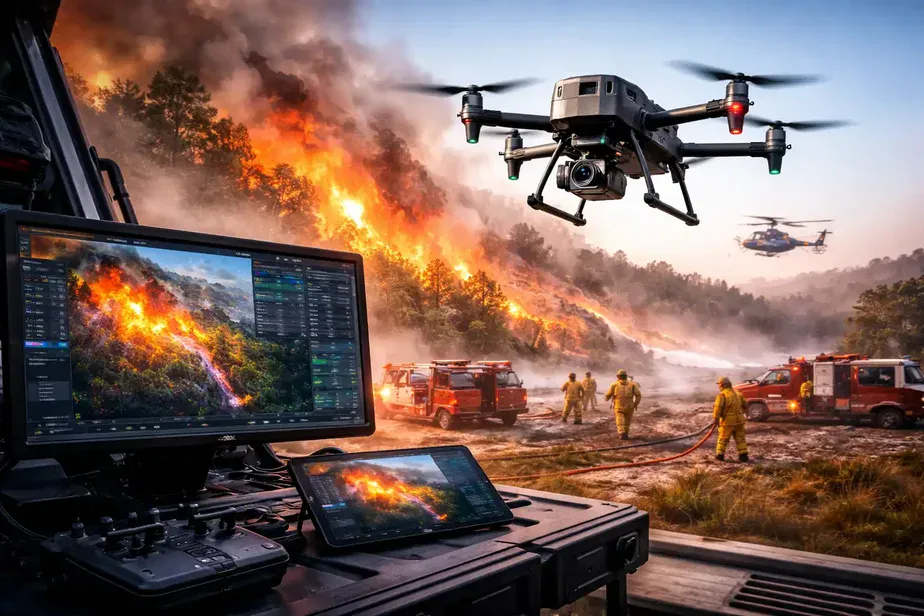
Drones, also called unmanned aerial vehicles (UAVs), provide valuable real-time information from above a fire scene. They can fly over hazardous areas without risking the lives of personnel, giving commanders a clear picture of fire spread, hotspots, and potential hazards. This aerial perspective complements ground observations and enhances situational awareness.
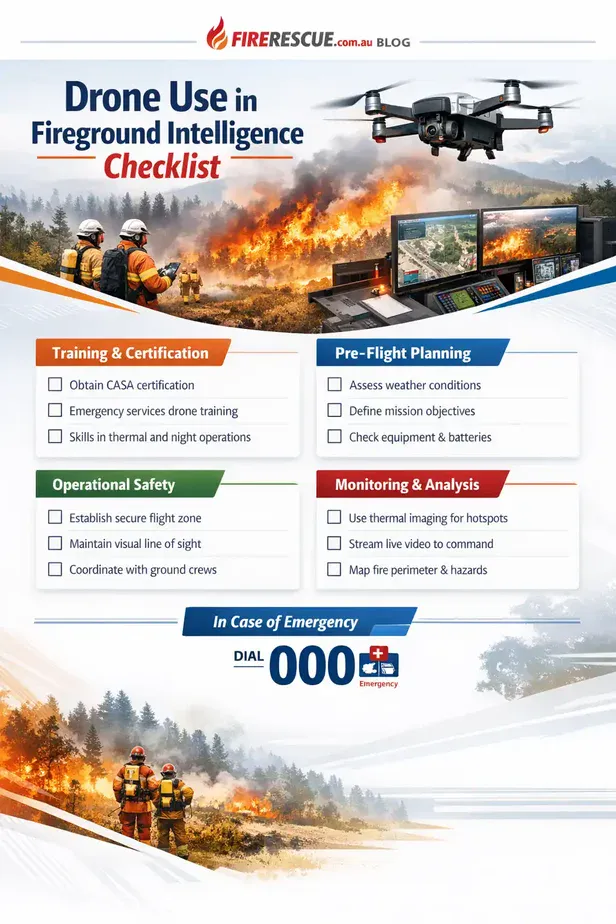
In fireground operations, drones can be equipped with thermal imaging cameras to detect heat sources invisible to the naked eye, revealing hidden embers or trapped individuals. High-definition video feeds streamed live back to command centres enable swift and informed decisions. This capability is particularly crucial during the initial attack phase, where understanding the fire’s behaviour can dictate resource allocation and crew safety.
Moreover, drones can operate in conditions that may be unsafe or inaccessible for ground crews, such as rugged terrain or dense smoke. Their agility allows them to navigate quickly through complex environments, providing a dynamic and evolving picture of the fireground. This adaptability makes them invaluable during rapidly changing incidents, where traditional reconnaissance methods may lag.
The integration of drones into fireground intelligence also fosters enhanced coordination between different emergency units. By relaying live aerial footage, drones help unify the operational picture shared by firefighters, incident commanders, and support teams. This shared situational awareness minimizes misunderstandings and streamlines the deployment of resources, ultimately improving the effectiveness of the response.
Additionally, drones equipped with advanced sensors can map fire perimeters and monitor environmental conditions such as wind speed and direction, which heavily influence fire behaviour. Continuous monitoring through drones allows for quicker adaptation to changing weather and fire dynamics, helping crews anticipate threats and adjust tactics accordingly.
Practical Applications in Australian Emergency Services
Fire and Rescue NSW and similar agencies in Victoria, Queensland, and Western Australia use drones to monitor bushfires, assess damage, and identify risks before crews enter dangerous zones. The State Emergency Service (SES) utilises drones for flood assessments and structural inspections after storms, while Police often deploy drones in search and rescue or crime scene management during emergencies.
Ambulance services benefit indirectly by having clearer access routes and knowing the precise locations of casualties or hazards, which drones help identify. The integration of drones into the broader emergency response increases overall efficiency and safety for all responders.
In addition, drones have been instrumental in post-incident analysis and recovery efforts. After containment, aerial surveys help map the full extent of damage, identify hotspots that may reignite, and assist with environmental impact assessments. This information supports rehabilitation planning and insurance processes, providing a comprehensive record of the incident.
Emerging technologies, such as AI-assisted image analysis, are being integrated with drone operations to enhance detection of fire behaviour patterns and predict fire spread. These advancements promise to further improve situational awareness and resource deployment strategies in Australian firegrounds.
Some agencies have begun using drones to support community engagement and education, demonstrating fire risks and safety measures from an aerial perspective. This helps raise public awareness about fire preparedness and the role of technology in emergency management.
Furthermore, the use of drones extends beyond the fireground. For example, they assist in infrastructure inspections such as power lines and communication towers, which are critical during fire seasons. Early detection of faults or damage can prevent secondary incidents and maintain vital emergency communication channels.
Training and Operational Planning for Drone Use
Effective drone use requires well-planned training for operators and incident commanders. Operators must be licensed under the Civil Aviation Safety Authority (CASA) regulations and familiar with the specific challenges of fireground environments, such as smoke interference, heat, and unpredictable winds. Training also covers safe flight practices to avoid collisions with manned aircraft like helicopters.
Fire agencies integrate drones into their incident management frameworks, ensuring drone operations are coordinated with ground crew movements. Communication between drone pilots and command is critical, so real-time data feeds are accessible where decisions are made. Contingency plans must be in place if drones lose signal or face technical failures.
Regular simulation exercises involving drones help maintain operator skills and test integration protocols. These drills also expose potential gaps in communication and operational workflows, allowing agencies to refine their procedures before real emergencies occur. Cross-agency training ensures that all responders understand the role and capabilities of drones during joint operations.
Safety Considerations
When using drones around fires, safety is paramount. Drones must not interfere with firefighting aircraft or obstruct aerial water bombing. Operators should avoid flying over people or occupied areas unless essential and authorised. Smoke and heat can reduce drone performance and increase risk of failure, so flights must be carefully monitored.
Australian emergency services advise strictly following agency protocols and CASA guidelines. If you are a member of the public, do not fly drones near fire scenes, as this can delay emergency operations and pose dangers to firefighters. When witnessing a fire emergency, call Triple Zero (000) immediately and follow official warnings and instructions.
In addition to flight safety, data security is a growing concern. Fireground intelligence often involves sensitive information about infrastructure, private properties, and vulnerable individuals. Agencies must implement robust protocols to protect data collected by drones, ensuring it is stored securely and accessed only by authorised personnel.
Furthermore, environmental conditions such as strong winds, rain, or extreme temperatures can impact drone performance. Operators need to assess weather conditions continuously and be prepared to abort missions if safety thresholds are exceeded. Battery life management is also critical, as drones must return safely before power depletion to avoid loss or damage.
Looking ahead, fire agencies are exploring the use of swarm drone technology, where multiple drones operate in coordinated groups to cover larger areas more efficiently. This approach could revolutionise fireground intelligence by providing comprehensive, real-time data streams from multiple vantage points simultaneously.
Additionally, integrating drone data with geographic information systems (GIS) allows incident commanders to visualise fire behaviour and resource positions on interactive maps. This fusion of data supports strategic planning and enhances communication with all personnel on the ground.
If You Only Do Five Things
Understand that drones provide essential aerial views that improve fireground awareness but are just one tool in a broad emergency response toolbox.
Ensure drone operators are properly trained, licensed, and familiar with the specific challenges of firefighting environments.
Integrate drone data carefully into incident command systems to assist decision-making while maintaining communication between air and ground crews.
Follow all safety protocols to avoid interference with firefighting aircraft and personnel and monitor drone flights closely to manage risks from smoke, heat, and wind.
If you are a member of the public, do not fly drones near fires or emergencies and always call 000 for urgent help.
Who Does What in Australia
Fire and Rescue Services handle firefighting in urban and some rural areas, including building fires, road accidents, and hazardous materials incidents. They often have specialist teams and equipment.
Police manage law enforcement, crowd control, and incident perimeter security. They assist with search and rescue and coordinate traffic around emergency scenes.
Ambulance Services provide medical care and transport for injured or ill persons at emergencies, often working alongside fire and police.
State Emergency Service (SES) focuses on storm, flood, and rescue operations in rural and regional areas. They support other agencies during natural disasters.
For life-threatening emergencies, always call 000 immediately.
FireRescue Training Hub
Access practical fire and emergency study support resources, downloads, checklists, audio guides, and member-only course content.
- Course library
- PDF downloads
- Audio guides
- Checklists
Study support only. Not accredited training or a replacement for workplace procedures.
About the author and safety review
Ken Walker
Former Station Officer and fire service educator
Former career firefighter with extensive career and volunteer fire service experience.
Qualifications: Associate Diploma of Applied Science in Fire Technology; Institute of Fire Engineers studies.
Author profilehttps://www.firerescue.com.au/about-us/