Stroke can happen without warning, and every minute matters. For firefighters, emergency-service personnel, workplace first aiders and other first responders, the priority is not to diagnose the exact type of stroke in the field. The priority is to recognise the problem early, call Triple Zero (000) immediately, support the person safely and pass on accurate information so ambulance crews and hospital teams can act without delay.
What Stroke Is and Why It Is So Urgent
A stroke occurs when blood supply to part of the brain is suddenly reduced or interrupted. Brain cells depend on a steady supply of oxygen and glucose, so when blood flow stops, brain function can change very quickly. Some effects may be mild at first, but they can worsen rapidly.
There are two broad stroke types. An ischaemic stroke happens when a blood vessel is blocked, usually by a clot. A haemorrhagic stroke happens when there is bleeding within or around the brain. The symptoms may look similar from the outside, but the causes and hospital treatment can differ. That is one reason field personnel should not try to decide what type of stroke it is unless that is specifically within their authorised scope of practice.
For first responders, the main message is simple: stroke is a medical emergency. It is not a condition to “wait and see” or to manage with rest and observation alone. The person needs urgent ambulance assessment and transfer to appropriate medical care.
Stroke can also be deceptive. A person may be awake, able to talk, or seem only slightly unwell. Another person may have a major weakness or confusion. The presentation varies, but the response from first responders should stay consistent: recognise early, call early, and keep the handover clear.
Recognising Stroke with F.A.S.T.
The Australian F.A.S.T. message is a simple way to identify possible stroke. It helps responders and bystanders focus on the signs that are easiest to check quickly.
- Face — has their mouth drooped?
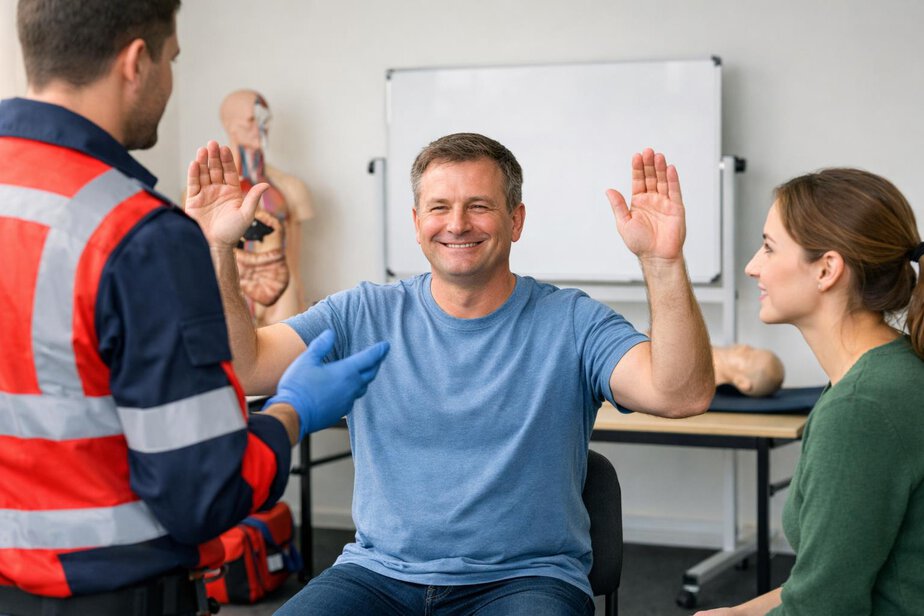
- Arms — can they lift both arms?
- Speech — is their speech slurred or difficult to understand?
- Time — call Triple Zero (000) immediately.
A person does not need to show every sign for stroke to be suspected. One sign is enough to act. In practice, any sudden facial droop, arm weakness or speech difficulty should trigger immediate concern, especially if the change came on suddenly.
How to use F.A.S.T. in the field
Keep the check brief and practical. You do not need a long examination before calling for help. Ask the person to smile, raise both arms, and speak a simple sentence if they can. If the person cannot complete the task, that is useful information in itself.
If the person seems confused or has trouble understanding, the speech part of F.A.S.T. still matters. The issue may be with speaking, understanding, reading, or all of these. Treat that as a warning sign rather than assuming the person is merely anxious or uncooperative.
Keep in mind that some people have pre-existing facial asymmetry, weakness or speech difficulty from another condition. Even so, a sudden change from their usual state should still be treated as possible stroke until proven otherwise.
Other Signs First Responders Should Recognise
Stroke does not always present neatly through the F.A.S.T. signs. Other clues can be just as important, especially in the early minutes when the presentation may be subtle or unusual.
- Sudden weakness, numbness or paralysis of the face, arm or leg.
- Sudden difficulty speaking or understanding speech.
- Sudden dizziness or a sense that the room is spinning.
- Loss of balance or unsteady walking.
- An unexplained fall.
- Sudden blurred vision or loss of vision.
- Severe or sudden unexplained headache.
- Difficulty swallowing.
These signs may appear alone or together. A person may complain of feeling “off”, unable to stand properly, or unable to see out of one side. Others may seem drowsy, vacant or unusually irritable. First responders should think broadly about stroke when the onset is sudden and the cause is not obvious.
It is also important to remember that stroke symptoms can come and go. If the signs disappear after several minutes, the person may still have had a transient ischaemic attack, or TIA. A TIA is a warning event and still needs urgent medical assessment. Do not reassure the person that the problem has passed and therefore can be ignored. Call Triple Zero (000).
Severe headache deserves particular caution. A sudden, unexplained headache is not always stroke, but it can be associated with serious brain bleeding or other urgent neurological problems. The same applies to vomiting, collapse, or sudden reduced awareness. Use a low threshold for escalation.
Why Time Matters
Time is critical because brain tissue can be lost quickly when blood flow is interrupted. For first responders, that means every avoidable delay matters: delay in recognition, delay in calling, delay in moving the person, and delay in handing over accurate information.
The most important time point is not simply when the call was made. It is when the person was last known to be normal or well. That time helps ambulance crews and hospital teams judge whether the person may be eligible for time-critical treatment pathways. If the exact onset is unknown, the last-known-well time is still valuable.
Try to record times accurately. If the person was seen normal at 7:20 am and symptoms were first noticed at 7:35 am, write those times down. Avoid vague phrases such as “about an hour ago” if a more exact time is available. Even small differences can matter later.
Do not wait to gather a complete history before calling Triple Zero (000). Calling first is the right approach when stroke is suspected. Additional details can be collected while the response is underway.
Why speed matters for the system, not just the patient
Rapid recognition and ambulance activation can improve the person’s opportunity to receive time-critical stroke treatment. It also helps ambulance crews choose the most appropriate destination and prepare hospital teams for immediate assessment. The sooner the person arrives, the sooner imaging and specialist decisions can begin.
That is why first responders should think in terms of a fast, coordinated pathway: recognise, activate, support, hand over. A calm and efficient response can make a major difference even before paramedics arrive.
First Responder Actions for Suspected Stroke
Use a simple, structured sequence. The exact clinical actions will vary according to your agency, training and authorised scope of practice, but the overall approach should stay focused on speed, safety and clear communication.
- Ensure scene safety. Check that the environment is safe for you, the person and others nearby.
- Recognise possible stroke signs. Watch for sudden facial droop, arm weakness, speech difficulty or other neurological changes.
- Apply the F.A.S.T. check. Use it briefly and practically.
- Call Triple Zero (000) immediately. Do not delay.
- Establish the exact symptom onset time or last-known-well time. Record the best available time.
- Assess and monitor airway, breathing and consciousness. Follow your training and local procedures.
- Position and support the person appropriately. Keep them safe and comfortable.
- Do not give food, drink or medication unless directed by authorised clinical personnel.
- Gather medical and medication information. If possible, obtain it from family, carers or witnesses.
- Prepare a clear ambulance handover. Keep it concise and factual.
- Continue monitoring until ambulance personnel take over. Watch for changes in consciousness, breathing or symptoms.
This sequence is useful because it separates what must happen now from what can be gathered while waiting. It also keeps attention on the priorities that matter most in the first minutes: safety, recognition, activation and monitoring.
First responders should not attempt advanced diagnostics in the field. In most cases, hospital assessment and brain imaging are needed to determine the stroke type and the best treatment. Your role is to identify the emergency early and make sure the person reaches the right care as quickly as possible.
Basic Supportive Care While Waiting for the Ambulance
Once Triple Zero (000) has been called, focus on basic supportive care. Keep the person calm and reassure them in a steady voice. Explain that help is on the way and that they should stay where they are unless moving is necessary for safety.
If the person is conscious, support them in the most comfortable and safe position that your training and local guidelines allow. Australian Stroke Foundation guidance commonly recommends laying the person on their side with the head slightly raised and supported. If your agency protocol differs, follow that protocol.
Check breathing and consciousness regularly. If the person becomes less responsive, more drowsy, or stops breathing normally, escalate immediately and follow current resuscitation procedures and Triple Zero operator instructions. If you are trained and authorised to provide additional care, follow your agency clinical guidelines.
Loosen restrictive clothing if it is interfering with breathing or comfort. Support any weak or paralysed limb gently. Do not pull on an arm or shoulder when moving the person, because weakness can make the limb vulnerable to injury.
Keep the person warm enough, but do not overheat them. Keep the scene calm, reduce unnecessary crowding, and minimise the number of people speaking at once. The goal is to reduce distress and prevent avoidable movement or exertion.
Do not give food or drink. Swallowing may be impaired, and food or fluid can be inhaled into the airway. Do not give aspirin or other medication simply because stroke is suspected. Some strokes involve bleeding, and aspirin may make a bleeding stroke more severe.
Communicating with a Person Who Cannot Speak Normally
Stroke can cause aphasia, which may affect a person’s ability to speak, understand, read or write. It can be frightening for the person and frustrating for those trying to help. A communication problem does not mean the person is confused, intoxicated or lacking intelligence.
Respect matters. Speak to the person directly, not only to bystanders. Use a calm tone and short sentences. Ask one question at a time. Give the person time to answer. Avoid talking over them or repeating the same question too quickly.
Simple yes/no questions can be helpful. For example, ask whether they have pain, whether they are breathing comfortably, or whether symptoms started today. If they can point, nod or use their hands, that may be enough to obtain useful information without creating pressure.
Do not correct every word or finish every sentence for them. If they are struggling to speak, let them try. If they appear to understand but cannot answer easily, give them time and reassurance. If they use gestures, watch closely and interpret carefully.
Where appropriate, ask a family member or witness to help translate the person’s usual communication style or language, but keep the person involved in the conversation. Treat them with patience and dignity at all times.
Communication difficulties are part of the medical emergency, not a reason to reduce care, patience or respect.
If the person becomes distressed by too many questions, reduce the number of prompts and focus on the essentials. You do not need a long interview before activation. The aim is to collect enough information to support the ambulance handover without slowing the response.
Information Paramedics Need
Useful information can save time later, especially when the person cannot speak clearly. Gather what you can from the person, family members, carers, colleagues or witnesses. Do not delay ambulance activation while chasing every detail.
Important details include:
- Exact symptom onset time or last-known-well time.
- What the first abnormal sign was.
- Whether symptoms were sudden or gradual.
- Whether symptoms have changed since they began.
- Whether the person has had a previous stroke or TIA.
- What medications they take.
- Whether they take anticoagulant or antiplatelet medicines.
- Any major medical conditions that are known.
Medication details are especially important. If possible, note the actual medicine names, not just “blood thinners”. But if names are not available, do not spend too long searching for them at the expense of time. Any useful fragment of information is better than none.
Also note practical details that may help ambulance crews on arrival, such as the person’s location, access issues, whether they are with family, and whether there are communication barriers. If the person has already had a fall, describe what was observed rather than guessing why it happened.
How to hand over clearly
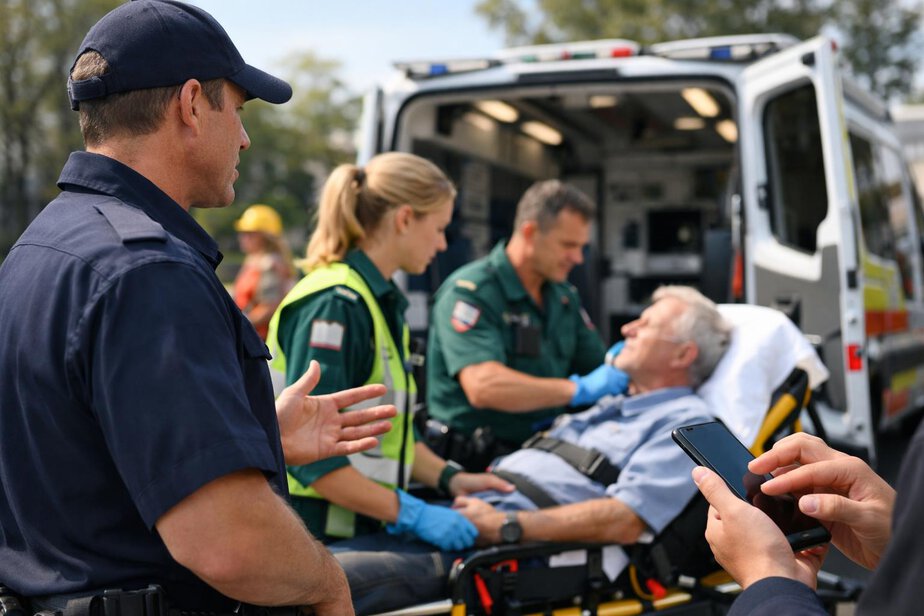
Keep the handover concise and factual. A simple structure is best: who the person is, what happened, when it started, what signs were seen, what has changed, and what relevant history is known. Mention if the person’s speech is slurred, if one arm is weak, or if the face droops. Include the last-known-well time if you have it.
If there were witnesses, say so. If the person’s symptoms resolved before the ambulance arrived, say that too. That information is still important because it may point to TIA rather than permanent stroke, but either way the person needs urgent medical assessment.
Remember that a good handover does not need to sound technical. It needs to be accurate, brief and easy for the ambulance crew to act on immediately.
A Simple Approach for Firefighters, Workplace First Aiders and Other First Responders
Different responders have different roles, but the core approach is the same. Firefighters may arrive first at a home or workplace. Workplace first aiders may be the first to see a colleague or visitor collapse or become confused. Emergency-service personnel may encounter stroke during another incident. In each case, the first response should be guided by the same priorities.
- Recognise the signs early.
- Call Triple Zero (000) without delay.
- Keep the person safe and monitored.
- Collect the key facts while waiting.
- Handover clearly to ambulance personnel.
The response should stay within the responder’s training, agency policy and authorised scope of practice. This is especially important for any clinical interventions such as oxygen therapy, medication decisions or other advanced actions. Those must only be provided where authorised and guided by current clinical protocols.
| Priority | What to do | What to avoid |
|---|---|---|
| Recognition | Use F.A.S.T. and watch for other sudden neurological signs | Waiting to see if symptoms settle |
| Activation | Call Triple Zero (000) immediately | Trying to diagnose the stroke type first |
| Care | Monitor airway, breathing and consciousness | Giving food, drink or unapproved medication |
| Handover | Pass on onset time, signs and history | Relying on vague estimates and assumptions |
This table is a reminder that the safest response is often the simplest one. Speed and accuracy matter more than doing many things at once.
Practical Key Takeaways for First Responders
Stroke is a time-critical medical emergency. A person may have a blocked vessel, a brain bleed, or symptoms that come and go. First responders should not try to work out the exact cause in the field unless that sits within their authorised system and clinical guidelines.
The main job is to recognise stroke early, call Triple Zero (000) immediately, note when the person was last known to be normal, and provide calm supportive care while waiting for the ambulance. Even if symptoms improve, the person still needs urgent assessment because the event may have been a TIA or a stroke that is temporarily fluctuating.
Use F.A.S.T., but do not stop there. Watch for other sudden signs such as weakness, numbness, balance problems, dizziness, vision loss, severe headache or difficulty swallowing. Keep the person safe, do not give food or drink, support a weak limb gently, and monitor breathing and consciousness until ambulance personnel take over.
Communicate respectfully, especially if the person has aphasia or cannot answer normally. Gather useful medication and medical history from witnesses where possible, but do not let information gathering delay the emergency response. A clear, factual handover helps paramedics and hospital staff continue care without losing time.
For current local expectations, first responders should always follow their own agency procedures, relevant state or territory ambulance clinical practice guidelines, and current Australian first aid or resuscitation guidance. This article is educational information only and does not replace formal training, operational instructions or advice from Triple Zero operators and attending paramedics. Before publication or operational use, verify facts and local procedures with authoritative Australian sources such as Stroke Foundation Australia, Healthdirect Australia, the relevant state or territory ambulance service, ANZCOR and your agency guidelines.
FireRescue Training Hub
Access practical fire and emergency study support resources, downloads, checklists, audio guides, and member-only course content.
- Course library
- PDF downloads
- Audio guides
- Checklists
Study support only. Not accredited training or a replacement for workplace procedures.
About the author and safety review
Ken Walker
Former Station Officer and fire service educator
Former career firefighter with extensive career and volunteer fire service experience.
Qualifications: Associate Diploma of Applied Science in Fire Technology; Institute of Fire Engineers studies.
Author profilehttps://www.firerescue.com.au/about-us/