Safety and Technology Update
Understanding Smart Sensors for Early Incident Detection
Smart sensors represent a critical advancement in early incident detection, offering timely alerts that can save lives and minimise property damage. These technologies utilise sophisticated algorithms and real-time data to identify hazards such as fire, smoke, gas leaks, or structural instability before they escalate.
Integrating smart sensors into safety systems enhances emergency response efficiency by providing detailed situational insights to Fire/Rescue teams, Ambulance services, Police, and the State Emergency Service (SES). This enables a coordinated and swift intervention tailored to the specific nature of the incident.
For Australian residents and businesses, understanding how these sensors function and how to respond appropriately to their alerts is essential for effective emergency management.
Background and Context
Australia’s diverse environment and urban spread present unique challenges for incident detection. Traditional smoke alarms and manual reporting of emergencies remain foundational, but smart sensor technologies are increasingly complementing these methods. They provide continuous monitoring and early warnings that can detect subtle signs of danger such as rising temperatures, unusual smoke patterns, or toxic gas concentrations that might otherwise go unnoticed.
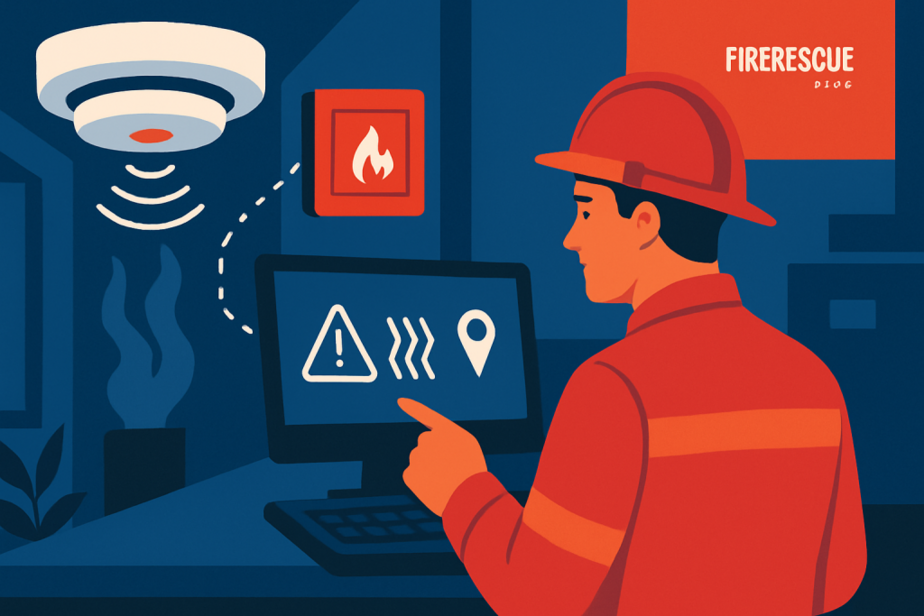
These sensors often connect to integrated systems that alert building managers, occupants, and emergency services simultaneously. This connectivity is particularly valuable in workplaces, apartment complexes, and critical infrastructure, where rapid detection and communication can prevent escalation and facilitate evacuation or containment efforts.
In addition, smart sensors can assist emergency services by providing real-time data such as temperature readings, location of the hazard within a building, or presence of hazardous substances, allowing for more informed decision-making on arrival.
The evolution of smart sensor technology has been driven by advances in wireless communication, miniaturisation of electronic components, and improved data analytics. These developments have made it feasible to deploy sensor networks covering extensive areas with minimal infrastructure. For instance, in wildfire-prone regions, sensor arrays can detect early signs of bushfires, such as changes in temperature gradients and smoke particulates, enabling rapid alerts to firefighting authorities and residents.
Moreover, the integration of Internet of Things (IoT) platforms allows smart sensors to communicate not only with emergency services but also with smart home systems and building automation. This interconnectedness means that when a sensor detects an incident, it can automatically trigger safety protocols such as unlocking emergency exits, activating ventilation systems to control smoke, or shutting down gas supplies to prevent explosions.
How Smart Sensors Work
Smart sensors incorporate advanced detection technologies including optical smoke detection, heat sensors, gas detectors, and sometimes even video analytics. These devices continuously monitor environmental conditions and use algorithms to differentiate between false alarms and actual threats.
When an unusual pattern or threshold is detected—such as rapidly increasing temperature, carbon monoxide presence, or dense smoke—the sensors trigger alerts. These alerts can be local via alarms or directly sent to monitoring centres or emergency services through secure communication networks.
Some systems also incorporate artificial intelligence to learn normal environmental patterns, reducing false positives and improving response times. This intelligent monitoring is especially important in complex environments like hospitals, warehouses, or manufacturing plants.
Many smart sensors now include self-diagnostic features that continuously assess their own performance and health status. This proactive approach alerts users or maintenance teams when sensor calibration is needed or when a device is malfunctioning, thereby ensuring that the system remains reliable over time. Such features are vital in critical environments where sensor failure could result in missed detections or delayed responses.
Furthermore, advancements in sensor fusion technology allow multiple sensor types to work together, corroborating data to confirm incidents with higher accuracy. For example, combining heat, smoke, and gas detection data can provide a comprehensive picture of a developing fire, reducing the likelihood of false alarms caused by cooking smoke or steam.
Where Early Detection Matters Most
Pie chart based on NSW residential fire start locations in winter 2025. Useful for thinking about smart sensor placement and coverage.
Related details
FRNSW recorded 1,020 residential fires and 94 injuries in NSW during winter 2025, with 9 fire deaths reported.
48% of those fires were linked to human activity such as unattended cooking, overloaded power boards, or items left too close to heaters.
Fire and Rescue NSW also said that in almost half of winter fires they attended, there was no smoke alarm or the alarm was not working.
For supporting safety messaging, ACCC states that more than 50 people across Australia die from house fires each year, and a working smoke alarm can halve the risk of dying in a house fire.
Suggested messaging under this chart: test smoke alarms monthly, replace the battery yearly, and replace the full alarm every 10 years.
Source basis: Fire and Rescue NSW winter 2025 home fire data + ACCC Product Safety smoke alarm guidance.
Emergency Response and Coordination
In Australia, the primary emergency number is 000. When smart sensors detect an incident that requires urgent response, it is important for occupants or monitoring personnel to confirm the situation and call 000 immediately if necessary. The emergency operator will determine which services to dispatch based on the information provided.
Fire/Rescue is typically the lead agency for fire-related incidents, including structural fires, bushfires, and hazardous material emergencies. They specialise in firefighting, rescue operations, and mitigation of fire hazards.
Police services handle law enforcement, crowd control, and investigation aspects, often working alongside Fire/Rescue during incidents involving criminal activity or public safety concerns.
Ambulance services provide medical care and transport for injured or ill persons. Early notification through smart sensors can allow Ambulance teams to be on standby or dispatched promptly if casualties are likely.
The State Emergency Service (SES) supports communities during floods, storms, and other natural disasters but can also assist in rescue operations where access or infrastructure has been compromised.
Coordination between these emergency agencies is facilitated through integrated communication networks that receive and process data from smart sensors. This inter-agency collaboration ensures resources are allocated efficiently and responders are equipped with up-to-date incident information, including hazard types, affected areas, and potential risks.
Additionally, some emergency response centres are adopting advanced geolocation technologies that use sensor data to pinpoint the exact location of incidents within large buildings or sprawling industrial sites. This capability significantly reduces response times and helps responders navigate complex environments safely.
Practical Implications for Australian Homes and Businesses
For homeowners and businesses considering smart sensor installation, it is crucial to select devices certified to Australian standards to ensure reliability and compatibility with emergency services. Integration with existing alarm systems and clear protocols for response are essential to maximise the benefits of early detection.
Training occupants and staff on recognising alerts and following emergency procedures complements technology. Even the most sophisticated sensor will only be effective if people respond calmly and promptly by calling 000 and evacuating if necessary.
Businesses can also leverage smart sensors for risk management and insurance purposes, demonstrating a proactive approach to safety. Regular maintenance and testing of sensors are critical to ensure ongoing accuracy and functionality.
Community awareness of smart sensor technology can further enhance public safety, as neighbours and local services can be alerted early, potentially preventing incident spread or secondary emergencies.
For residential settings, smart sensors can be integrated with home automation systems to provide added layers of protection. For example, when a sensor detects smoke or gas, it can trigger automated notifications to residents’ smartphones, activate lighting to guide occupants to safety, or even interface with security cameras to provide visual confirmation of the incident.
In commercial and industrial environments, smart sensors contribute to workplace safety compliance and can be part of a broader occupational health and safety strategy. They enable facility managers to monitor conditions continuously and respond proactively to potential hazards, reducing downtime and protecting employees.
Emerging technologies are also exploring integration of smart sensors with drones and robotic systems for incident assessment in hazardous or hard-to-reach areas. These innovations promise to further improve incident detection and emergency response capabilities in the future.
Summary
Smart sensors for early incident detection are an evolving technology with significant potential to improve emergency outcomes across Australia. By combining reliable detection with coordinated emergency service responses and community readiness, these systems help mitigate risks and protect lives and property.
For anyone installing or relying on these devices, understanding their operation, limitations, and the appropriate emergency protocols is key. Always remember to call 000 in an emergency and follow the instructions provided by emergency operators and responders.