Power Outage Preparedness
Power outages can happen anytime in Australia, especially during storms or heatwaves. It’s important to stay calm and prepared with a clear plan.
This checklist provides practical steps, safety advice, and guidance on who to contact for help during outages. Follow official agency instructions and local warnings to keep yourself and your family safe.
Understanding Power Outages in Australia
Australia’s power outages can be caused by storms, bushfires, equipment faults or extreme weather. Sometimes outages last just minutes, other times hours or even days. Being ready helps reduce stress and keeps your household safe.
During outages, some services may be limited. Mobile phone coverage might be affected, so have alternative communication methods. Knowing what to do before, during and after an outage is vital.
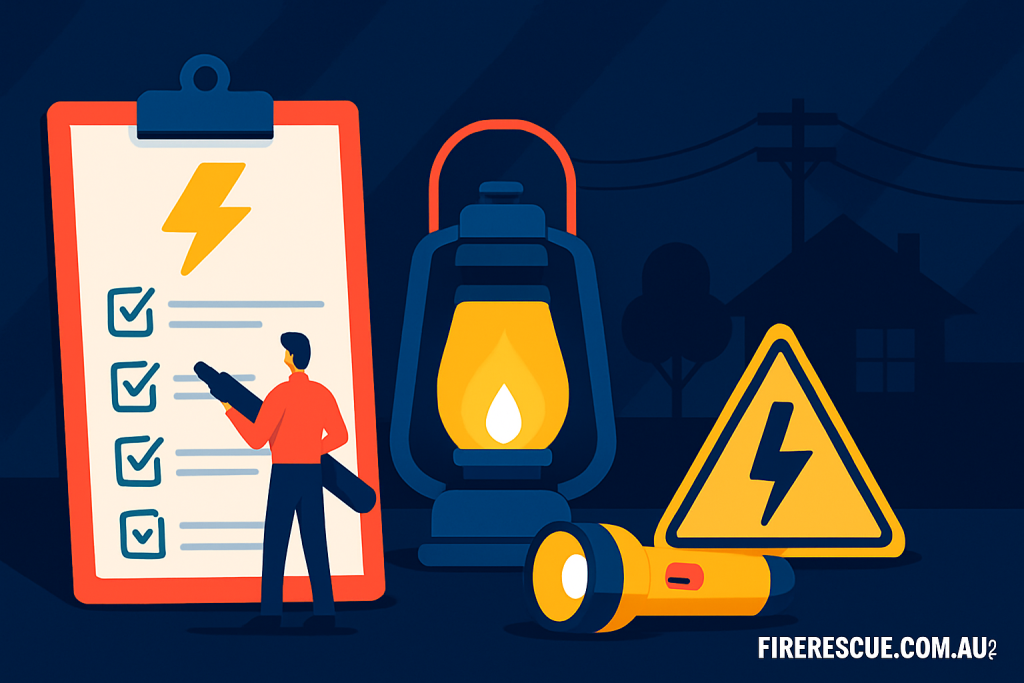
Power outages can also affect essential community infrastructure such as traffic lights, water supply pumps, and medical facilities. This means that being prepared on a personal level is only part of the solution—being aware of wider community impacts helps you plan accordingly. For example, avoid driving through intersections with non-functioning traffic signals and check on neighbours who may be more vulnerable to disruptions.
Before a Power Outage: Preparation Steps
Prepare your home and family ahead of time. Keep torches with fresh batteries easily accessible. Store enough bottled water and non-perishable foods to last several days.
Have a battery-powered or wind-up radio to receive updates if mobile or internet services fail. Keep mobile phones and power banks fully charged when bad weather is forecast.
Know the locations of your circuit breakers and how to safely turn off appliances. This can prevent damage and electrical fires when power is restored.
Inform household members about your emergency plan and where to find supplies. Include any neighbours who may require help, especially elderly or vulnerable people.
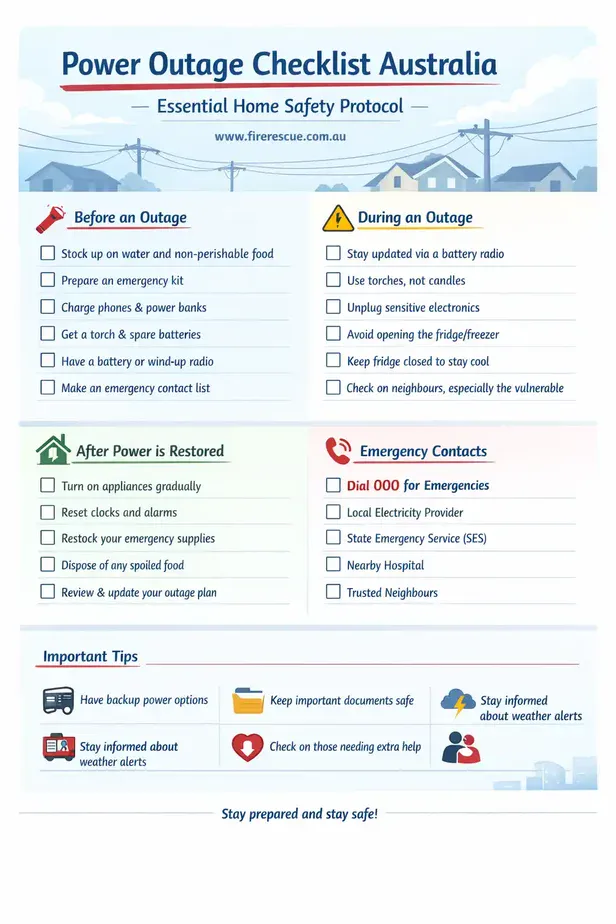
Power Outage Checklist for Australia
Keep a practical, printable checklist ready for storms, heatwaves, and sudden outages. This clean one-page PDF helps households prepare before the power goes out, stay safer during the outage, and respond properly once power returns.
- Simple one-page A4 layout
- Clear before, during and after steps
- Fast to print and easy to keep handy
Helpful, printable emergency content from FireRescue.com.au.
Additionally, consider creating a written emergency contact list that includes phone numbers for your electricity provider, local emergency services, nearby hospitals, and trusted neighbours or family members. Having this information readily available can save valuable time during an outage.
It’s also wise to prepare an emergency kit that includes first aid supplies, essential medications, blankets, and basic hygiene items. If you have pets, include food and water for them as well. Think about any special needs household members might have, such as infants, elderly family, or people with disabilities, and ensure their requirements are part of your plan.
For those who rely on medical devices that require electricity, arrange backup power solutions like uninterruptible power supplies (UPS) or generators, and consult with your healthcare provider about contingency plans.
Consider also the importance of keeping important documents such as identification, insurance papers, and medical records in a waterproof and easy-to-access container. Having these on hand can be crucial if evacuation becomes necessary.
Regularly test and maintain your emergency equipment, including torches, radios, and generators, to ensure they function correctly when needed. Replace batteries and fuel as required to avoid last-minute surprises.
Engage with your community’s emergency preparedness programs or local council initiatives. Sharing information and resources with neighbours can enhance collective safety and provide mutual support during prolonged outages.
During a Power Outage: What to Do
Safety First
Never use candles unattended as they can easily cause fires. Opt for battery-powered lights instead. Avoid using generators indoors due to carbon monoxide risk.
Keep refrigerator and freezer doors closed to maintain cold temperatures. Food can stay safe for up to four hours in a closed fridge, or 24-48 hours in a full freezer.
Be cautious when using alternative heating or cooking devices such as gas stoves or barbecues. Use them only in well-ventilated areas to reduce the risk of carbon monoxide poisoning.
If you must use a generator, ensure it is placed outdoors, away from windows and doors, and follow all manufacturer safety instructions. Never connect a generator directly to your home’s wiring without a qualified electrician’s help to avoid backfeeding, which can be dangerous for utility workers.
Check on family members, friends, and neighbours, particularly those who may need extra assistance such as elderly people, young children, or those with medical conditions. Establish a communication plan if mobile networks are down, such as meeting points or scheduled check-ins.
Limit the opening of refrigerator and freezer doors as much as possible to prolong the safe storage of food. If the outage is expected to last longer than a day, consider transferring perishable items to a cooler with ice packs.
During extended outages, conserve your mobile phone battery by reducing screen brightness, closing unused apps, and enabling power-saving modes. Use text messages instead of calls when possible, as texts use less battery and network resources.
Avoid unnecessary travel during outages, especially at night, due to the increased risk at unlit intersections and roads. If you must drive, proceed with extreme caution and treat all traffic lights as stop signs.
Stay Informed
Listen to official updates on a battery-powered radio or check local emergency services websites when possible. Follow advice from Fire/Rescue NSW, Police, SES, or other local agencies.
Do not call emergency services unless there is a life-threatening situation. For emergencies, dial 000 immediately.
Power outages may also affect your ability to use electronic payment systems, so keep some cash on hand for essential purchases. Prepare to manage without electronic devices for extended periods if necessary.
Pay attention to updates regarding the expected duration of the outage and any safety warnings related to weather or infrastructure damage. This information can help you adjust your plans accordingly.
Use social media cautiously as misinformation can spread quickly during outages. Verify information through official channels before acting on it.
After Power is Restored: Key Actions
Check electrical equipment carefully before switching them back on. Any damaged devices or wires should not be used until inspected by a qualified electrician.
Discard perishable foods that have been kept above safe temperatures for too long to avoid food poisoning.
Report any ongoing power problems to your electricity provider promptly. Continue to monitor local news for updates on recovery efforts in your area.
Once power returns, be prepared for possible fluctuations or surges that can damage appliances. Use surge protectors where possible, and avoid turning on all electrical devices simultaneously to reduce load on the system.
Take the opportunity to review your emergency preparedness plan and restock supplies used during the outage. Reflecting on your experience can help improve your readiness for future events.
Check smoke alarms and carbon monoxide detectors after power is restored to ensure they are functioning correctly. Replace batteries or units if necessary.
Consider sharing your outage experience with neighbours and community groups to help identify areas for collective improvement in preparedness and response.
Document any damage or losses caused by the outage for insurance claims or assistance applications. Photographs and detailed notes can be very helpful.
If You Only Do Five Things
Keep a torch and fresh batteries on hand at all times, avoiding candles to reduce fire risk.
Store drinking water and non-perishable food for at least three days.
Have a battery-powered radio ready to receive emergency updates during outages.
Know how to safely turn off your home’s electrical supply to protect appliances.
Call 000 immediately if someone’s life or safety is at risk during a power outage.
These fundamental steps create a foundation for safety and calm during power interruptions. Building on this foundation by tailoring your plan to your household’s specific needs will increase your resilience.
Remember, preparedness is an ongoing process. Regularly revisit and update your checklist and supplies to adapt to changing circumstances and new information.
Who Does What in Australia?
Fire/Rescue: Handles fires, rescues, and hazardous situations. They assist during emergencies involving flames or smoke.
Police: Maintain public safety and order. They respond to crimes, accidents, and help coordinate during disasters.
Ambulance: Provides medical emergency care and transport. Call them for serious injuries or health emergencies.
State Emergency Service (SES): Supports communities during floods, storms, and power outages. They help with damage assessment and basic rescue tasks.
Understanding the distinct roles of these agencies ensures you contact the right service promptly, improving response times and resource allocation during emergencies.
In addition to these primary services, local councils and utility providers play key roles in outage management and community support. Reporting faults and damage directly to your electricity distributor helps speed up restoration efforts.
Community volunteer groups and neighbourhood support networks also contribute significantly during prolonged outages, providing assistance and information to those in need.