Heat Stroke First Aid Australia – checklistHeat Stroke First Aid Australia
Heat stroke is a serious condition that can develop quickly during hot Australian summers or intense physical activity. Knowing the right first aid steps can save lives and reduce complications.
This guide explains how to recognise heat stroke symptoms, what actions to take immediately, and how to stay safe in high heat situations. Always follow advice from local emergency services and stay informed about heat warnings.
What is Heat Stroke?
Heat stroke is the most severe form of heat illness. It occurs when the body’s temperature rises above 40°C and the natural ability to cool down fails. This leads to damage in the brain and other vital organs. It is a medical emergency that requires immediate attention to prevent serious harm or death.
Unlike milder heat-related conditions such as heat cramps or heat exhaustion, heat stroke represents a critical failure of the body’s thermoregulation. The excessive heat overwhelms the body’s cooling mechanisms, causing cellular damage and potentially irreversible organ dysfunction. Without prompt treatment, heat stroke can lead to seizures, coma, and even fatal outcomes.
How Heat Stroke Happens
Heat stroke can develop when a person is exposed to high temperatures, especially combined with high humidity. Activities like manual labour outdoors, sports, or being trapped in a hot environment can increase risk. Dehydration, certain medicines, and some health conditions may also contribute.
In Australia, prolonged exposure to the sun during heatwaves or bushfire seasons can rapidly raise body temperature. People working in construction, agriculture, or emergency services are particularly vulnerable. Additionally, factors such as obesity, cardiovascular disease, and impaired sweating can diminish the body’s ability to cope with extreme heat. Medications such as diuretics, antihistamines, and some psychiatric drugs may also impair heat regulation.
Recognising Heat Stroke Symptoms
Early recognition of heat stroke signs is critical. The affected person may have a very high body temperature, be confused, or lose consciousness. Their skin might feel hot and dry, or sometimes sweaty if the body is still trying to cool down.
Symptoms can develop suddenly or gradually and may be mistaken for other conditions. It is important to consider recent heat exposure and physical activity when evaluating these signs. Heat stroke can affect anyone but is more dangerous for children, the elderly, and those with pre-existing health issues.
Common Symptoms to Watch For
Look for a sudden onset of headache, dizziness, and nausea. The person may appear weak, pale, or have rapid breathing and a fast heartbeat. If they become disoriented, unable to respond, or collapse, these are warning signs of severe heat stroke.
Other symptoms can include muscle weakness or cramps, seizures, and flushed or dry skin. In some cases, the skin may be moist if the body is still attempting to sweat. Loss of coordination, irritability, and hallucinations are also possible. Recognising these symptoms early allows for quicker intervention and better outcomes.
Heat Stroke First Aid Australia: What To Do
If you suspect someone has heat stroke, call triple zero (000) immediately for emergency help. While waiting for paramedics, you can take important steps to support the person and reduce body temperature safely.
It is essential to act quickly yet calmly to avoid panic. Providing first aid can significantly reduce the risk of long-term damage. Always prioritise calling emergency services first, as heat stroke requires professional medical treatment beyond initial first aid.
Step One: Move to a Cooler Place
Get the person out of direct sunlight and into a shaded or air-conditioned area if possible. This reduces further heat exposure and helps the body start to cool down.
If indoors, turn on fans or air conditioning. If outdoors, find the nearest shaded spot or create shade using umbrellas or tarps. Avoid crowding the person, and ensure fresh air circulation. Removing excess clothing can also aid cooling but be careful to keep the person comfortable.
Step Two: Cool the Body Quickly
Use whatever is available to cool the person down: wet towels, spray bottles filled with cool water, or fans. Focus on areas where blood vessels are close to the skin, like the neck, armpits, and groin. Avoid ice or very cold water directly on the skin, as this can cause shock.
If possible, immerse the person in a cool bath or shower, but only if they are conscious and can safely do so. Evaporative cooling techniques, such as misting with water and fanning, are effective and safer for most situations. Avoid rubbing or massaging the skin, which may cause discomfort or injury.
Step Three: Hydrate Carefully
If the person is conscious and able to swallow, offer small sips of cool water. Avoid sugary, caffeinated, or alcoholic drinks. Do not give fluids if the person is drowsy or vomiting, as this increases the risk of choking.
Hydration helps restore fluid balance and supports recovery. However, overhydration can also be harmful, so give fluids cautiously. Oral rehydration solutions are preferable if available, as they replace electrolytes lost through sweating. If the person refuses fluids or becomes nauseous, stop giving drinks and focus on cooling while awaiting medical help.
Step Four: Monitor Vital Signs
Keep checking the person’s breathing, pulse, and responsiveness while waiting for emergency services. If they become unconscious, place them in the recovery position if it can be done safely and monitor closely until help arrives.
Observing vital signs helps detect deterioration early. If breathing becomes irregular or stops, be prepared to perform CPR if trained. Avoid moving the person unnecessarily, especially if they have seizures or severe confusion. Stay calm and provide reassurance to the person if they are conscious.
Step Five: Avoid Harmful Practices
Do not give medications like aspirin or paracetamol to reduce temperature. Avoid alcohol, caffeine, or heavy physical activity. Never leave the person alone, especially if they are confused or unconscious.
Some common misconceptions include using cold baths or ice packs aggressively, which can cause shivering and worsen heat retention. Medications like fever reducers do not address the underlying cause of heat stroke and may delay proper treatment. Continuous supervision is critical to ensure safety until professional help arrives.
Preventing Heat Stroke in Australia
Prevention is the best approach to heat stroke, especially during the hot Australian summer months or heatwaves. Avoid strenuous outdoor activities during peak heat, wear loose, light clothing, and stay hydrated regularly. Pay close attention to vulnerable people such as young children, older adults, and those with chronic illnesses.
Planning ahead for heat events includes checking weather forecasts and heat alerts, scheduling outdoor tasks for cooler parts of the day, and ensuring access to shade and water. Using sunscreen and wearing hats can protect against sunburn, which can impair the skin’s ability to cool. Regular breaks and acclimatisation to heat also reduce risk.
Communities can support heat safety by looking out for neighbours, especially those living alone or with limited mobility. Public health messages and heat health plans play a crucial role in raising awareness and coordinating responses during extreme heat. Employers have a responsibility to provide safe working conditions and heat illness prevention measures.
If You Only Do Five Things
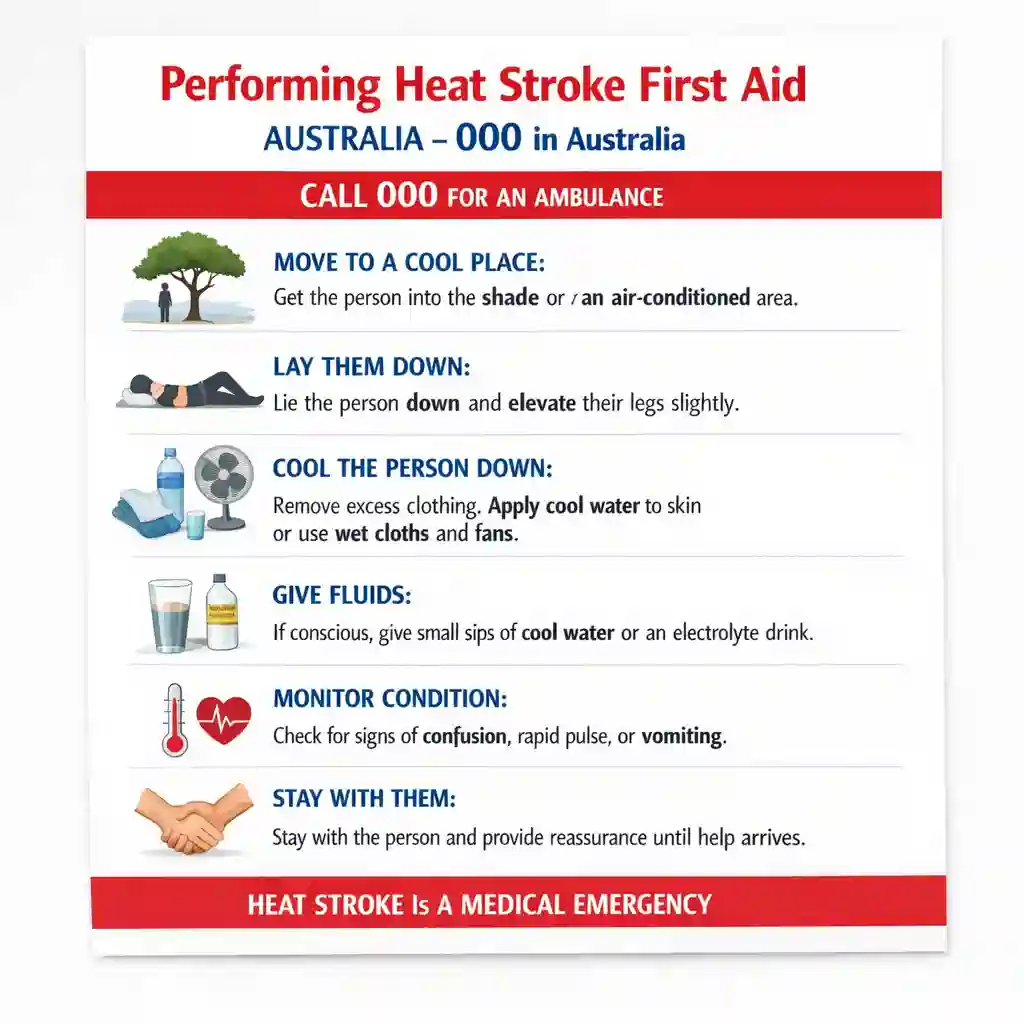
First, call triple zero (000) immediately if you think someone has heat stroke. Early medical attention is crucial.
Second, move the person to a cooler, shaded area to reduce heat exposure.
Third, cool their body with wet towels or cool air, focusing on the neck, armpits, and groin.
Fourth, offer small sips of water only if they are alert and able to swallow.
Fifth, keep monitoring their condition and be ready to provide information to emergency responders.
Downloadable A4 Checklist
Print this and keep it somewhere visible. Tick items as you go, it helps under pressure.
Stay Informed and Prepared
Always listen to local weather warnings and heat health alerts issued by Australian authorities. Preparing your home and workplace for heat events can reduce risks. If you work or exercise outdoors, plan for breaks and access to shade and water. Remember, quick action can make all the difference in heat stroke situations.
Understanding heat stroke and how to respond is vital for everyone living in or visiting Australia. Heat-related illnesses can escalate rapidly, but with knowledge and preparedness, many cases can be prevented or mitigated. Stay alert during heatwaves, and encourage others to do the same.
For more information and official guidance, visit your local health department website or the Australian Government’s health resources on heat safety.
FireRescue Training Hub
Access practical fire and emergency study support resources, downloads, checklists, audio guides, and member-only course content.
- Course library
- PDF downloads
- Audio guides
- Checklists
Study support only. Not accredited training or a replacement for workplace procedures.
About the author and safety review
Ken Walker
Former Station Officer and fire service educator
Former career firefighter with extensive career and volunteer fire service experience.
Qualifications: Associate Diploma of Applied Science in Fire Technology; Institute of Fire Engineers studies.
Author profilehttps://www.firerescue.com.au/about-us/