How to Respond Safely to Road Accidents in Remote Outback Australia
A practical, step-by-step guide for emergency services and the travelling public covering safety, essential equipment, and the roles of fixed-wing and rotary aircraft.
Why Remote Responses Differ from Urban Incidents
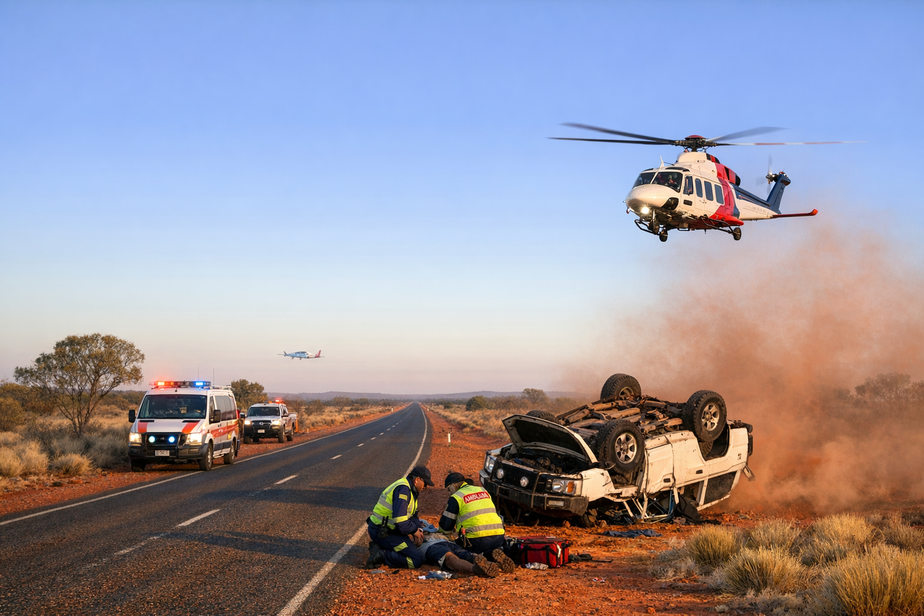
Responding to a road accident in the Outback is fundamentally different from attending an urban crash. Distances are vast, infrastructure is sparse, and environmental factors can quickly turn a manageable injury into a life-threatening situation. For emergency services and the public, appreciating these differences shapes safe decision-making on scene and affects priorities for equipment, communication and evacuation.
- Remote Outback incidents face extended response times due to vast distances, limited road access, and sparse communications infrastructure, making on-scene decisions more critical.
- Emergency services often operate with fewer resources and must prioritise survival, scene safety, and stabilisation until additional support or aeromedical evacuation arrives.
- Environmental hazards such as extreme heat, wildlife, and limited shade increase the risk to casualties and responders and must factor into triage and evacuation plans.
- Coordination across local SES, volunteer ambulance services, police, RFDS (Royal Flying Doctor Service), and community rangers is essential because each agency brings different capabilities.
“In remote settings, the first ten minutes don’t just set the tone for patient care — they can determine survival until evacuation is possible.” — Practical field guidance for remote responders
Immediate Safety Priorities for the Public and Responders
Whether you’re the first passerby or a trained responder, the initial actions you take should prioritise safety above all. Moving injured people without assessing scene hazards can worsen injuries, while failing to secure the site may expose casualties and responders to further danger.
Step-by-step safety checklist
- Establish scene safety: Move to a safe distance if there’s risk of fire, fuel leak, unstable vehicles or oncoming traffic before attempting to help casualties.
- Protect yourself: Use high-visibility clothing, gloves and eye protection when available and isolate vehicle power (engine off, keys removed) where it’s safe to do so.
- Warn and control traffic: Set up warning devices — triangles, flares or hazard lights — and create a safe approach path for emergency vehicles.
- Call for help: Provide precise location details (GPS coordinates, nearest road markers, odometer readings from nearest town) and an accurate description of casualties and hazards.
For bystanders without clinical training, the highest-impact actions are calling for help, keeping casualties still and warm, and controlling severe bleeding. Time and environmental exposure are often the greatest threats; conserving body heat and preventing catastrophic haemorrhage are priorities until trained clinicians or aeromedical teams arrive.
Essential Life-Saving Equipment to Carry or Have Accessible
When you’re travelling through remote regions, what you carry can change an outcome. For responders, those items are standardised; for travellers, a compact selection tailored to likely incidents will dramatically increase survivability until professional help can reach the scene.
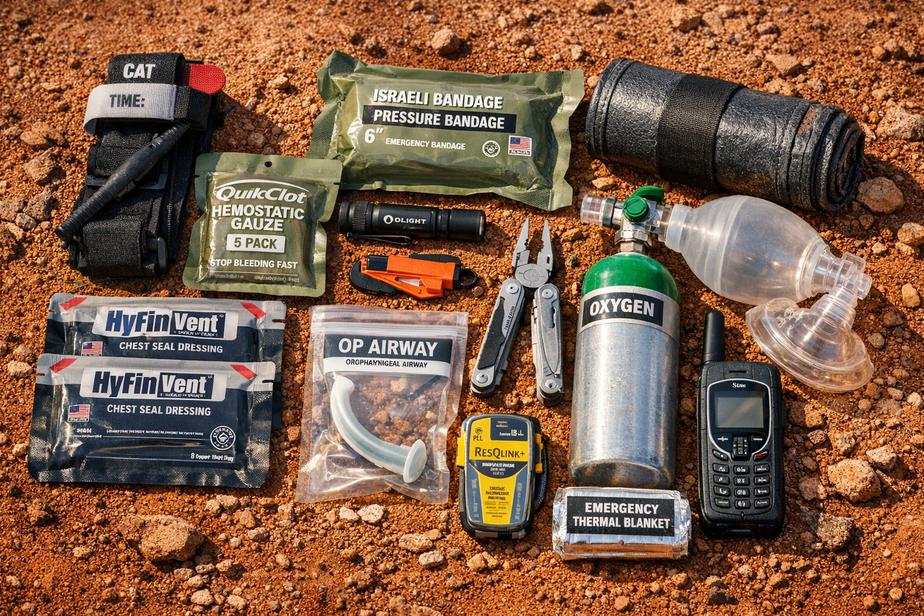
Core elements of a remote trauma kit. Image: sample kit laid out for clarity.
- Catastrophic haemorrhage control: Commercial tourniquets, pressure dressings and haemostatic gauze can stop life-threatening bleeding that would otherwise be fatal within minutes.
- Airway and breathing tools: Pocket masks for CPR, oropharyngeal airways and, for trained responders, a bag-valve-mask (BVM) — these address compromised breathing that can rapidly become fatal.
- Chest injury supplies: Chest seals for open pneumothorax and equipment to recognise/treat tension pneumothorax in trained hands (needle decompression where protocols and training permit).
- Stabilisation and extrication tools: Cervical collars, vacuum splints or improvised immobilisation materials, seat-belt cutters and window breakers to allow safe extrication without causing further spinal damage.
- Communications and survival: Personal locator beacons (PLBs), satellite phones or satellite messengers, high-energy food, at least 4–6 litres of potable water per person for extended waits, torches and spare batteries.
- Scene management: High-visibility blankets, fire extinguisher (small, vehicle-rated), multi-tools and basic repair kits to make your vehicle safe or to stabilise a casualty during extrication.
For volunteer and professional responders, a standardised trauma kit with clearly labelled components and a practice regime for using them is essential. For travellers, a compact kit focusing on haemorrhage control, communication and shelter will provide the most value when minutes count.
Key takeaway
A small number of items — tourniquet, haemostatic dressing, PLB/satellite communicator and water — offer the highest survival benefit in remote vehicle incidents. Training in using these items multiplies their effectiveness.
Triage and Initial Medical Priorities in Remote Settings
Medical priorities in the Outback adapt standard clinical frameworks to limited resources and longer transport timelines. Rapid assessment and pragmatic interventions target deterioration risks first: airway compromise, severe bleeding and tension pneumothorax are immediate threats.
Adapted primary survey: DRABCDE
Danger, Response, Airway, Breathing, Circulation, Disability, Exposure — apply this systematically, but with an emphasis on treatments that can be sustained until evacuation. For example, a secured airway is valuable only if the patient can be ventilated and protected during the wait for transport.
- Control major bleeding with direct pressure, pressure dressings and tourniquets as needed — this is often the difference between life and death.
- Airway security using manual manoeuvres and adjuncts; be conservative with cervical movement if spinal injury is suspected.
- Breathing problems — identify flail chest, open pneumothorax or tension pneumothorax. Trained clinicians should consider decompression when indicated.
- Immobilisation of suspected spinal injuries using collars, blocks or improvised supports, balancing the need for rapid extrication for definitive care.
- Documentation — record times, observations and interventions clearly and pass concise, structured information to incoming teams and aeromedical crews.
Improvise when necessary but avoid interventions that create greater risk (for example, prolonged extrication without adequate airway control). Always document what you do and when you did it — aeromedical and receiving hospitals rely on accurate handover details.
Roles of Fixed-Wing and Rotary Aircraft in Outback Evacuations
Aeromedical services are life-saving in the Outback. Understanding the strengths and limitations of fixed-wing and rotary assets helps ground teams prepare accurate information and a safe evacuation pathway.
Fixed-wing (e.g., RFDS)
Fixed-wing aircraft excel at long-range transfers. When a prepared airstrip is available, fixed-wing transfers provide speed and endurance to tertiary hospitals, and many services operate night-capable aircraft. They are most efficient for moving stable or semi-stable patients over hundreds of kilometres where runway access exists.
Rotary-wing (helicopters)
Helicopters provide shorter-ground-time access, landing closer to scenes or performing hoist/rescue operations where terrain prevents landing. For time-critical cases — catastrophic haemorrhage, compromised airway or major multi-system trauma — helicopters are often the best option because they can deliver advanced care rapidly and extract patients from difficult locations.
- Aircraft provide advanced clinical care en route, including assisted ventilation, IV fluids and advanced analgesia.
- Aircraft crews coordinate with ground teams to assess or prepare the landing zone (LZ): a cleared, level area free of loose debris and hazards. Marking the LZ and providing accurate GPS coordinates reduces approach risks.
- Prepare the scene: clear a minimum recommended area (often 50m–100m where possible), remove people and loose items, and advise pilots of hazards like powerlines, antennas or sloping terrain.
Good coordination is practical — provide exact GPS coordinates, describe surface type and obstacles, and ensure a single, trained person is the radio point of contact. When aircraft arrive, follow the crew’s direction immediately and keep the LZ clear of unnecessary personnel.
Preparing the Public: What Travellers Should Carry and Know
Preparation reduces both the likelihood and consequences of remote incidents. Travellers can expect long waits for help; sensible packing, route planning and basic skills are the best insurance.
Pre-departure essentials
- Share your plan: Register routes and ETAs with a friend, family member or local station and check road and weather updates.
- Carry communications: PLB or satellite communicator; know how and when to activate them. Mobile phones are unreliable across the Outback.
- Essentials kit: Water, extra fuel, tyre repair kit, basic tools, high-energy food and a compact trauma kit focused on bleeding control and warmth.
- Training: Basic first aid and bleeding control training — regional short courses are often available and highly relevant.
Simple opportunities prevent escalation: check your vehicle maintenance, know how to change a tyre safely, and carry a checklist (digital or printed) so you don’t forget critical items when packing.
Prepare Before You Travel — Reduce Risks and Save Lives
Preparation is the most effective intervention for remote travel safety. A few deliberate steps before you leave home dramatically reduce your exposure to risk and make rescue operations faster and safer when incidents occur.
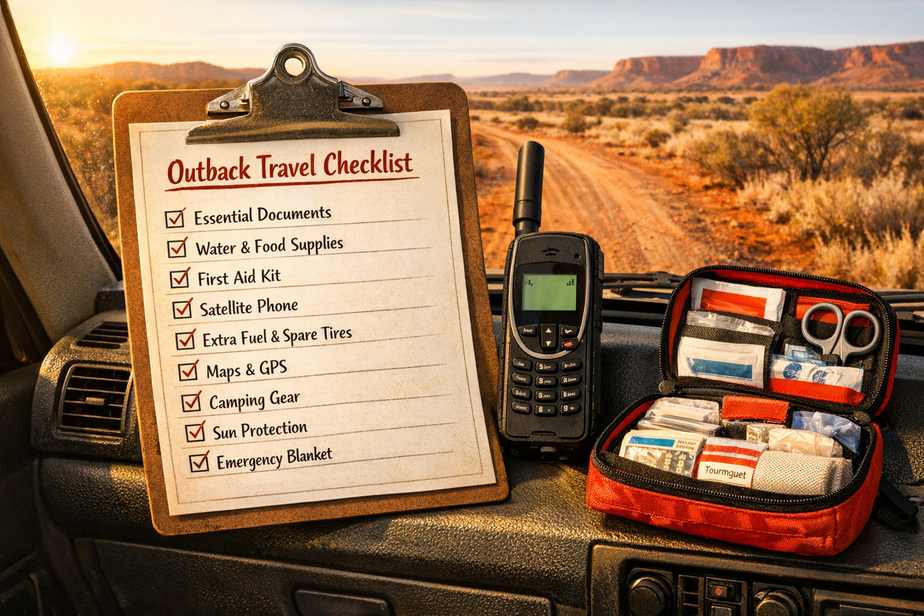
Before you head into remote country
Download and print a travel checklist, register your route, pack a PLB or satellite communicator, include a compact trauma kit with bleeding control items, and ensure at least 4–6 litres of water per person. Take a short remote-first-aid course where possible — it multiplies the effectiveness of what you carry.
If you operate in a professional capacity (SES, volunteer ambulance, police), build regular joint exercises with local aeromedical providers and community responders. Practising LZ setup, radio protocols and handover structure will reduce delays and improve patient outcomes when real events occur.
Download the printable remote travel checklist
Note: If you’re planning remote travel now, check local RFDS and state emergency services websites for up-to-date checklists, course dates and region-specific advice.
Conclusion — Practical Steps to Improve Survival in Remote Road Crashes
Remote Outback road accidents present unique challenges, but clear priorities and practical preparation reduce mortality and morbidity. Focus on scene safety, catastrophic haemorrhage control, communication (PLB/satellite), and preparing a safe landing zone for aeromedical assets. Travellers who carry a small, targeted kit and complete basic first-aid training substantially reduce the risk to themselves and others.
- Secure the scene first, then assess and treat life threats — bleeding, airway and breathing.
- Carry and know how to use a PLB or satellite communicator; accurate location data saves time.
- A compact trauma kit prioritising haemorrhage control, airway adjuncts and thermal protection offers the best survival value for non-clinicians.
- Coordinate with aeromedical services by providing clear, concise information and preparing a safe LZ when possible.
Final takeaway
In the Outback, small preparations and early, decisive actions save lives. Equip yourself sensibly, train practically and communicate clearly — and you will be far better prepared to respond when every minute matters.
Next steps: sign up for a local bush first-aid course, assemble a compact trauma and survival kit, test a satellite communicator, and share your travel plans before you go. Safe travel reduces the need for rescue — and when rescue is needed, it makes that rescue faster and more effective.
FireRescue Training Hub
Access practical fire and emergency study support resources, downloads, checklists, audio guides, and member-only course content.
- Course library
- PDF downloads
- Audio guides
- Checklists
Study support only. Not accredited training or a replacement for workplace procedures.
About the author and safety review
Ken Walker
Former Station Officer and fire service educator
Former career firefighter with extensive career and volunteer fire service experience.
Qualifications: Associate Diploma of Applied Science in Fire Technology; Institute of Fire Engineers studies.
Author profilehttps://www.firerescue.com.au/about-us/