Conclude Road Accident Rescue Operations
Evidence preservation, equipment recovery, decontamination and documentation.
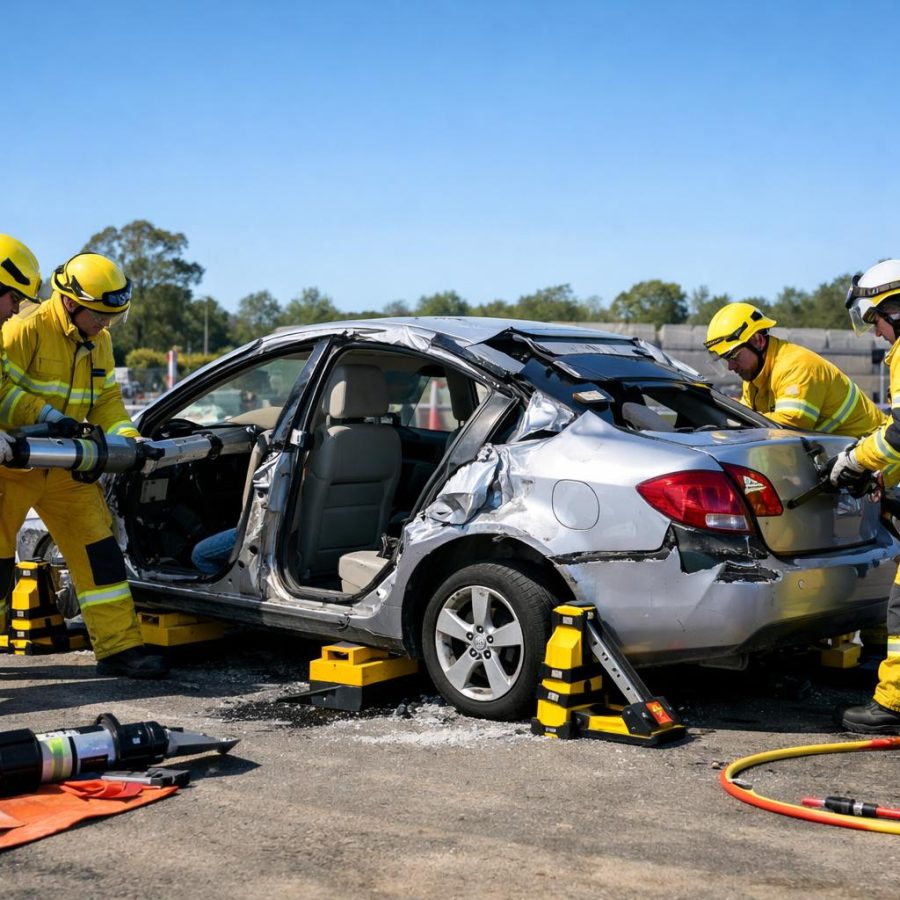
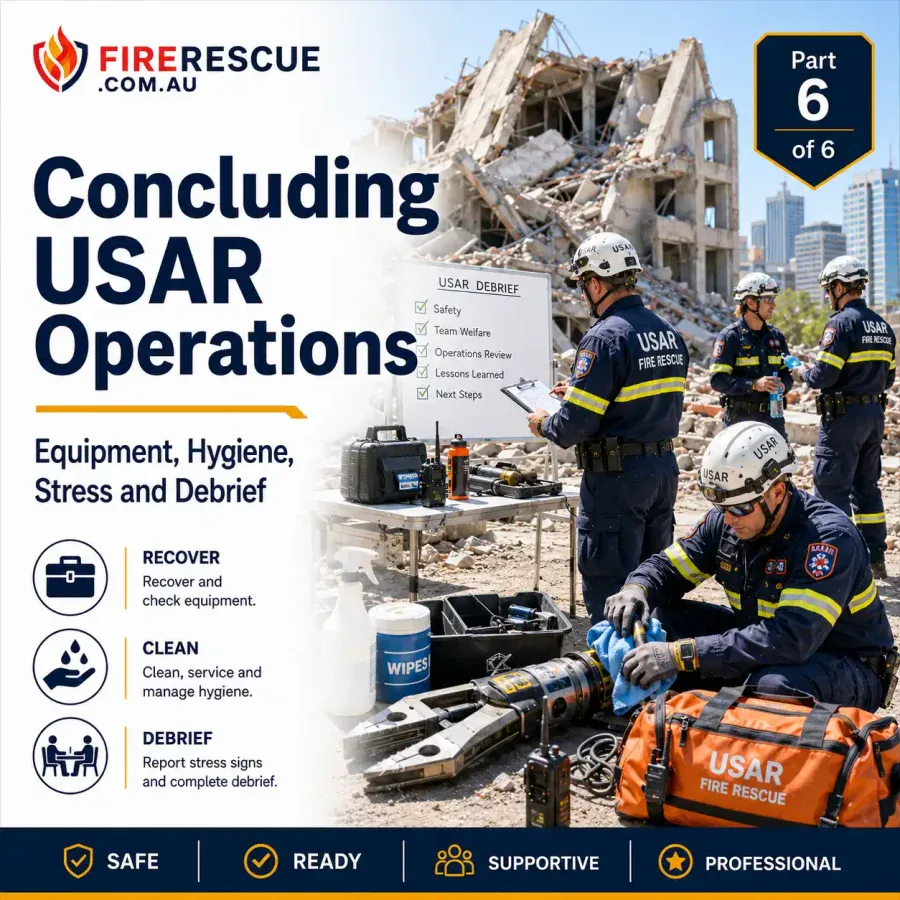
Conclude road accident rescue operations with the same discipline used throughout the rescue. Once casualties have been removed, crews still have important responsibilities: preserve the incident scene, recover equipment, clean and maintain tools, complete decontamination and hygiene precautions, participate in operational debriefing and finalise required documentation.
Part 7 Progress Tracker
Refresh each section as you complete the post-rescue responsibilities.
Learning Summary
Part 7 explains how to conclude road accident rescue operations after casualty removal. It covers preserving incident scene integrity, recovering rescue equipment, cleaning and maintaining equipment, following decontamination and hygiene procedures, contributing to debriefings and completing operational documentation including post-incident reporting.
Preserve the scene
Protect evidence and disturb only what rescue access or scene safety required.
Recover equipment
Collect tools, check condition and return equipment toward operational readiness.
Decontaminate properly
Follow contamination control and hygiene procedures after the rescue task.
Complete records
Participate in debriefing and complete required operational documentation.
Conclude Road Accident Rescue Operations by Preserving the Incident Scene
The rescue may be physically complete, but the incident scene still matters. Appropriate actions should be taken to preserve the scene in accordance with organisational procedures.
Evidence integrity remains important
Road crash rescue may involve disturbing parts of a vehicle, moving debris or creating access points. However, the course makes clear that evidence should be preserved wherever possible and disturbed only when required to gain access or make the scene safe.
This protects the integrity of the incident scene until investigation activities are completed.
Scene preservation supports accountability
A disciplined rescue crew understands that casualty care comes first, yet unnecessary disturbance after the rescue task can compromise later review or investigation. Preserving the scene is part of professional operational handover.
Clear boundaries, careful withdrawal and evidence-aware pack-up help finish the rescue responsibly.
Preserve what can be preserved, and disturb only what rescue access or safety requires.
Recover Rescue Equipment With Discipline and Care
Equipment recovery is a structured operational task. The course requires equipment to be recovered, cleaned and maintained in accordance with organisational procedures and manufacturers’ guidelines.
Recovery restores control of the work area
After casualty removal, tools, hoses, protective coverings, stabilisation items and support equipment should be accounted for and recovered safely. This reduces clutter, limits trip hazards and prepares the crew to transition out of the active rescue phase.
Recovery should be orderly rather than rushed, particularly where equipment has been exposed to fluids, debris or heavy operational use.
Equipment condition must be checked
Recovery is also the point where damage, contamination, wear or maintenance needs may be identified. Tools used during a demanding rescue should not simply be returned to storage without attention.
Responsible recovery supports both responder safety and future operational readiness.
Collect
Recover all deployed rescue tools, stabilisation items and support equipment.
Inspect
Check for contamination, damage, faults or servicing needs.
Return
Prepare equipment to move back toward full operational readiness.
Clean, Maintain and Return Equipment Toward Operational Readiness
Part 7 is not only about removing tools from the scene. It is also about restoring those tools so they remain safe, serviceable and ready for future operations.
Cleaning and maintenance protect the next crew
Rescue equipment may collect road grime, glass fragments, bodily fluids, oils, dust or other contaminants. Cleaning and maintenance should follow organisational procedures and manufacturers’ guidelines so equipment can be safely used again.
This work matters because equipment readiness after one rescue directly affects performance at the next call.
Readiness is a post-incident outcome
The course knowledge evidence identifies procedures for returning equipment to operational readiness. That means tools are not merely put away; they are checked, maintained and prepared for future response.
A professional rescue operation ends with capability restored wherever procedures require it.
Clean
Remove contamination and operational residue using approved processes.
Inspect
Look for damage, missing items, faults or service issues.
Maintain
Follow organisational and manufacturer requirements for equipment care.
Ready
Return the crew and equipment toward full operational readiness.
Complete Decontamination and Hygiene Precautions
The course requires decontamination procedures to be followed and hygiene precautions to be implemented in accordance with organisational procedures after road accident rescue operations.
Decontamination protects people and resources
Rescue scenes may expose crews and equipment to biohazards, vehicle fluids, dust, glass and other contaminants. Decontamination procedures help reduce the chance that these hazards are carried from the incident into appliances, stations or later operations.
This is a continuation of the hygiene discipline introduced earlier during casualty management.
Hygiene remains active after the rescue
Hygiene precautions do not finish when the casualty leaves the vehicle. They continue through equipment handling, clothing management, cleaning processes and the safe completion of the post-incident phase.
The aim is simple: protect responders, protect others and reduce avoidable contamination risk.
Recognise contamination risks on people, tools and clothing.
Follow organisational decontamination and hygiene procedures.
Prevent operational contaminants from moving into future work areas.
Participate in Operational Debriefing
Debriefing gives crews the opportunity to review what occurred, contribute relevant observations and support continuous improvement after rescue operations.
Debriefing closes the operational loop
The course requires participation in operational debriefing. This reflects the value of reviewing the incident after immediate rescue actions are complete. Team members may contribute information about hazards, scene controls, access decisions, equipment use and communication.
A respectful debrief supports learning while preserving the professionalism of the crew.
Debriefing improves future readiness
Rescue work is complex. Debriefing helps identify what supported the operation, what required adjustment and what information should be captured for organisational follow-up.
This strengthens team learning and helps connect field experience to future rescue preparedness.
Debriefing is not a formality; it is part of responsible rescue performance.
Complete Operational Documentation and Post-Incident Reporting
To conclude road accident rescue operations fully, crews must complete required documentation in accordance with organisational procedures, including post-incident reporting where required.
Documentation provides the official operational record
The course identifies operational documentation such as exposure records, incident field notes, incident reports and post-operational reports. These records help capture what occurred and support organisational accountability.
Accurate documentation also helps preserve important operational details after the urgency of the rescue has passed.
Part 7 prepares the way for the capstone
The next article will bring the entire road accident rescue process together in one full crew scenario, from briefing and response through to final readiness checks.
Part 7 completes the end-of-operation discipline that makes the full rescue workflow whole.
A rescue operation is not fully closed until required records, reports and operational follow-up are complete.
The RESCUE Cycle: End Ready
Part 7 completes the End Ready stage of the undertake road accident rescue framework. The crew preserves scene integrity, restores equipment, follows hygiene and decontamination processes, contributes to debriefing and completes documentation.
Receive
Receive task information and understand the response need.
Equip
Prepare PPE, rescue tools and team readiness.
Secure
Control hazards, establish safe work areas and stabilise vehicles.
Care
Assess casualties, reduce harm and support medical personnel.
Unlock
Create safe access and remove casualties using suitable techniques.
End Ready
Preserve the scene, recover equipment, decontaminate, debrief and document.
Part 7 focus: End the rescue operation professionally so the incident scene, equipment, records and team readiness are properly managed.
Interactive Scenario Drill
Choose the strongest post-rescue action once the casualty has been removed.
Scenario
A casualty has been removed from a stabilised vehicle and transferred to medical care. Rescue tools remain deployed, some equipment is contaminated, and police investigators have not yet completed their scene work. What should the rescue crew do next?
Knowledge Quiz
Test the Part 7 end-of-operation principles before the final capstone article.
Question 1
Why should the incident scene be preserved after rescue actions?
Question 2
What should happen to equipment after road accident rescue operations?
Question 3
Why are decontamination and hygiene precautions important after rescue work?
Question 4
What completes the operational close-out of the rescue?
60-Second Refresher Drill
Tick each statement once you can explain it clearly in your own words.
FireRescue Training Hub
Access practical fire and emergency study support resources, downloads, checklists, audio guides, and member-only course content.
- Course library
- PDF downloads
- Audio guides
- Checklists
Study support only. Not accredited training or a replacement for workplace procedures.
About the author and safety review
Ken Walker
Former Station Officer and fire service educator
Former career firefighter with extensive career and volunteer fire service experience.
Qualifications: Associate Diploma of Applied Science in Fire Technology; Institute of Fire Engineers studies.
Author profilehttps://www.firerescue.com.au/about-us/