Power Outage Preparedness
A power outage can happen anytime in Australia, whether from storms, equipment faults, or planned maintenance. Being prepared helps keep your family safe and lessens the disruption. This checklist offers clear, calm steps to guide you before, during, and after an outage.
Remember to stay informed through official sources, keep safety top of mind, and have your supplies ready. These simple actions make a big difference when the power goes out.
Understanding Power Outages in Australia
Power outages in Australia occur for many reasons including severe weather, accidents involving power lines, or issues at power stations. In rural areas, outages can last longer due to access challenges. Urban outages are often shorter but can affect more people. Knowing why and how outages happen helps you prepare effectively.
During outages, emergency services like Fire/Rescue NSW or the SES provide support. Police and Ambulance services also play key roles, especially if accidents or health emergencies arise. Always follow official advice and call 000 for life-threatening emergencies.
Australia’s electricity infrastructure is extensive and complex, spanning vast distances to connect homes and businesses. This breadth means that localized faults can cascade, sometimes causing widespread outages. Understanding these dynamics allows households and communities to better anticipate the potential scale and duration of interruptions.
Additionally, the Australian Energy Market Operator (AEMO) works to balance supply and demand, but extreme heatwaves or bushfires can strain the grid beyond capacity, leading to planned or unplanned blackouts. Being aware of these factors helps in planning your response and managing expectations.
Before a Power Outage: Preparation Steps
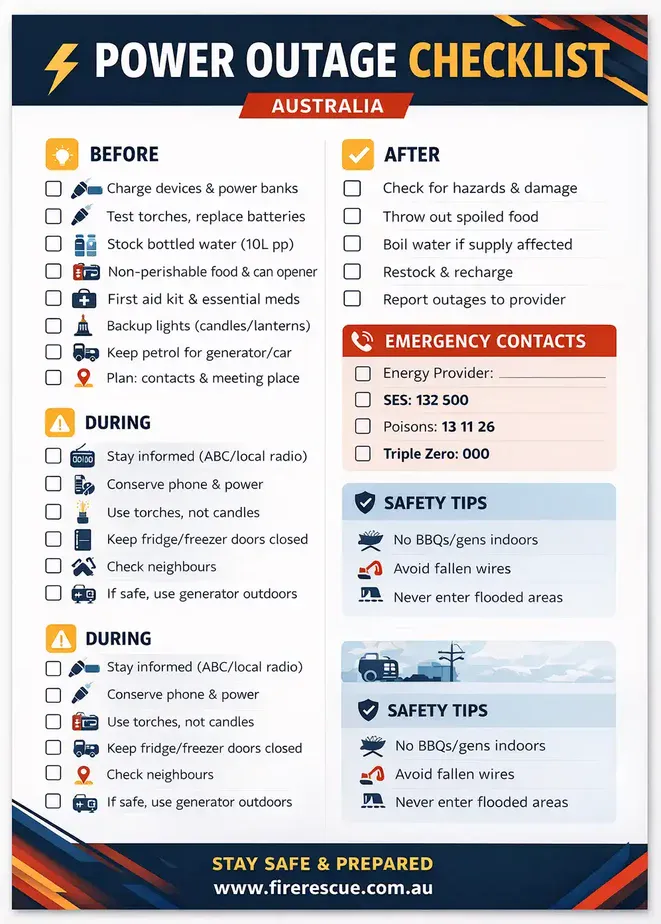
Start by assembling a basic emergency kit. Include torches with fresh batteries, a battery-powered or wind-up radio to follow updates, and enough bottled water and non-perishable food for a few days. Store matches or a lighter safely for emergency heating or cooking.
If you rely on medical devices that need electricity, speak with your health provider about backup plans. Register with your local council if you require assistance during outages. Keep mobile phones fully charged and have portable chargers ready.
Plan how you will keep food safe during an outage. Keep fridge and freezer doors closed as much as possible to maintain cold temperatures. If you have a generator, ensure it is installed by a professional and use it outdoors only to avoid carbon monoxide risks.
Beyond basic supplies, consider investing in surge protectors for essential appliances to guard against power spikes when electricity returns. Also, prepare alternative cooking methods such as a gas stove or barbecue, ensuring you have enough fuel stored safely.
Prepare a family emergency plan that includes meeting points, communication methods, and roles for each member during an outage. Practice this plan so everyone knows what to do and where to go if the power fails unexpectedly.
Household Safety Checks
Regularly check smoke alarms and fire extinguishers. Power outages can increase fire risk if candles are used or cooking is done on open flames. Never leave flames unattended. Have a family meeting to discuss outage safety and communication plans.
Inspect your electrical wiring and appliances periodically to ensure they are in good working order. Faulty wiring can cause fires or damage when power is restored. If you notice any issues, engage a licensed electrician to perform repairs or upgrades.
During a Power Outage: What To Do
As soon as the power goes out, stay calm and check your emergency kit. Use your torch or battery-powered light rather than candles if possible to reduce fire risk. Tune into your battery-powered radio for local updates and instructions from authorities.
If you are using a generator, keep it outside and away from windows and doors. Never run it in enclosed spaces. Avoid overloading electrical circuits when power returns, and turn off appliances to prevent surges.
Limit phone use to conserve battery power. Check on neighbours, especially elderly or vulnerable people, but maintain safe distancing if advised. Keep freezer and fridge doors closed to maintain food safety.
Be cautious when using alternative heating or cooking methods. Ensure proper ventilation when using gas heaters or barbecues indoors to prevent carbon monoxide poisoning. Always follow manufacturer instructions and safety guidelines.
If you rely on electrically powered medical equipment, have a contingency plan such as relocating to a place with power or using backup batteries. Inform emergency services if you anticipate needing urgent assistance due to power loss.
Fire Safety During Outages
Fires can start easily when power is out and alternative lighting or cooking methods are used. Avoid placing candles near curtains or flammable materials. Have a fire extinguisher handy and know how to use it. If you detect smoke or fire, call Fire/Rescue on 000 immediately.
Consider installing battery backup smoke detectors to ensure alerts remain active during outages. Keep fire escape routes clear and ensure everyone in your household knows how to exit safely in case of fire.
After the Power is Restored
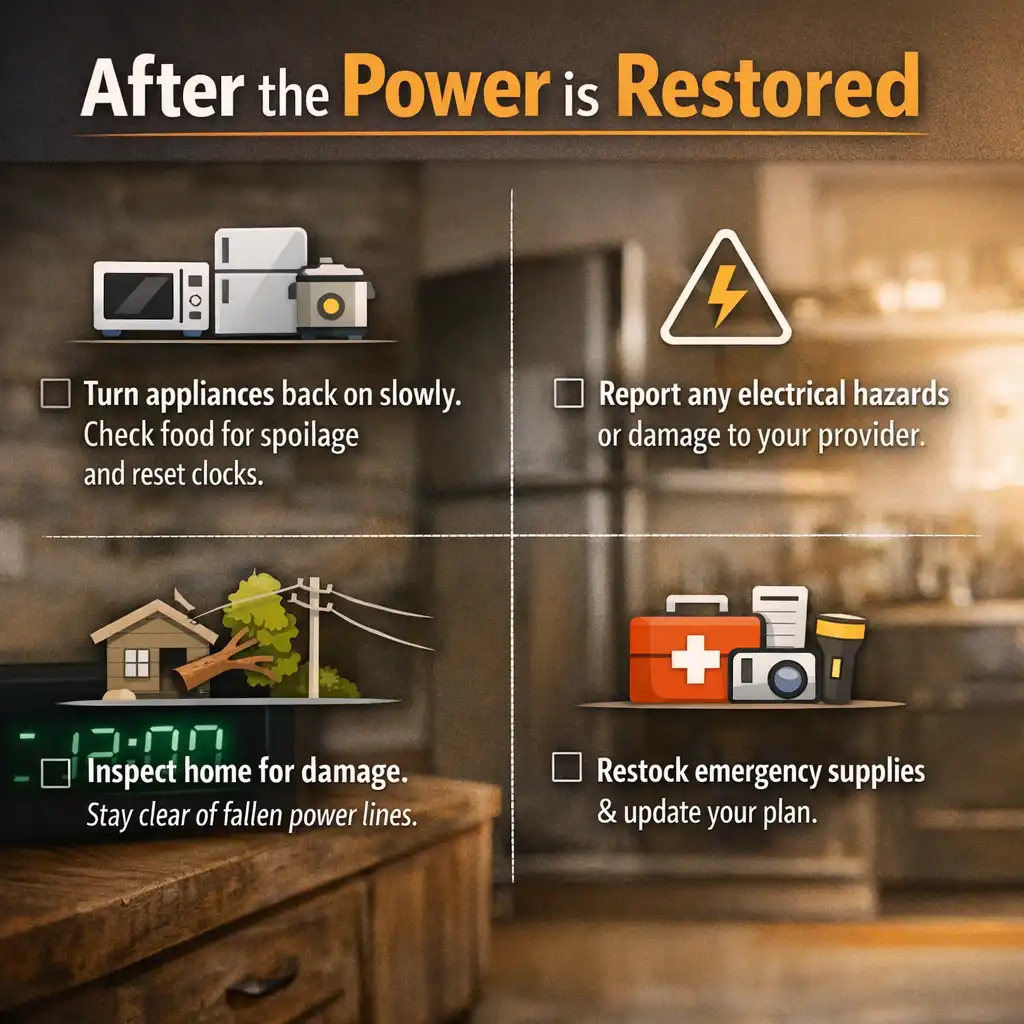
When power returns, turn appliances back on slowly to avoid overloads and damage. Check refrigerated food for spoilage and discard anything unsafe. Reset clocks and alarms as needed.
Report any electrical hazards or damage to your electricity provider promptly. Continue to monitor official announcements in case of further outages or safety warnings.
Inspect your home for any damage caused during the outage, such as downed power lines or fallen trees. Do not touch or approach fallen wires and report them to your energy supplier immediately.
Evaluate your emergency kit and replenish supplies used during the outage to ensure readiness for future events. Review your emergency plan and update it based on lessons learned.
If You Only Do Five Things
Prepare an emergency kit with torches, water, and food. Charge your phones and have portable chargers ready.
Keep a battery-powered radio handy to receive updates from local authorities.
Avoid using candles; opt for safe lighting to reduce fire risk.
Check on neighbours who may need help, especially the elderly or disabled.
Call 000 immediately if there is a fire, medical emergency, or danger to life.
Who Does What In Australia?
Fire/Rescue teams respond to fires, hazardous material incidents and rescues. They also advise on fire safety during outages.
Police manage public safety and security during outages, help control traffic, and respond to emergencies.
Ambulance services attend medical emergencies and transport patients to hospital.
SES (State Emergency Service) assists with flood, storm damage, and power outages by providing emergency support and helping communities recover.
Staying Informed and Connected
Australian energy providers like Ausgrid, Energex, and Western Power offer outage maps and alerts on their websites and phone apps. Register for SMS or email updates if available in your area.
Social media channels from official emergency services provide real-time information. Avoid sharing unverified rumours that can cause confusion. Trust local government and trusted news outlets for your information during an outage.
Consider establishing a neighbourhood communication network using text groups or social media to share verified updates and assist vulnerable community members during outages. This helps maintain connection and coordination when traditional communication may be disrupted.
Special Considerations for Rural and Remote Areas
Power outages last longer and are more common in rural Australia. It is especially important to keep extra supplies and fuel on hand. Check that communication devices are working and know the location and contact details of your nearest emergency services.
If you use well water, consider how a power outage affects your supply. Have backup water stored and a plan to maintain hygiene and drinking water safety.
Rural residents should also prepare for limited access to services during outages, including fuel stations and grocery stores. Planning ahead by stocking essentials and arranging alternative transport options can reduce hardship.
Satellite phones or battery-powered communication devices may be valuable in remote areas where mobile coverage is unreliable. Ensure these devices are charged and tested regularly.
Supporting Vulnerable Australians
Older people, those with disabilities or medical conditions, and families with young children may need extra help during outages. Neighbours and community groups can play a vital role in checking in and sharing resources.
If you care for someone vulnerable, keep a detailed list of their needs, medications, and emergency contacts. Notify your local council or healthcare provider if you need assistance during power outages.
Community organisations often run programs to assist vulnerable groups during emergencies. Engage with these networks to access support services and share information on coping strategies.
Consider preparing a personal emergency kit tailored to specific health or mobility needs. Include extra medication, mobility aids, and contact information for healthcare providers.
Conclusion: Being Ready Counts
Power outages are a fact of life in Australia. Preparing ahead with a clear checklist reduces stress and risks. Stay informed, keep safety front of mind, and know who to call for help. By taking these steps, you protect your home, family, and community effectively.
Remember that preparedness is an ongoing process. Regularly review and update your emergency plans and supplies to adapt to changing circumstances and new information. Sharing knowledge and resources with neighbours strengthens community resilience against outages and other emergencies.
For emergencies at any time, dial 000. Follow advice from your local Fire/Rescue, SES, Police, and Ambulance services.

FireRescue Training Hub
Access practical fire and emergency study support resources, downloads, checklists, audio guides, and member-only course content.
- Course library
- PDF downloads
- Audio guides
- Checklists
Study support only. Not accredited training or a replacement for workplace procedures.
About the author and safety review
Ken Walker
Former Station Officer and fire service educator
Former career firefighter with extensive career and volunteer fire service experience.
Qualifications: Associate Diploma of Applied Science in Fire Technology; Institute of Fire Engineers studies.
Author profilehttps://www.firerescue.com.au/about-us/