Fire & Rescue Insights
Tunnel Fire Ventilation Research
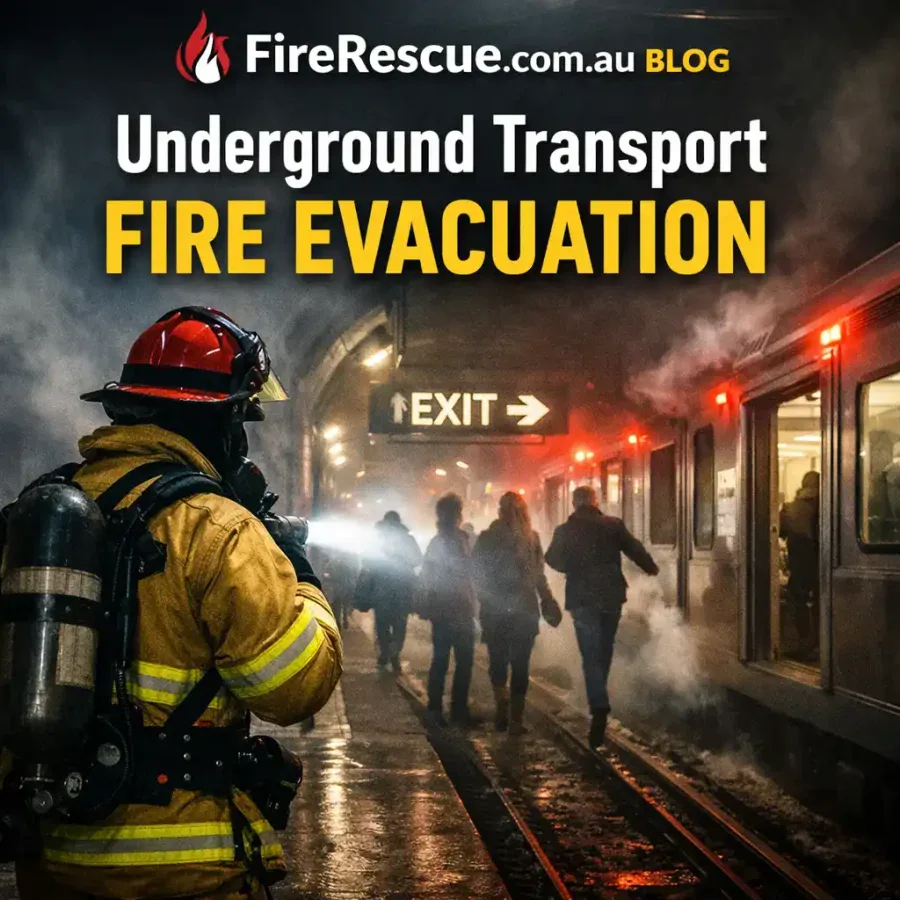
Tunnel fire ventilation research plays a critical role in enhancing safety protocols within Australia’s growing underground transport infrastructure. Effective ventilation systems are essential to manage smoke, heat, and toxic gases during fires, ensuring evacuation routes remain viable and emergency responders can safely access affected areas.
This ongoing research focuses on improving airflow dynamics, integrating advanced detection technologies, and refining emergency response strategies. Understanding these developments helps emergency services, infrastructure operators, and the public prepare for and mitigate fire-related risks.
Practical application of these findings supports safer tunnel designs and informed training for Fire/Rescue personnel, Police, Ambulance, and the State Emergency Service (SES), ensuring a coordinated approach during tunnel fire incidents.

Tunnel Fire Ventilation Research
A clean, practical Australian guide covering smoke control, airflow research, detection systems, evacuation support, and emergency response value in tunnel fire incidents.
Background and Context
Australia’s urban development has led to an increase in underground tunnels used for road traffic, rail, and utilities. These enclosed environments pose unique challenges when fires occur, mainly because smoke and heat can rapidly reduce visibility and air quality. Tunnel fire ventilation research has, therefore, become a key area of focus to improve safety standards and emergency response effectiveness.
Ventilation systems in tunnels are designed to control the movement of smoke and hot gases, directing them away from evacuees and emergency crews while maintaining breathable air in escape routes. The research underpinning these systems draws from fire dynamics, fluid mechanics, and materials science to optimise airflow patterns and ensure resilient infrastructure.

The critical importance of this research is underscored by the potential severity of tunnel fires, which can quickly become life-threatening due to confined spaces and limited exits. As a result, tunnel fire ventilation research is closely linked with broader emergency management practices and infrastructure design regulations in Australia.
Moreover, with the expansion of smart city initiatives and increased integration of technology in infrastructure, tunnel ventilation research has begun to incorporate intelligent systems that adapt to real-time conditions. These systems can automatically adjust fan speeds and airflow directions based on sensor inputs, improving efficiency and response times during fire emergencies.
Research also explores the impact of various tunnel geometries and lengths on smoke propagation. Longer tunnels with multiple curves or junctions create complex airflow patterns that challenge traditional ventilation methods. Understanding these factors is essential for tailoring ventilation strategies to specific tunnel designs, ensuring maximum safety regardless of tunnel configuration.
In addition to these factors, environmental conditions such as ambient temperature, humidity, and external wind pressures also influence smoke movement and ventilation effectiveness. Researchers thus study the interaction between natural ventilation effects and mechanical ventilation systems to develop hybrid approaches that maximise smoke control while minimising energy consumption.
Another emerging area is the assessment of ventilation system resilience during power outages or system failures. Backup power solutions and fail-safe mechanisms are critical to ensure continuous operation during emergencies, and current research evaluates redundancy strategies and system robustness under extreme conditions.
Key Areas of Tunnel Fire Ventilation Research
Airflow Modelling and Control
A major research focus is on predicting and managing airflow during fire scenarios. Computational fluid dynamics (CFD) modelling allows engineers to simulate how smoke and heat will behave within a tunnel, testing different ventilation strategies without real-world risk. These models help identify optimal fan placement, speed settings, and ventilation modes (such as longitudinal or transverse ventilation) to control smoke movement effectively.
Recent advancements in CFD tools incorporate more sophisticated turbulence models and account for the effects of heat release rates and chemical reactions during combustion. This leads to more accurate predictions of smoke layer heights and temperature distributions, which are critical for designing ventilation systems that protect evacuation routes from hazardous conditions.
Furthermore, researchers are exploring real-time adaptive control systems that use CFD outputs integrated with sensor data to dynamically adjust ventilation parameters during a fire. This proactive management enhances smoke control and reduces the risk to occupants and responders.
Detection and Monitoring Technologies
Integrating advanced sensors capable of detecting smoke, heat, and toxic gases early is vital. Research into more sensitive and reliable detection equipment supports rapid activation of ventilation systems and emergency protocols. Real-time monitoring also provides Fire/Rescue teams with critical information on fire location and intensity, enabling more effective intervention.
In addition to traditional smoke and heat detectors, there is ongoing exploration of optical and laser-based sensors that can detect minute changes in air composition and visibility. These technologies offer faster detection times and can differentiate between false alarms and genuine fire events, reducing unnecessary system activations.
Moreover, integration of sensor networks with artificial intelligence (AI) algorithms is being researched to enhance decision-making by predicting fire development and suggesting optimal ventilation responses. This integration represents a significant step toward fully automated fire management systems within tunnels.
Human Safety and Evacuation Modelling
Understanding how people move and respond to smoke in tunnels informs ventilation system design to maintain safe evacuation routes. Research includes studying smoke toxicity levels, visibility thresholds, and crowd behaviour under fire conditions to ensure ventilation strategies provide adequate protection for occupants until they can exit or be rescued.
Simulation of human behaviour during emergencies, including panic and congestion effects, helps emergency planners develop more effective evacuation procedures. These models also assist in designing signage, lighting, and communication systems that guide occupants safely and efficiently to exits.
Recent studies also examine the psychological impact of tunnel fire emergencies on occupants, aiming to refine communication strategies that reduce panic and encourage orderly evacuation. Understanding human factors complements technical ventilation design to create holistic safety systems.
Materials and Fire Resistance
Research into fire-resistant construction materials and coatings complements ventilation considerations by reducing fire spread and structural damage. These materials can affect heat generation and smoke production rates, factors essential to ventilation system performance assessments.
Innovations in intumescent coatings and fire-retardant composites provide additional layers of protection. These materials expand when exposed to heat, forming insulating barriers that slow temperature rise and limit smoke production, thereby giving ventilation systems more time to manage the environment and protect occupants.
Ongoing research also evaluates the longevity and environmental impact of fire-resistant materials, ensuring that safety improvements are sustainable and compatible with tunnel maintenance practices. The integration of these materials within tunnel linings and critical infrastructure components contributes significantly to overall fire resilience.
Practical Implications for Emergency Response
For emergency services in Australia, tunnel fire ventilation research translates into better operational protocols and collaboration during incidents. Fire and Rescue teams rely on ventilation systems to clear smoke, enabling safer access and more effective firefighting. Understanding ventilation system design and function is a critical part of their training.
Police play a key role in managing tunnel access, directing traffic, and securing evacuation routes. Their coordination with Fire/Rescue ensures that emergency operations proceed smoothly and public safety is maintained.
Ambulance services focus on rapid treatment and transport of those affected by fire or smoke inhalation. Early ventilation activation reduces smoke exposure, improving survival chances and recovery outcomes.
The State Emergency Service (SES) may assist in supporting evacuation efforts and managing secondary hazards such as structural damage or power failures. Their role complements the specialised expertise of Fire/Rescue and other agencies.
Training exercises increasingly incorporate realistic simulations of tunnel fires, allowing emergency teams to practice coordination and ventilation system management in controlled environments. These drills improve response times and decision-making under pressure, which are critical during real incidents.
Furthermore, collaboration between engineering experts and emergency responders during the design phase of new tunnels ensures that ventilation systems are tailored to operational needs. This integration enhances safety outcomes and streamlines emergency procedures.
When a tunnel fire occurs, the community should call 000 immediately to report the incident. Prompt notification triggers the coordinated response from Fire/Rescue, Police, Ambulance, and SES, leveraging ventilation systems and research-backed procedures to manage the emergency effectively.
In addition, the lessons learned from past tunnel fire incidents worldwide are incorporated into Australian emergency response training and ventilation design. Case studies of major tunnel fires highlight the importance of rapid ventilation activation and the challenges posed by smoke movement, informing continuous improvements in protocols and system capabilities.
Community education about tunnel fire risks, evacuation procedures, and the role of ventilation systems is increasingly recognised as essential. Public awareness campaigns complement technical measures by preparing tunnel users to respond calmly and effectively during emergencies.
Key takeaways
Tunnel fire ventilation research is vital for managing smoke and heat in emergencies, improving occupant safety and supporting emergency service operations.
Advanced modelling, detection technologies, and materials research provide practical insights that inform ventilation system design and emergency response protocols.
Emergency services including Fire/Rescue, Police, Ambulance, and SES work collaboratively during tunnel fire incidents, leveraging ventilation systems to protect lives and infrastructure. Always call 000 if a tunnel fire is suspected.