Proceed to the Fireground — Safe Access, Navigation, Observation and Arrival Reports
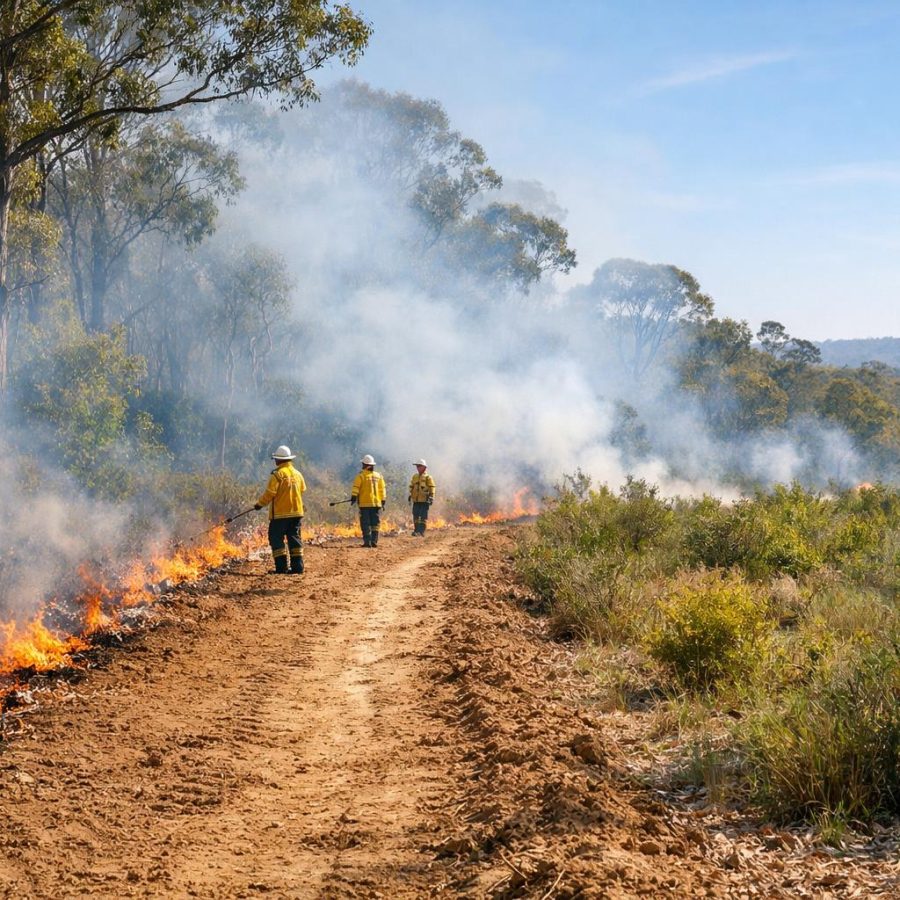
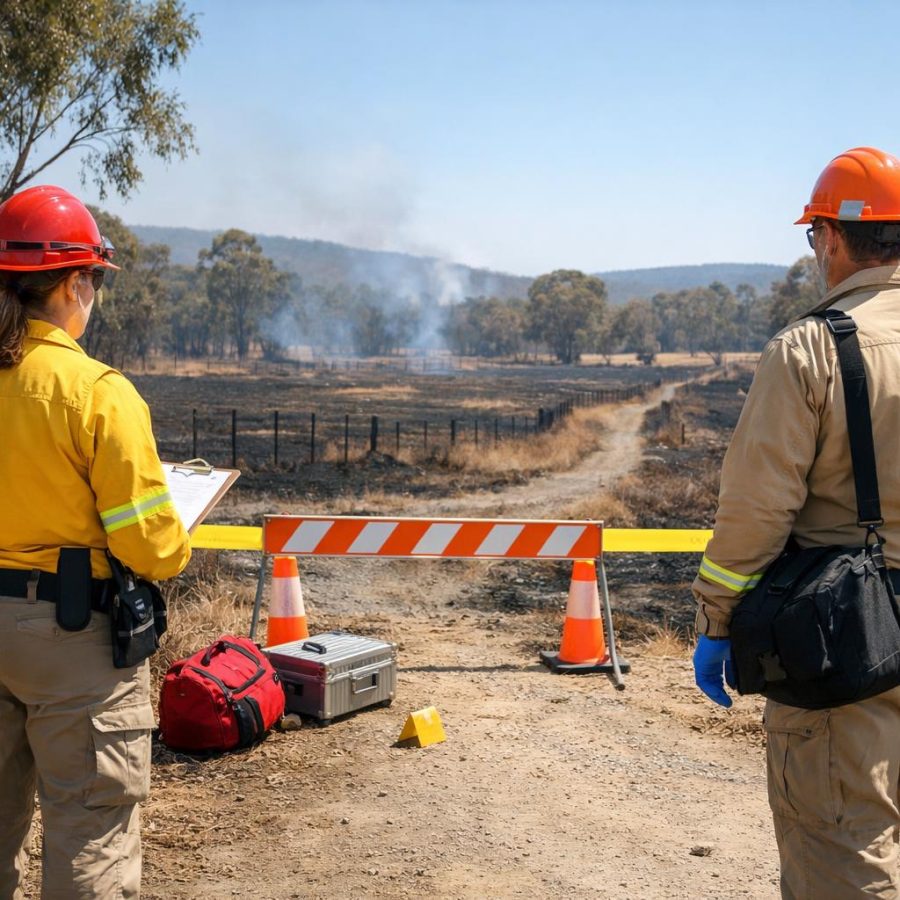
Proceeding to the fireground is not simply travel between two points. It is an active operational stage where crews confirm the wildfire location, determine and achieve safe access, avoid unnecessary harm, observe possible fire-cause evidence, use navigational aids and provide the required arrival report. Good fireground entry begins with disciplined movement.
Part 3 refresher progress
Mark each section as refreshed while you work through the approach and arrival process.
By the end of Part 3, you should be able to:
Explain why the wildfire location must remain confirmed while the crew is on approach.
Describe the need to achieve access without injury or damage to vehicles, equipment or environmentally sensitive areas.
Recognise that evidence observed on approach may be relevant to wildfire cause and must be reported appropriately.
Identify the importance of navigational aids and arrival reports during the proceed-to-fire stage.
Confirm the wildfire location while on approach
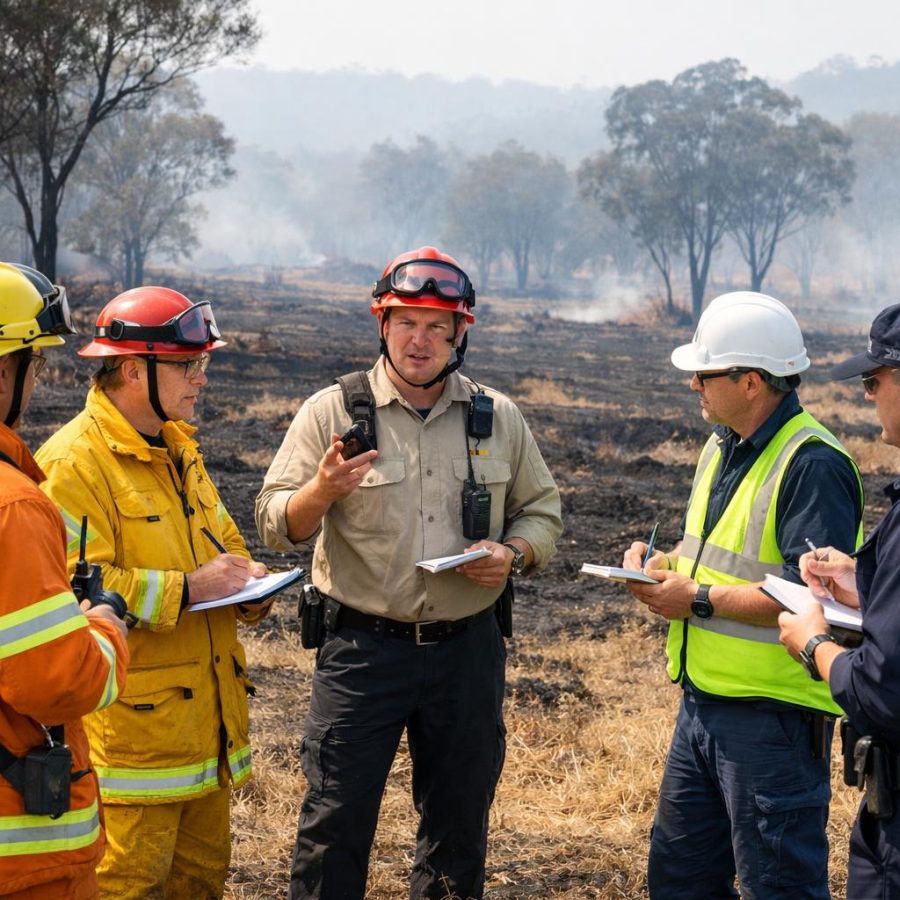
The fireground approach begins with ongoing confirmation of the wildfire location, either through observation or from instructions received while travelling.
Part 2 focused on confirming the location before departure. Part 3 continues that responsibility while the crew proceeds to the wildfire. The location is not treated as fixed simply because the vehicle has left. Instead, the course requires the location to be confirmed by observation or from instructions while on approach.
This matters because the proceed-to-fire stage connects preparation with arrival. A crew is moving from planned response into the real operating environment. Therefore, it must remain alert to whether the fire location is becoming clearer, whether instructions are updated or whether observations on approach confirm the response direction.
The key principle is disciplined confirmation. The crew should not treat movement as an automatic process. It remains part of the operation. The approach is a time to remain aligned with available information and to avoid drifting away from the confirmed task. This helps the crew enter the incident area with better orientation and a clearer understanding of where it is reporting from.
Within the WILDFIRE READY Cycle, this step forms the first part of the letter L: location confirmed. The crew is no longer only preparing to move. It is actively validating its movement toward the fireground.
Approach travel remains an operational task. Location confirmation continues until the crew has properly arrived and reported.
Determine and achieve safe access to the area
Access must be determined and achieved without injury to personnel or damage to vehicles, equipment or environmentally sensitive areas.
Safe access is central to proceeding to the fireground. The course makes this very clear. It is not enough to simply reach the area. Access must be determined and then achieved in a way that protects personnel, vehicles, equipment and environmentally sensitive areas.
This gives the access task several layers. First, there is the question of whether the area can be approached as expected. Second, there is the way that approach is made. Third, there is the effect of that approach on people, operational resources and the environment. Each layer matters because a rushed or poorly considered entry can create problems before the crew has even begun its fireground work.
The phrase “without injury” keeps people at the centre of the decision. The phrase “without damage” extends that care to vehicles, equipment and sensitive areas. Together, they reinforce a disciplined standard. Access is not judged only by whether the crew got through. It is judged by whether the crew achieved that access properly.
This section also links to later parts of the series. In Part 5, fireground hazards and risk reduction become a major focus. However, risk thinking starts earlier. It is already active during the journey into the area. The crew does not wait until it sees flame to start protecting itself and its resources.
Personnel safety
Access should be achieved without injury to the people involved in the response.
Operational resource care
Vehicles and equipment should not be damaged through poorly managed access.
Environmental awareness
Environmentally sensitive areas must be recognised and unnecessary harm minimised.
Best practice
Treat access as a safety and resource decision, not only a route-finding exercise.
Common mistake
Assuming the quickest route is automatically the safest or most suitable access option.
Observe and report possible fire-cause evidence
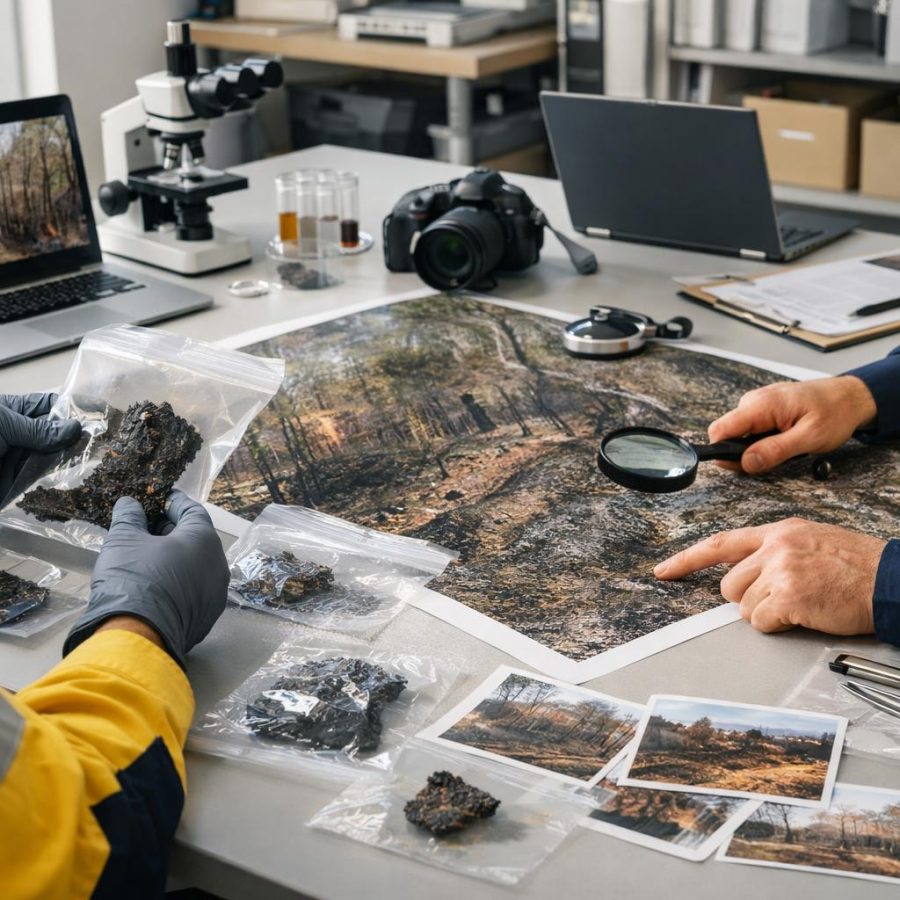
Evidence observed on approach that may be relevant to the cause of the wildfire is noted and brought to the attention of the appropriate authorities.
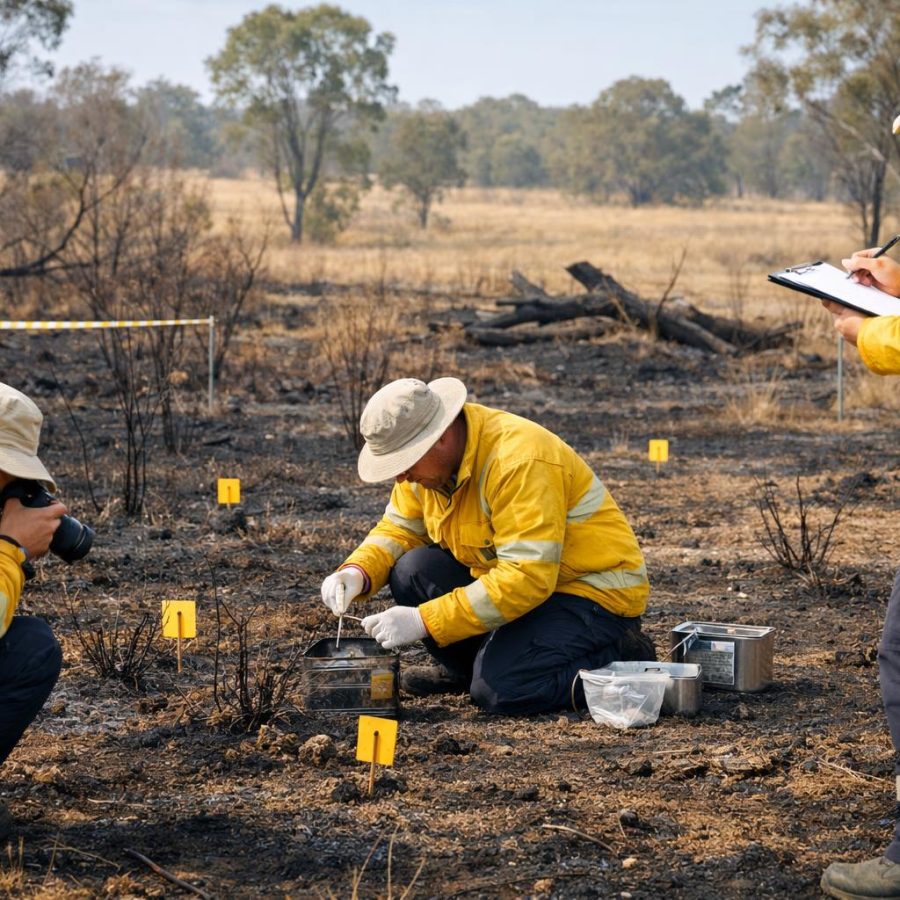
The course includes an important observation duty during approach. If the crew sees evidence that may be relevant to the wildfire cause, it is not ignored. It is noted and brought to the attention of the appropriate authorities. This places careful observation inside the proceed-to-fire stage.
This requirement does not turn every crew member into an investigator. Rather, it asks crews to remain alert to relevant evidence and to pass that information on through the correct pathway. The focus is on noticing, noting and reporting. A crew member should understand that what is seen while approaching may later matter to the wider incident picture.
The knowledge evidence for the course also includes fire cause, which supports the value of this requirement. Part 6 will return to evidence protection more directly. For now, Part 3 establishes the first step: observe carefully while approaching and ensure relevant cause-related information is not lost.
Good observation also strengthens broader situational awareness. As the crew moves closer, it is gathering information about the fireground context. Some of that information may concern location or access. Some may concern the environment. Some may concern possible cause evidence. The disciplined crew remains open-eyed without drifting away from its immediate travel and safety responsibilities.
If something observed on approach may relate to wildfire cause, note it and bring it to the attention of the appropriate authority.
Use navigational aids for planning and operational purposes
Navigational aids are used during the response for planning and operational purposes. The course knowledge evidence includes aerial photographs, compass, global positioning systems and maps.
Navigation supports more than route finding. In the Suppress wildfire course, navigational aids are used for planning and operational purposes. This makes navigation part of disciplined response management rather than a background convenience.
Different navigational aids may support the crew in different ways. The course knowledge evidence identifies aerial photographs, compass, global positioning systems and maps. Together, these tools help crews understand location, support access decisions and assist with the operational picture as they proceed toward the fireground.
The value of navigation is strongest when it supports clear thinking. A crew that understands where it is, where it is heading and how that approach fits the response plan is better positioned to arrive with purpose. Navigation therefore links Part 2 preparation with Part 3 movement and reporting.
It is also important that navigation remains connected to organisational process. The course emphasises organisational documentation, policies and procedures elsewhere in its knowledge evidence. In practical terms, the crew uses navigational aids in a way that supports the response structure, not as an isolated personal preference.
Navigation is not only about reaching the fire. It supports safe access, operational awareness and a clearer arrival report.
Navigation refresher check
Notify arrival and provide the appropriate report
The proceed-to-fire stage concludes with notification of arrival and the provision of an appropriate report.
Arrival reporting is the formal bridge between travelling to the incident and beginning on-scene activity. The crew has approached, confirmed the location, achieved access, used navigational aids and observed matters that may need reporting. It now needs to notify arrival and provide the appropriate report.
This step prevents the approach phase from ending in silence. A crew that has arrived but has not reported has not fully completed the proceed-to-fire requirement. The notification matters because it supports shared awareness. It tells the operational system that the crew has reached the area and is ready to transition into the next stage of work.
The course does not prescribe the exact report wording in this element. Instead, it requires an appropriate report to be provided. That keeps the requirement tied to organisational expectations. The key lesson for this refresher is simple: arrival should be communicated, and the report should be suited to the role, task and organisational process.
Part 4 will then move into the next operational priority: protecting people and assets. However, that work begins more cleanly when the crew has completed this arrival step properly. Good reporting keeps the operation connected from one stage to the next.
Notify
Arrival is communicated rather than assumed.
Report
The appropriate report is provided through the required operational pathway.
Transition
The crew is now ready to move into the next response stage with shared awareness.
WILDFIRE READY focus: L
Part 3 activates the letter L in the WILDFIRE READY Cycle: Location confirmed, safe access achieved and observations reported.
Location confirmed
The crew confirms the wildfire location while on approach through observation or instructions.
Low-harm access achieved
Access is achieved without injury to personnel or damage to vehicles, equipment or environmentally sensitive areas.
Learning from observations
Relevant fire-cause evidence observed on approach is noted and brought to the attention of the appropriate authority.
Part 3 is the bridge between preparation and action. It turns planning into disciplined movement. The crew confirms, accesses, observes, navigates and reports. None of these actions are side issues. They are all part of reaching the fireground properly.
A strong approach protects the crew from avoidable mistakes. It also protects equipment, vehicles and sensitive areas, while preserving information that may matter later. By the time arrival is reported, the crew should have maintained a clear line from the response information received in Part 2 through to the fireground entry process in Part 3.
Scenario: The crew is approaching the wildfire area
The crew is travelling toward the fireground. Which action best matches the Part 3 proceed-to-fire process?
Part 3 refresher check
Choose the best answer for each question.
1. While on approach, the wildfire location is confirmed by:
2. Access to the area should be achieved without:
3. Which group contains recognised navigational aids from the course knowledge evidence?
Say the Part 3 sequence out loud
Use this quick drill to reinforce the proceed-to-fire process before moving into Part 4.
- Confirm the wildfire location by observation or instructions while on approach.
- Determine and achieve access safely.
- Avoid injury to personnel and damage to vehicles, equipment or environmentally sensitive areas.
- Note relevant evidence observed on approach that may relate to wildfire cause.
- Use navigational aids for planning and operational purposes.
- Notify arrival and provide the appropriate report.
FireRescue Training Hub
Access practical fire and emergency study support resources, downloads, checklists, audio guides, and member-only course content.
- Course library
- PDF downloads
- Audio guides
- Checklists
Study support only. Not accredited training or a replacement for workplace procedures.
About the author and safety review
Ken Walker
Former Station Officer and fire service educator
Former career firefighter with extensive career and volunteer fire service experience.
Qualifications: Associate Diploma of Applied Science in Fire Technology; Institute of Fire Engineers studies.
Author profilehttps://www.firerescue.com.au/about-us/