Safety Update
Key takeaways
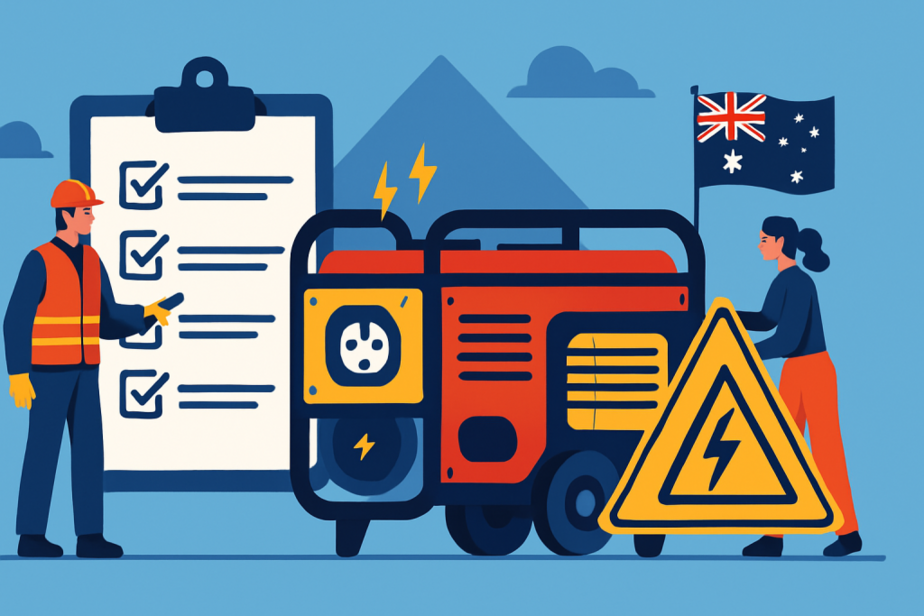
Using a portable or standby generator can provide critical power backup during outages, but improper use poses serious safety risks including carbon monoxide poisoning, electrical hazards, and fire.
This checklist offers clear, plain-English guidance designed specifically for Australian homes, families, and workplaces to ensure safe generator operation, maintenance, and storage.
Knowing who to contact in emergencies and understanding the roles of Fire/Rescue, Police, Ambulance, and SES can help you stay prepared and respond correctly if incidents arise.
Background and context
Generators have become an essential part of many Australian households and workplaces, especially in regional and remote areas prone to power interruptions caused by weather events or infrastructure failures. Their ability to provide temporary power can be lifesaving and enable business continuity. However, generators produce carbon monoxide, an invisible and odourless gas that is potentially fatal if inhaled in confined spaces. Electrical faults and fuel handling errors also contribute to risks of fire and electric shock.
Understanding how to use generators safely is vital to protect your family, employees, and property. This article outlines a practical safety checklist tailored for Australian conditions and regulatory frameworks. It emphasises straightforward steps and preventive measures that anyone can apply.
With the increasing frequency of extreme weather events such as bushfires, storms, and floods across Australia, the reliance on generators has grown significantly. This makes awareness of safe generator use more critical than ever. Ignoring safety guidelines not only endangers lives but can also result in costly property damage and legal consequences. Moreover, local councils and state authorities often have regulations governing generator installation and operation, so compliance is essential to avoid penalties.
Generator Safety Checklist Australia: Plain-English Basics
Before operating any generator, ensure you read the manufacturer’s instructions carefully and follow all recommended safety guidelines. Always place the generator outdoors in a well-ventilated area, at least several metres from windows, doors, or vents to avoid carbon monoxide entering occupied spaces. Never run a generator inside your home, garage, basement, or any enclosed or partially enclosed area.
Use heavy-duty, outdoor-rated extension cords that are free from damage and rated to handle the electrical load. Connect appliances directly to the generator or via these cords rather than hardwiring the generator into your home’s electrical system unless installed by a licensed electrician with appropriate transfer switches. This prevents backfeeding, which can endanger utility workers and cause electrical fires.
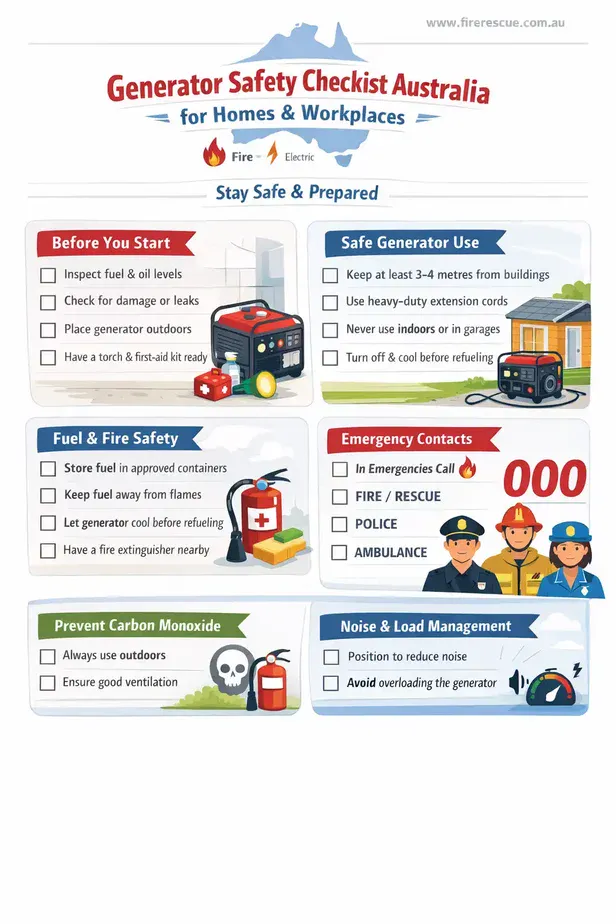
Generator Safety Checklist for Homes & Workplaces
A practical Australian-ready checklist covering safe setup, operation, fuel handling, carbon monoxide prevention, and emergency response.
Keep this guide handy before storm season, blackouts, or backup generator use.
Maintain a safe distance from the generator while it’s running, and avoid touching it with wet hands or when standing in water to reduce the risk of electric shock. Turn off the generator and let it cool before refuelling. Store fuel in approved containers in a cool, ventilated area away from ignition sources. Never store fuel inside living areas.
It is also important to consider the noise levels generated by portable generators. Excessive noise can be a nuisance to neighbours and may be subject to local noise regulations. Position your generator as far away from neighbouring properties as possible and consider using sound-dampening enclosures specifically designed for generators, ensuring that ventilation and safety are not compromised. This approach helps maintain good community relations and compliance with local laws.
When selecting a generator, choose one with sufficient capacity to handle your essential appliances without overloading. Oversizing a generator can be inefficient and costly, while undersizing can cause damage to the generator or connected devices. Consult an electrician or generator specialist if unsure about the correct size and type for your needs.
Before You Start: Inspection and Preparation
Check the generator’s oil and fuel levels before use, and inspect for any visible damage or leaks. Ensure the unit is grounded if required by the manufacturer. Confirm that smoke and carbon monoxide alarms in your home or workplace are operational. Have fresh batteries on hand and test alarms regularly.
In addition to visual inspections, it is wise to perform a brief test run of your generator before an actual power outage occurs. This helps verify that the unit starts properly, runs smoothly, and powers your critical appliances as expected. Running the generator periodically also prevents fuel degradation and mechanical issues that can arise from prolonged inactivity.
During Operation: Monitoring and Safety
Do not overload the generator; only connect appliances within its rated capacity. Monitor the generator regularly for abnormal sounds, smells, or performance issues. Keep children and pets away from the running generator. Ensure adequate ventilation is maintained at all times.
It is also essential to keep a fire extinguisher rated for electrical and fuel fires close to the generator area. In the event of a fire, knowing how to safely use the extinguisher can prevent disaster. Additionally, avoid refuelling the generator while it is running or still hot, as fuel vapours may ignite. Always refuel in a well-ventilated outdoor area and wipe up any spills immediately.
If your generator has an automatic shutoff feature for low oil or overload conditions, ensure it is enabled and functioning correctly. These safety features can prevent damage to the generator and reduce risks during operation.
Practical Implications: Emergency Preparedness and Response
Despite precautions, emergencies can occur. If you suspect carbon monoxide poisoning—symptoms include headache, dizziness, nausea, and confusion—immediately turn off the generator, move everyone to fresh air, and call 000 for emergency medical assistance. Inform the operator of the carbon monoxide risk and symptoms.
Fire or smoke related to the generator requires calling Fire/Rescue on 000. Firefighters are trained to handle electrical fires and hazardous fuel situations safely. Police may be involved if there is property damage or investigation required after an incident. The State Emergency Service (SES) can provide assistance during power outages and storm events but does not attend to medical or fire emergencies.
Regularly review your emergency plans, including generator safety, with household members or workplace teams. Keep emergency contact numbers visible and ensure everyone knows how to shut down the generator quickly if needed.
It is beneficial to incorporate generator safety into broader emergency preparedness drills. Practicing how to safely operate, shut down, and respond to generator-related incidents can improve confidence and reduce panic during real emergencies. Ensure that all household or workplace members understand the risks associated with generators and the importance of following safety procedures.
Maintenance and Storage for Longevity and Safety
Conduct routine maintenance as per the manufacturer’s schedule. Change oil, replace filters, and inspect spark plugs to keep the generator in good working order. Drain fuel or add stabilisers if the generator will be stored for extended periods. Store the generator in a dry, secure location away from children and ignition sources.
Regular maintenance not only ensures reliable operation but also extends the lifespan of your generator. Keep a logbook of all maintenance activities, including dates and work performed. This record can be useful for warranty claims and resale value, as well as providing a clear history of upkeep.
When storing fuel, always follow Australian standards for fuel storage and handling. Use containers approved for petrol or diesel and mark them clearly. Avoid storing large quantities of fuel indoors or near heat sources. Additionally, periodically inspect stored fuel for signs of contamination or degradation, replacing it as necessary to maintain generator performance.
Conclusion: Staying Safe and Prepared with Generators
Generators are valuable assets during power disruptions but require respect and caution to operate safely. Following this Australian-focused safety checklist can minimise risks and protect lives and property. Knowledge of emergency contacts and roles ensures the right help arrives promptly when needed.
Remember, when in doubt or facing an emergency, call 000 immediately. Fire/Rescue, Police, Ambulance, and SES each have defined roles to support you through incidents. Your careful preparation and calm response are the best defences against generator-related hazards.
In summary, the key to safe generator use lies in preparation, proper operation, and routine maintenance. Being informed and vigilant can prevent most accidents and ensure your generator serves as a reliable backup power source when you need it most. Stay safe and power on responsibly.
FireRescue Training Hub
Access practical fire and emergency study support resources, downloads, checklists, audio guides, and member-only course content.
- Course library
- PDF downloads
- Audio guides
- Checklists
Study support only. Not accredited training or a replacement for workplace procedures.
About the author and safety review
Ken Walker
Former Station Officer and fire service educator
Former career firefighter with extensive career and volunteer fire service experience.
Qualifications: Associate Diploma of Applied Science in Fire Technology; Institute of Fire Engineers studies.
Author profilehttps://www.firerescue.com.au/about-us/