Preparedness essentials
Key takeaways for your emergency contact card printable
Creating and keeping a clear emergency contact card printable can save valuable time during urgent situations. It helps family members, colleagues, or caregivers quickly access critical phone numbers and instructions without confusion.
This guide covers the basics you need to include, how to keep it up to date, and how to use it effectively for Australian homes and workplaces. It also explains who to call for different emergencies and why having this card is a simple but powerful safety step.
Remember to always call 000 for life-threatening emergencies, and follow advice from official agencies like Fire Rescue NSW, the SES, or your local police.
What is an emergency contact card printable and why it matters
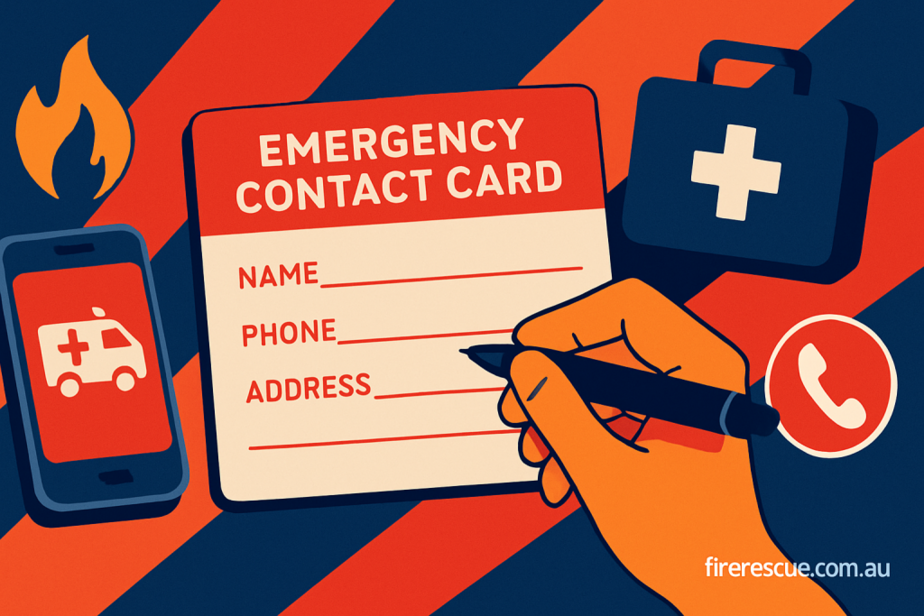
An emergency contact card printable is a physical or digital document that lists key contacts and important health and safety information. It is designed to be easily accessible during emergencies, helping people respond quickly and correctly.
In Australia, emergencies can range from house fires and bushfires to medical incidents or severe weather events. Having a clear card with contacts like family members, neighbours, doctors, and emergency services can make a real difference.
This card also serves as a reminder of important safety steps and can be adapted for workplaces to support staff preparedness and response.
Beyond just listing contacts, the card helps reduce panic and confusion by providing clear, organised information at a glance. This can be critical when seconds count, and when those responding may not know the household or workplace well.
Moreover, the emergency contact card acts as a crucial communication tool in multi-occupant residences or shared work environments. It ensures that everyone, from visitors to temporary staff, has immediate access to vital information, facilitating smoother coordination and response in times of crisis.
Emergency Contact Cards for Australian Homes
Download a clean printable PDF designed to help households keep emergency contacts visible, organised and easy to use when pressure is high.
- ✓Clear card layout for home emergency details
- ✓Printable format for quick access and visibility
- ✓Simple, practical structure for Australian households
- ✓Fast download with a clean one-page presentation
A simple preparedness resource from FireRescue Blog. Keep a printed copy somewhere easy to find.
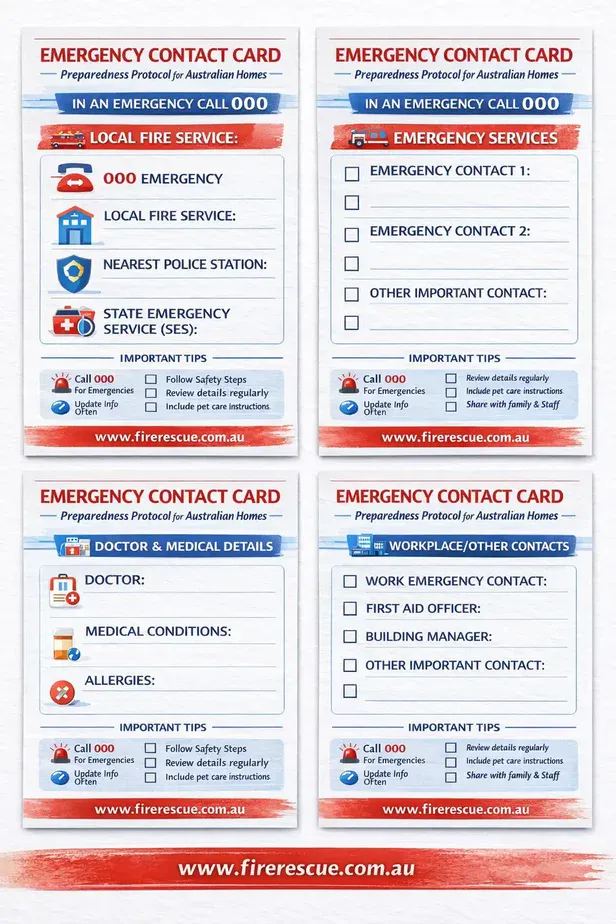
Elements to include on your emergency contact card printable
Start by listing the triple zero emergency number (000) prominently. This is the most important number for life-threatening emergencies and must be easy to find.
Next, add local emergency service contacts such as the Fire Rescue service in your state (e.g., Fire Rescue NSW, CFA in Victoria), your nearest police station, State Emergency Service (SES), and ambulance services if they have direct non-emergency numbers.
Include family members or trusted friends’ phone numbers, especially those who can assist if you are unavailable. If you have specific health concerns, note your doctor’s contact and any important medical details like allergies or medications.
Consider adding your workplace’s emergency coordinator or first aid officer contacts if the card is for an office or organisation. It’s also useful to add your local council’s emergency management office or community notices line.
Finally, keep space for quick notes such as your address, nearby landmarks, or special instructions for emergency crews.
Additionally, you might want to include any specific instructions that could assist emergency responders, such as the location of shut-off valves for gas and water, presence of pets, or any mobility aids used by occupants. This added information can streamline emergency response and improve safety outcomes.
Another valuable element to consider is including emergency evacuation routes or meeting points tailored to your home or workplace. This can guide occupants and responders to safety efficiently, especially in complex buildings or rural areas where navigation might be challenging.
How to keep your emergency contact card up to date and visible
Review your emergency contact card regularly, at least twice a year or after any significant life changes like moving house, changing jobs, or updating phone numbers.
Keep printed cards in accessible places such as the fridge door, wallet, or inside your home’s main entrance. In workplaces, place them near phones, first aid kits, or staff noticeboards.
For digital copies, save the card on your phone and cloud storage, ensuring it is easy to locate without internet access. Share a copy with trusted family or workplace contacts.
Use waterproof sleeves or laminating to protect printed cards, especially if kept outdoors or near kitchen and work areas where spills might occur.
Encourage family members and colleagues to have their own cards and understand how to use them in emergencies.
Visibility is key. Consider placing cards in multiple strategic locations to ensure quick access no matter where an emergency occurs. For example, a card in the car, on a keychain, or in a handbag can be invaluable when away from home or work.
In addition to physical placement, educating household members and employees about the card’s purpose and contents is vital. Regular drills or discussions can increase familiarity and confidence, ensuring everyone knows how to act swiftly and effectively.
If you only do five things with your emergency contact card
First, make sure the emergency triple zero number (000) is clearly visible at the top of your card for quick access.
Second, include at least two trusted contacts who can be called if you are not available or need assistance.
Third, list local fire and rescue, police, ambulance, and SES contacts relevant to your area.
Fourth, keep your card somewhere easy to find and regularly remind household members or employees where it is.
Fifth, update the card after any changes to contacts, addresses, or medical information to ensure it stays accurate and useful.
By focusing on these five points, you maximise the card’s effectiveness and ensure it serves its purpose during critical moments.
Remember that the simplicity of these steps is what makes the card so practical. Overcomplicating the card with excessive details can hinder quick comprehension during emergencies, so keep it concise yet comprehensive.
Who does what in Australia: emergency services explained
Fire Rescue services such as Fire Rescue NSW or the Country Fire Authority in Victoria respond to fires, rescues, and hazardous incidents. They lead in fire suppression and emergency evacuation support.
The Police handle law enforcement, public safety, investigations, and crowd control. They also coordinate during large emergencies and secure scenes.
Ambulance services provide medical care and transport, responding to injuries, medical emergencies, and illnesses.
The State Emergency Service (SES) assists with storm damage, flood rescue, and other natural disaster responses. They support communities with preparedness and recovery.
Other important agencies include the Australian Red Cross, which provides emergency relief and family tracing services, and local volunteer groups that often play critical roles in community safety.
Remember, for any life-threatening emergency, your first call should always be to 000.
Understanding the roles of these services helps clarify whom to contact depending on the emergency type. For example, in the event of a fire, contacting Fire Rescue is paramount, while a crime or suspicious activity should be reported to the Police. Medical emergencies require ambulance services, and natural disasters often need SES assistance. This knowledge can speed up response times and improve outcomes.
FireRescue Training Hub
Access practical fire and emergency study support resources, downloads, checklists, audio guides, and member-only course content.
- Course library
- PDF downloads
- Audio guides
- Checklists
Study support only. Not accredited training or a replacement for workplace procedures.
About the author and safety review
Ken Walker
Former Station Officer and fire service educator
Former career firefighter with extensive career and volunteer fire service experience.
Qualifications: Associate Diploma of Applied Science in Fire Technology; Institute of Fire Engineers studies.
Author profilehttps://www.firerescue.com.au/about-us/