Fire and Rescue Insights
Key takeaways
Hydrogen fires present unique challenges due to hydrogen’s low ignition energy, high flame speed and invisible flame characteristics, necessitating specialised firefighting tactics.
Effective control requires understanding hydrogen’s behaviour, utilising appropriate protective equipment, and coordinating closely with emergency services including Fire & Rescue, Police, Ambulance and SES.
Australian responders must adapt firefighting strategies to local conditions, placing emphasis on ventilation, cooling, and isolation while ensuring public safety and minimising environmental impact.
Background and context
Hydrogen is increasingly recognised as a key energy carrier in Australia’s transition towards cleaner fuels and hydrogen-powered technologies. While it offers promising benefits for reducing carbon emissions, it also presents distinctive fire hazards that emergency services must be prepared to manage. Hydrogen’s physical and chemical properties differ significantly from conventional fuels, influencing fire behaviour in ways that impact firefighting tactics.
Hydrogen is an extremely light, colourless, odourless gas that ignites at very low energy levels. Its flames are often nearly invisible in daylight, complicating detection and control. Moreover, hydrogen burns with a higher flame speed and wider flammability range compared to hydrocarbons, requiring specialised knowledge and equipment for safe and effective firefighting. These characteristics mean that traditional strategies may not always apply, and responders must be trained to recognise and mitigate hydrogen-specific risks.
Hydrogen Fire Behaviour
Flammability and Ignition Characteristics
Hydrogen has an exceptionally wide flammability range, approximately 4% to 75% by volume in air, which means it can ignite over a broad range of concentrations. Its ignition energy is very low—just a fraction of that needed for gasoline vapours—making accidental ignition more likely in many scenarios. Even small sparks, static electricity or hot surfaces can ignite hydrogen leaks.
Hydrogen flames burn with a nearly invisible pale blue or colourless flame in daylight, which can complicate visual detection and increase the risk of undetected fires spreading. The flame temperature is high, typically around 2,000 6C, capable of causing severe burns or structural damage.
Diffusion and Dispersion
As the lightest gas, hydrogen disperses rapidly upwards when released, which can reduce concentrations near the ground but increase risk in enclosed or poorly ventilated spaces. This rapid diffusion influences how fires behave, often causing flames to extend vertically swiftly and potentially impinging on overhead structures.
Hydrogen may also accumulate in confined spaces such as basements, tunnels or storage rooms, where ventilation is limited. These conditions can create explosive atmospheres and increase the risk of flashback or backfire during firefighting operations. Understanding the dynamics of hydrogen dispersion is critical for responders to anticipate fire spread and explosion potential, especially in complex environments.
Firefighting and Control Strategies
Detection and Safety Precautions
Due to the invisibility of hydrogen flames and the gas’s low ignition energy, early detection is critical. Firefighters should utilise specialised hydrogen detectors where available and maintain heightened situational awareness for signs of leaks or flame presence. Personal protective equipment must include flame-resistant clothing, eye protection, and respiratory protection suitable for potentially toxic combustion products.
Maintaining safe distances during initial assessment is vital, as hydrogen fires can rapidly escalate. Communication and coordination with other emergency services help establish exclusion zones and manage public safety effectively. Additionally, responders should be trained to identify subtle indicators such as the sound of gas escaping under pressure or unusual heat signatures, which may signal a hydrogen leak or fire before visible flames are detected.
Extinguishing Techniques
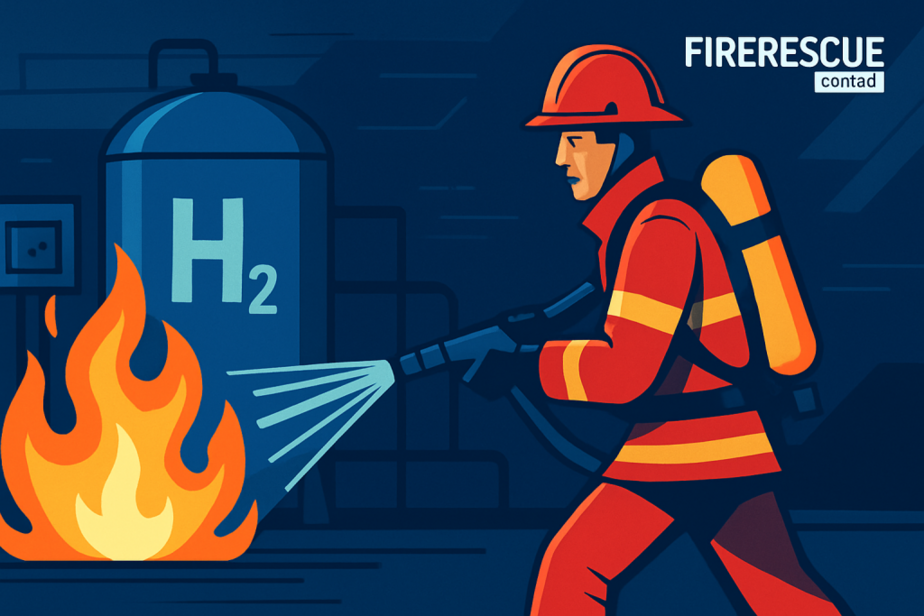
Unlike hydrocarbon fires, hydrogen fires often do not respond well to traditional foam or dry chemical extinguishers. Water spray is the preferred extinguishing agent, as it cools surrounding surfaces and can suppress vapour clouds. However, direct application on the flame may not always be effective due to the flame’s high temperature and invisible nature.
In cases of hydrogen leaks without fire, controlling the source by shutting valves or isolating the supply is a primary objective. If the hydrogen is burning, allowing it to burn off safely under controlled conditions may be preferable to extinguishing, as unburned gas accumulation can create explosive hazards. The decision to extinguish or allow controlled burning must be made carefully, considering factors such as proximity to populated areas, environmental impact, and potential for reignition.
Ventilation and Isolation
Ensuring adequate ventilation is essential to disperse hydrogen concentrations and reduce explosion risk. Firefighters should use natural ventilation where possible and avoid creating ignition sources during ventilation operations. Isolating the incident area by establishing exclusion zones protects responders and the public from exposure to flames, heat, or potential explosions. In urban or industrial settings, responders may need to coordinate with facility managers to access ventilation controls or implement forced ventilation safely. Additionally, monitoring atmospheric hydrogen levels during ventilation can guide the effectiveness of these efforts and inform ongoing safety decisions.
Role of Emergency Services in Australia
In the event of a hydrogen fire or leak, calling triple zero (000) immediately is critical. Fire & Rescue NSW, or the equivalent state fire services, are the primary responders for fire suppression and hazard control. Their training includes specialised procedures for gas fires, including hydrogen.
Police play a vital role in securing the incident perimeter, managing traffic and public safety, and assisting with evacuation if necessary. Ambulance services provide medical support for any injuries resulting from burns, inhalation, or trauma related to the incident.
The State Emergency Service (SES) may be called upon to assist with rescue operations, especially in complex environments or where structural damage has occurred. Effective inter-agency communication and coordinated response plans are essential to manage hydrogen fire incidents safely and efficiently. Regular joint training exercises and scenario planning involving all relevant agencies enhance preparedness and ensure seamless operational responses during real incidents.
Practical Implications for Responders
Hydrogen fire incidents require specialised knowledge, equipment and tactics tailored to the gas’s unique properties. Training programs for firefighters should incorporate hydrogen fire behaviour, detection techniques and control methods specific to Australian conditions and infrastructure.
Fire services should liaise closely with industry operators handling hydrogen, including refuelling stations, storage facilities and transport operators, to understand site-specific risks and mitigation measures. Pre-incident planning and risk assessments are critical to ensure preparedness. This proactive approach enables responders to familiarise themselves with site layouts, emergency shutdown procedures and potential hazards before incidents occur, significantly improving response effectiveness.
Additionally, investing in modern detection technologies and protective equipment adapted to hydrogen’s unique characteristics can greatly enhance firefighter safety and operational success. Innovations such as infrared cameras designed to detect invisible hydrogen flames, and improved respiratory protection, are becoming increasingly important as hydrogen infrastructure expands.
Another critical practical consideration is the management of hydrogen storage systems themselves. High-pressure tanks and cryogenic storage units require routine inspections and maintenance to prevent leaks and failures. Responders should be familiar with the design and operation of these systems to anticipate potential hazards during incidents. Understanding the locations of shut-off valves, pressure relief devices, and emergency venting systems can be lifesaving during an emergency.
Furthermore, the integration of hydrogen technologies into public infrastructure, such as transport networks and energy grids, calls for comprehensive risk management strategies. Emergency response plans must be updated regularly to reflect the evolving landscape of hydrogen use. Collaboration between government agencies, industry stakeholders, and emergency services is vital to develop standards, protocols and information-sharing mechanisms that support safe hydrogen utilisation.
Environmental considerations also play a role in hydrogen fire control. While hydrogen combustion primarily produces water vapour, the rapid heat release and potential for large-scale fires can impact surrounding ecosystems and urban environments. Responders should assess risks to flora, fauna, and water bodies when planning firefighting tactics, ensuring that suppression efforts do not inadvertently cause environmental harm.
Finally, public education about hydrogen safety and emergency procedures can help reduce incidents and improve community resilience as hydrogen technologies become more widespread in Australia’s energy landscape. Awareness campaigns, clear signage at hydrogen facilities, and community engagement programs all contribute to safer integration of hydrogen into everyday life.
FireRescue Training Hub
Access practical fire and emergency study support resources, downloads, checklists, audio guides, and member-only course content.
- Course library
- PDF downloads
- Audio guides
- Checklists
Study support only. Not accredited training or a replacement for workplace procedures.
About the author and safety review
Ken Walker
Former Station Officer and fire service educator
Former career firefighter with extensive career and volunteer fire service experience.
Qualifications: Associate Diploma of Applied Science in Fire Technology; Institute of Fire Engineers studies.
Author profilehttps://www.firerescue.com.au/about-us/