Fire and Rescue Insights
Understanding Flashover Prediction Models
Flashover remains one of the most dangerous phenomena encountered during structural fires. It represents the near-simultaneous ignition of all combustible materials in an enclosed space, creating a rapid and devastating transition in fire behaviour. For firefighters and emergency planners, anticipating the onset of flashover is critical to ensure safety and inform tactical decisions. This is where flashover prediction models come into play — sophisticated tools developed from advanced fire research to provide insight into fire dynamics and potential flashover timing.
Key takeaways
Flashover prediction models integrate temperature, heat release rates, and environmental factors to forecast when flashover conditions could occur, helping firefighters to better anticipate risks.
These models support emergency planning by providing data-driven insights that can influence evacuation timing, resource allocation, and operational tactics during fire incidents.
Understanding the practical applications of flashover models is essential for Fire and Rescue services, as well as for coordinating with Ambulance, Police, and the State Emergency Service (SES) during complex emergencies.
Background and Context
Flashover occurs when surfaces and gases within an enclosed space reach their ignition temperature almost simultaneously, resulting in an explosive and intense fire spread. This event drastically alters fire behaviour and creates extreme hazards, often catching occupants and firefighters off guard. Historically, many fireground casualties have been linked to unexpected flashover events, underscoring the need for effective prediction and warning mechanisms.
Research into flashover has evolved over decades, combining experimental fire science with computational modelling. Early models relied heavily on simplified heat transfer equations and empirical thresholds, such as the temperature at which pyrolysis gases ignite. Modern flashover prediction models incorporate complex variables including ventilation conditions, fuel load, room geometry, and fire growth rates. This enhanced accuracy allows for more reliable predictions, which are vital during emergency responses.
Core Elements of Flashover Prediction Models
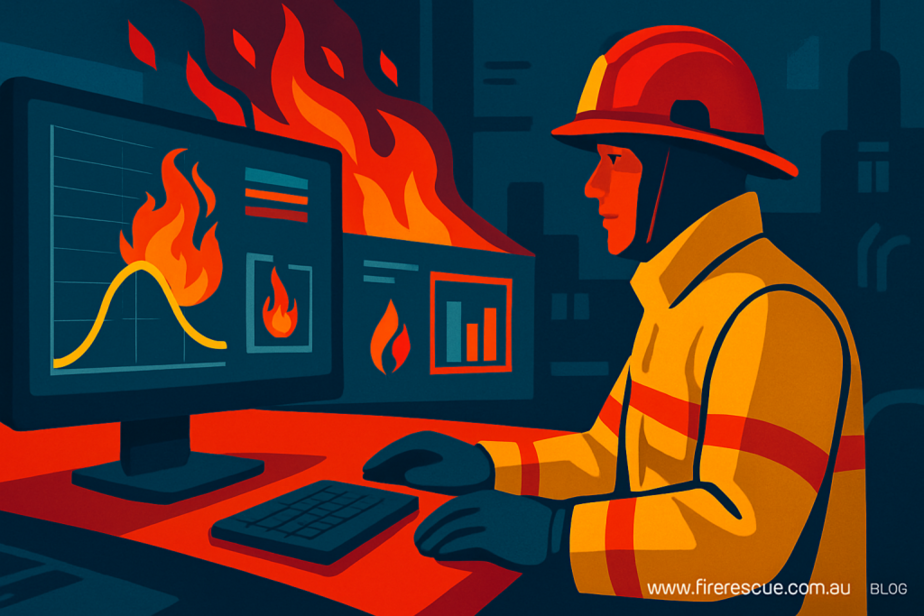
At their essence, flashover prediction models analyse the thermal environment inside a burning compartment to estimate the time and conditions leading to flashover. Key inputs include ambient temperature, heat release rate (HRR) of the fire, smoke layer temperature, and oxygen availability. Some models utilise computational fluid dynamics (CFD) to simulate fire growth and smoke movement, while others employ simplified engineering calculations for rapid field assessments.
The predictive outputs typically include critical temperature thresholds, smoke layer height, and the expected timeline to flashover. Firefighters can use these predictions to gauge when conditions may become untenable, enabling them to adjust ventilation tactics, reposition crews, or initiate evacuation protocols promptly. For incident commanders, integrating model data with real-time observations enhances situational awareness and informs resource deployment.
Types of Models
Flashover prediction models range from empirical correlations developed through controlled burns to sophisticated numerical simulations. Empirical models often use data from fire experiments to identify critical temperature or heat flux values associated with flashover onset. These models are useful for quick estimations but may lack adaptability to complex scenarios.
Numerical models, such as those based on CFD, simulate the physical and chemical processes of fire development in detail. They can account for dynamic ventilation changes, varying fuel loads, and structural configurations. While highly accurate, these models require substantial computational resources and expertise, making them more suitable for pre-incident planning and research rather than real-time emergency use.
Practical Implications for Emergency Services
Integrating flashover prediction models into operational protocols offers several advantages for Fire and Rescue services. Firstly, it enhances firefighter safety by providing early warnings of hazardous conditions, allowing personnel to withdraw or implement protective measures before flashover occurs. Secondly, it improves incident command decisions by offering data-driven insights into fire progression, thus refining tactical approaches such as ventilation, suppression methods, and search and rescue timing.
Coordination with other emergency agencies is also influenced by flashover predictions. For example, Ambulance services can better prepare for potential casualties when flashover risk is high, while Police can assist with traffic control and public safety measures during evacuations. The SES may be called upon to support community coordination and provide logistical assistance. Clear communication between these agencies, informed by flashover modelling data, strengthens overall emergency response effectiveness.
Emergency Response and Public Safety
In Australia, the public is advised to immediately call triple zero (000) if a fire is suspected or detected. Fire and Rescue NSW or the relevant state fire authority will respond to contain and suppress the fire. Police typically manage perimeter control and public safety, while Ambulance services attend to any injured persons. The SES may assist during widespread emergencies or when structural collapse or other hazards complicate rescue efforts.
By understanding flashover prediction models, emergency responders can better anticipate fire behaviour and coordinate their efforts accordingly. This not only improves firefighter safety but also enhances community protection by reducing the chance of uncontrolled fire spread and ensuring timely evacuations.
Future Directions and Challenges
The development of flashover prediction models continues to advance with ongoing research and technological innovation. Integration with smart sensors, thermal imaging, and real-time data analytics promises to make flashover prediction more accessible and actionable on the fireground. Training firefighters to interpret and apply model outputs effectively remains a priority, ensuring these tools translate into safer operational decisions.
Challenges remain in bridging the gap between complex model capabilities and practical field use. Simplified interfaces and decision-support systems are needed to make flashover predictions available without requiring specialist knowledge or extensive computational time. Additionally, regional variations in building construction, fuels, and climate must be factored into model development to ensure relevance across diverse Australian environments.
Moreover, the integration of flashover prediction models with emerging technologies such as artificial intelligence (AI) and machine learning is showing promising potential. AI algorithms can analyse vast amounts of fire incident data to identify patterns and improve model accuracy over time. This could lead to adaptive prediction systems that learn from each incident, providing increasingly precise flashover warnings tailored to specific fire scenarios.
Another important avenue is the development of wearable technology for firefighters that incorporates flashover prediction data. Such devices could provide real-time alerts directly to personnel on the fireground, enhancing situational awareness and enabling rapid responses to deteriorating conditions. Coupled with augmented reality (AR) interfaces, these tools have the potential to revolutionise how firefighters perceive and react to fire dynamics in complex structures.
Community education also plays a vital role in the broader application of flashover knowledge. Public awareness campaigns that explain the dangers of flashover and the importance of early evacuation can save lives. Emergency services can leverage model insights to tailor these messages, highlighting specific risks associated with building types or fire scenarios common in their regions.
In addition, collaboration between fire researchers, software developers, and frontline responders is essential to ensure that flashover prediction tools remain practical and user-friendly. Workshops, training programs, and feedback loops help refine model interfaces and ensure they meet the needs of diverse users, from incident commanders to firefighters operating in high-stress environments.
Expanding on the practical applications, flashover prediction models can also be incorporated into virtual reality (VR) training environments. These immersive simulations allow firefighters to experience and respond to flashover scenarios in a controlled setting, enhancing their understanding of fire dynamics and decision-making under pressure. As VR technology becomes more accessible, such training tools are expected to become a standard component in firefighter education.
From a research perspective, interdisciplinary collaboration is fostering innovative approaches to flashover prediction. Materials science experts are investigating how modern building materials and furnishings influence fire behaviour and flashover thresholds. This research feeds into model refinement, ensuring predictions remain accurate as construction practices evolve. Additionally, environmental scientists contribute by studying how climate change affects fire risks, such as increased temperatures and drought conditions that may accelerate fire growth and alter flashover dynamics.
Operationally, integrating flashover prediction data with incident command systems and geographic information systems (GIS) enables a more comprehensive overview of fire incidents. Commanders can visualise real-time fire progression alongside flashover risk zones, improving strategic planning and resource allocation. This integration supports dynamic risk assessments that adapt as conditions change, ultimately enhancing the protection of both firefighters and the public.
Furthermore, international collaboration is shaping the future of flashover prediction. Fire agencies and research institutions worldwide share data, methodologies, and lessons learned to build more robust and universally applicable models. This global exchange fosters innovation and helps standardise best practices in fire safety and emergency response.
As research progresses, fire agencies and emergency services will benefit from collaborative efforts to refine prediction models and integrate them into comprehensive risk management frameworks. Ultimately, flashover prediction models represent a vital component in the ongoing effort to improve fireground safety and operational effectiveness.
FireRescue Training Hub
Access practical fire and emergency study support resources, downloads, checklists, audio guides, and member-only course content.
- Course library
- PDF downloads
- Audio guides
- Checklists
Study support only. Not accredited training or a replacement for workplace procedures.
About the author and safety review
Ken Walker
Former Station Officer and fire service educator
Former career firefighter with extensive career and volunteer fire service experience.
Qualifications: Associate Diploma of Applied Science in Fire Technology; Institute of Fire Engineers studies.
Author profilehttps://www.firerescue.com.au/about-us/