Insight from FireRescue Australia
Robotics in rescue and suppression are transforming how emergency services operate across Australia. These technologies improve safety for personnel and speed up incident response in hazardous environments.
From fire suppression drones to robotic search and rescue units, practical applications continue to evolve. This guide explores current uses, future potential, and how Australian agencies integrate robotics effectively.
Modern emergency technology guide
Robotics Aiding Firefighting and Rescue in Australia
Explore how robotics support Australian emergency services in dangerous environments, improve responder safety, and strengthen incident response with practical insights in one easy PDF guide.
- Australian emergency service context
- Quick, practical and easy to follow
Clean, practical reading for people interested in rescue technology, emergency response, and modern suppression support tools.
Understanding Robotics in Rescue and Suppression
Robotics in rescue and suppression refers to the use of automated or remotely controlled machines designed to assist emergency responders during incidents. These machines may operate in environments too dangerous or inaccessible for humans, such as intense fires, collapsed buildings, or hazardous chemical spills. They help gather information, perform rescues, or directly suppress fires without placing personnel at unnecessary risk.
In Australia, the adoption of robotics is growing steadily. Fire agencies, police, State Emergency Service (SES), and ambulance crews increasingly rely on these tools to complement traditional methods. Robotics bring unique capabilities, allowing teams to assess situations quickly and act decisively.
Common Robotic Technologies in Australian Emergency Services
Firefighting Robots
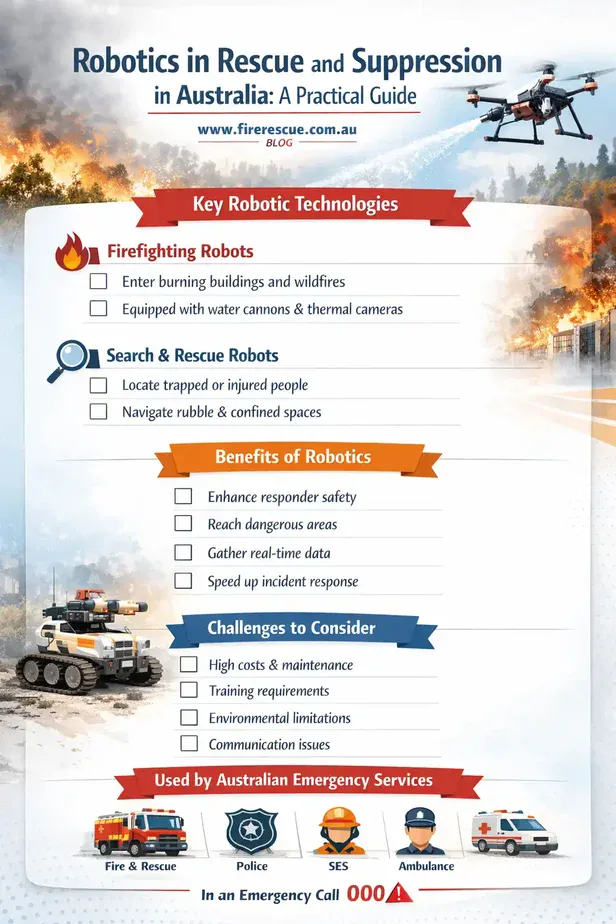
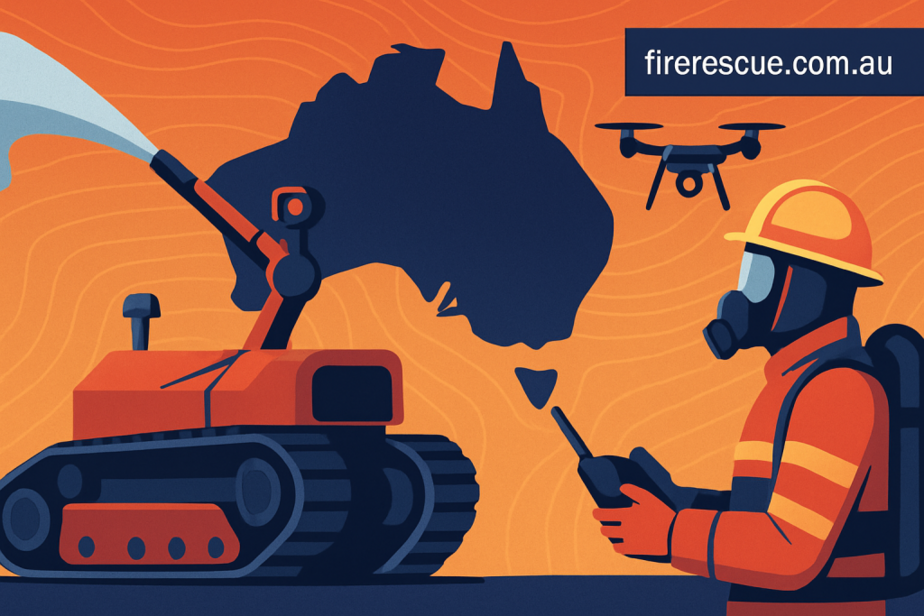
Firefighting robots can enter burning buildings or wildfires to extinguish flames where it might be too dangerous for firefighters. Many are equipped with thermal imaging cameras, water or foam delivery systems, and sensors to detect heat levels. Some are remotely operated ground vehicles, while others are drones designed to drop fire retardant or relay aerial footage.
For example, several fire brigades in New South Wales and Victoria have trialled robotic units to support urban search and rescue and wildfire suppression. These machines ease human workload, reduce exposure to hazards, and improve operational efficiency.
Search and Rescue Robots
Robots are also vital in locating trapped or injured people after disasters such as building collapses, floods, or landslides. Small, agile robots can navigate debris and confined spaces to send back real-time video and sensor data. This helps responders plan safe and effective rescues.
In Australia, the SES actively incorporates robotic technology during flood and storm emergencies to survey damage and search for missing persons. Police and ambulance services sometimes deploy robots for hazardous material detection and remote medical assistance.
Benefits and Challenges of Using Robotics
The key benefit of robotics is enhanced safety. Machines can enter dangerous zones without risking human life. They also extend the reach of responders, providing detailed data from places inaccessible or unsafe. Robotics improve the speed and accuracy of decision-making during emergencies.
However, integrating robotics presents challenges. Equipment cost and maintenance can be significant. Training responders to operate new technology requires time and resources. Environmental factors such as smoke, debris, or rough terrain may limit robot performance. Reliable communication links for control and video feed are essential but can be disrupted in emergency settings.
Despite these challenges, agencies across Australia continue to invest in robotics because the overall benefits to safety and operational effectiveness outweigh the drawbacks.
Robotics in Australian Fire and Emergency Services
In Australia, Fire and Rescue NSW, Country Fire Authority in Victoria, Queensland Fire and Emergency Services, and other state agencies have begun using robotic technology as part of their operational toolkit. These technologies complement existing firefighting equipment and techniques.
The SES utilises drones for rapid aerial assessments during floods, storms, and search operations. Police use robots for bomb disposal and hazardous material incidents. Ambulance services explore remote telemedicine robots to assist paramedics in complex scenes.
Collaboration between these agencies ensures robotics are deployed where most effective, with clear protocols and safety guidelines. Investing in research and pilot programs continues to expand the capabilities tailored for Australian conditions.
Expanding Applications and Future Trends
Looking ahead, the role of robotics in rescue and suppression is expected to grow with advances in artificial intelligence and machine learning. These technologies will enable robots to make autonomous decisions in dynamic and unpredictable environments, further reducing the need for direct human control. For instance, AI-powered drones could independently map fire perimeters, identify hotspots, and deploy suppressant agents precisely where needed.
Moreover, the integration of sensor fusion—combining data from thermal imaging, gas detectors, and LIDAR—will enhance situational awareness for emergency teams. This allows responders to receive a comprehensive picture of the incident in real time, facilitating better coordination and resource allocation.
Australian research institutions and technology companies are actively collaborating to develop rugged, adaptable robotic platforms suited to the country’s diverse terrain and climate. Innovations such as amphibious robots for flood rescue or swarm robotics for large-scale wildfire monitoring are under investigation, promising to further revolutionise emergency response capabilities.
Community Engagement and Education
Effective deployment of robotics also depends on community understanding and acceptance. Emergency services are increasingly engaging with the public through demonstrations, workshops, and media outreach to explain how robotic tools function and their benefits. This transparency builds trust and encourages cooperation during incidents.
Educational programs focusing on STEM (science, technology, engineering, and maths) aim to inspire the next generation of innovators who will drive further advancements. By highlighting careers in emergency robotics, these initiatives help ensure a skilled workforce capable of supporting and evolving these technologies for years to come.
Ultimately, fostering a strong link between emergency services, technology developers, and the community is vital to maximise the positive impact of robotics on rescue and suppression efforts.
If You Only Do Five Things
Firstly, stay informed about the latest robotics and technology developments your local emergency services are adopting. Understanding these tools helps you appreciate their role in safety.
Secondly, never attempt to interfere with or operate emergency robotics yourself. These machines require specialist training and supervision to ensure safe use.
Thirdly, always follow official advice and local warnings during emergencies. Emergency services rely on accurate and timely information to deploy robotics effectively.
Fourthly, if you witness an emergency where robotics might be used, provide clear and calm information to responders to assist their operation.
Finally, remember to call 000 immediately for any life-threatening emergency. Robotics support responders, but human expertise and coordination remain essential.
Who Does What in Australia
Fire and Rescue Services handle firefighting and rescue operations, including urban fires, hazardous materials incidents, and some road rescues.
Police manage law enforcement, control scenes during emergencies, and deploy specialised units like bomb disposal and tactical robots.
State Emergency Service (SES) focuses on flood, storm, and disaster response, often using drones and robotics for search and damage assessment.
Ambulance Services provide medical care and transportation, exploring remote robotic assistance to enhance treatment in difficult conditions.
Robotics in rescue and suppression is an exciting area of development that strengthens the capabilities of Australia’s emergency services. By embracing these tools safely and effectively, responders can improve outcomes and protect communities better than ever before.
Robotic Integration in Hazardous Materials Incidents
Beyond fire and rescue, robotics play a crucial role in managing hazardous materials incidents. Robots equipped with chemical sensors and containment tools can approach and neutralise dangerous substances without exposing humans to toxic environments. This capability is vital in industrial accidents or chemical spills, where early containment can prevent widespread harm.
Australian emergency services have trialled robotic systems that can sample air quality, detect radiation, and even deploy sealants to contain leaks. These technologies enhance situational assessment and enable safer, more effective responses to hazardous conditions.
Robotics Enhancing Wildfire Management Strategies
Wildfires present a complex challenge due to their scale, speed, and unpredictability. Robotics offer unique advantages in monitoring and managing these events. Drones equipped with advanced sensors can provide continuous aerial surveillance, mapping fire behaviour and spotting new ignitions early.
Ground-based robotic units can access rugged or remote areas, delivering fire retardants precisely where needed or creating firebreaks under remote control. These robots reduce the physical demands on firefighters and enable safer operations during extreme fire conditions.
Additionally, integrating robotics data with predictive modelling tools helps fire chiefs make informed decisions about resource deployment and evacuation plans, ultimately saving lives and property.
Psychological Impact and Support Through Robotics
Robotics also contribute to the psychological well-being of emergency responders by reducing exposure to traumatic scenes. By delegating high-risk tasks to machines, responders can avoid direct confrontation with distressing situations such as severe injuries or fatalities.
Moreover, some advanced robots are being developed with communication capabilities to provide comfort to trapped or injured victims, relaying messages from loved ones or emergency teams, which can significantly improve survivor morale during rescue operations.
Training and Simulation Using Robotics
Training emergency personnel to work alongside robotics is essential for successful integration. Australian agencies utilise robotic simulators and virtual reality environments to prepare responders for real-world scenarios involving these technologies.
These training programs improve operator proficiency, situational awareness, and coordination between human teams and robotic units. Continuous skill development ensures that responders can maximise the benefits of robotics during actual emergencies.
Such training also highlights potential limitations and troubleshooting techniques, fostering confidence and adaptability among emergency workers.
International Collaboration and Knowledge Sharing
Australia’s emergency services engage in international partnerships to exchange knowledge about robotics in rescue and suppression. Collaborations with agencies in the United States, Japan, and Europe provide valuable insights into best practices, emerging technologies, and operational strategies.
Participation in global forums and joint exercises helps Australian teams stay at the forefront of innovation, while contributing their own experiences with unique environmental challenges such as bushfires and floods.
Robotics in rescue and suppression is an exciting area of development that strengthens the capabilities of Australia’s emergency services. By embracing these tools safely and effectively, responders can improve outcomes and protect communities better than ever before.
FireRescue Training Hub
Access practical fire and emergency study support resources, downloads, checklists, audio guides, and member-only course content.
- Course library
- PDF downloads
- Audio guides
- Checklists
Study support only. Not accredited training or a replacement for workplace procedures.
About the author and safety review
Ken Walker
Former Station Officer and fire service educator
Former career firefighter with extensive career and volunteer fire service experience.
Qualifications: Associate Diploma of Applied Science in Fire Technology; Institute of Fire Engineers studies.
Author profilehttps://www.firerescue.com.au/about-us/