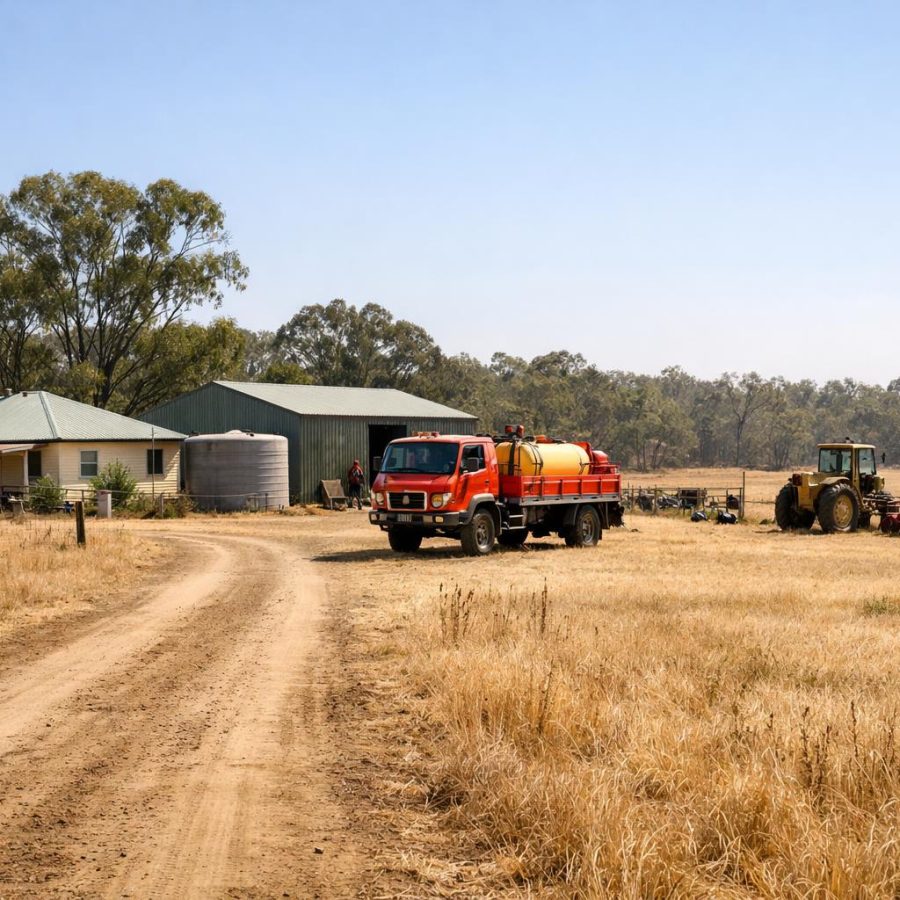
Grain storage is a routine part of farm work, but silos and grain-handling systems can become deadly when dust, fire, low oxygen or engulfment hazards are present. Fine grain dust can ignite fast, and a silo may be a confined space with risks that are not obvious until something goes wrong.
Why Dust Explosion Hazard and silo incidents are so dangerous
Grain dust is not just a nuisance. Fine dust can burn rapidly, and a suspended dust cloud may explode if it meets an ignition source, especially inside an enclosed silo or grain-handling system. The danger is increased because dust often accumulates in hidden places before anyone notices it.
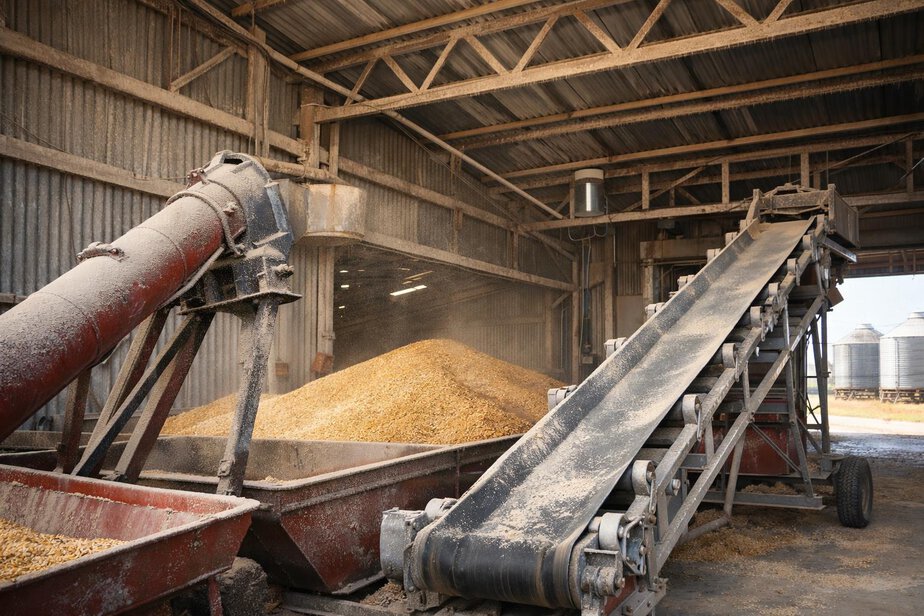
On Australian farms, grain dust can be created during harvesting, transferring, loading, unloading, cleaning and movement through augers and conveyors. The more grain is handled, the more opportunities there are for dust to spread and settle.
In a silo, several hazards can happen at the same time. A person may face fire, explosion, engulfment, low oxygen, toxic gases, fumigants, moving machinery and structural collapse. That combination is why silo incidents can escalate so quickly.
How grain dust explosions start
For a dust explosion to occur, several conditions must line up. There needs to be fine dust, oxygen, dispersion into a cloud, confinement and an ignition source. A silo or grain-handling area can provide all of these conditions at once.
Common ignition sources include electrical faults, sparks, static electricity, overheated bearings, damaged motors, welding, grinding, smoking, naked flames and hot machinery. Even a small spark can be enough if a dust cloud is present.
Dust collecting on machinery, beams, ledges and electrical equipment adds to the risk. If that dust is disturbed, it can become airborne again. If it then meets heat or sparks, the result can be a flash fire or explosion.
Equipment faults are especially concerning because they can develop slowly. A bearing may run hot, a belt may slip, or a motor may fail. These problems may create both an ignition source and a point where dust accumulates.
Common silo hazards that are easy to miss
A grain silo may be legally classified as a confined space. The exact legal requirements differ between Australian jurisdictions, so farmers and workplaces should check their local regulator and follow the rules that apply to their state or territory.
Typical silo hazards include low oxygen, toxic gases, fumigants, grain dust, fire, explosion, engulfment and moving machinery. Some hazards are permanent, while others appear after storage, fumigation, wet grain or a machinery fault.
Engulfment is one of the most serious dangers. Grain can collapse suddenly around a person. A worker standing on stored grain, or trying to break up crusted or bridged grain, may sink or be buried within seconds. A rescue attempt can become a second emergency very quickly.
Low oxygen is another hidden hazard. The air inside a silo may not support normal breathing, especially after fumigation, spoilage or fermentation. Toxic gases may also be present, and fumes can linger long after the work seems finished.
Moving machinery creates a separate set of risks. Augers, conveyors, fans and other equipment can start unexpectedly if isolation is not done properly. A person can be trapped, struck or pulled in before they have time to react.
Respiratory protection alone does not make an unsafe silo safe to enter. If the space is not properly tested, controlled and authorised, the risk remains serious.
Prevention starts before grain goes into storage
The best control is to keep the system clean, maintained and planned for emergencies before anyone needs to enter a silo. Prevention is a work process, not a one-off task.
Regularly inspect motors, bearings, belts, augers, conveyors, electrical systems and dust-control equipment. Look for overheating, wear, vibration, missing guards, damaged wiring and signs of poor performance. Fix faults early.
Keep grain-handling areas clean using suitable equipment and procedures that do not create another airborne dust cloud. Cleaning should reduce dust, not spread it. Use methods and equipment that suit the site and the material being removed.
Control smoking, welding, grinding and other hot work around grain storage and handling areas. Hot work should only occur under strict site controls and only when it is safe to do so. Never treat a grain area like an ordinary workshop.
Display clear warning signs and restrict unauthorised silo access. Lock ladders and access hatches when they are not being used. If people cannot enter casually, the risk of an impulsive and dangerous entry is reduced.
Train workers in grain dust, machinery, fire, explosion and confined-space hazards. Training should also cover what not to do, because many fatal incidents begin with a rescue attempt or a quick repair that was never properly planned.
| Hazard | Example warning sign | Practical control |
|---|---|---|
| Combustible dust | Visible dust on beams, ledges or equipment | Clean regularly with suitable methods |
| Ignition source | Hot bearing, sparks, damaged wiring | Inspect and repair equipment promptly |
| Confined space | Limited entry and poor air movement | Apply entry controls and rescue planning |
| Engulfment | Bridged or crusted grain surface | Do not walk on grain or enter to break it up |
Safe entry requires planning, not improvisation
If entry into a silo is necessary for maintenance or other authorised work, the process should follow the relevant confined-space requirements for the jurisdiction and the workplace. Those requirements may include risk controls, atmospheric testing, an entry permit, trained workers, a standby person and a suitable rescue plan.
Before maintenance or authorised entry, isolate augers, conveyors, electrical equipment and other machinery so they cannot start unexpectedly. Lockout and isolation should be done in line with site procedures and manufacturer instructions.
Atmospheric testing may be needed before entry and during the work. Air quality can change once a person is inside, especially in a space with dust, fumigants or limited ventilation. Conditions that looked safe at the start can become unsafe later.
Any rescue plan must match the actual risks. A plan for a normal farm shed is not enough for a confined space or an engulfment hazard. The team must be trained, the equipment must be suitable and the rescue method must be realistic.
What to do in a silo or grain-dust emergency
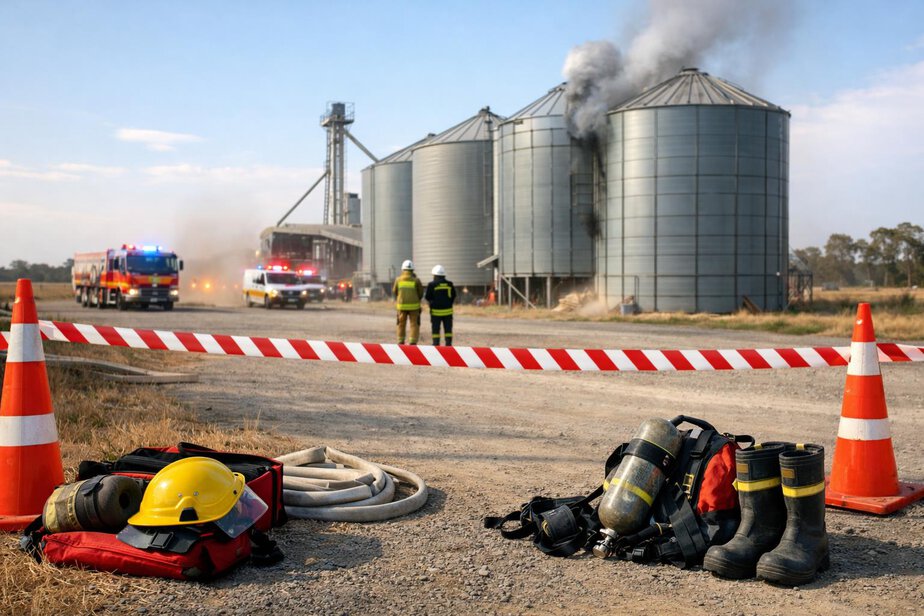
In an emergency, act quickly but do not make the scene worse. Immediate life-threatening emergencies in Australia require Triple Zero (000).
- Call emergency services on 000.
- Evacuate workers and visitors from the danger area.
- Establish a safe exclusion zone.
- Account for everyone and immediately report any missing person.
- Do not enter the silo, climb damaged structures or attempt an improvised rescue.
- Do not restart augers, fans, conveyors or electrical equipment.
- Do not attempt to fight a fire inside a silo unless specifically trained, equipped and authorised.
- Follow all directions given by emergency services.
If someone is missing, do not assume they have escaped. Report the last known location and keep others away from the hazard. Unplanned rescue attempts can result in several people being overcome or killed.
Do not rely on respirators, ropes or a quick retrieval method to make the area safe. If the atmosphere is unsafe, or if grain is shifting, the danger may be greater than it appears from outside the silo.
Information emergency services will need
When emergency crews arrive, fast and accurate information helps them assess the scene and plan a safer response. Provide the following if you can do so without entering danger:
- the exact location and safest property entrance
- whether anyone is missing, trapped or injured
- the silo’s contents, capacity and estimated fill level
- whether smoke, heat, unusual smells or structural movement have been noticed
- the last known location of workers
- details of fumigants, pesticides or other chemicals used
- the location of electrical, fuel and machinery isolation points
- the position of augers, conveyors, ladders, hatches and access points
- any known structural damage or risk of collapse
- a site map and details of nearby water supplies, where available
- contact details for the silo manufacturer, grain specialist or site manager
Keep current safety data and fumigation records where responders can access them. If the site has a plan, make sure it is available quickly and is understandable to someone unfamiliar with the property.
Why unplanned rescue attempts make things worse
It is natural to want to help a co-worker or family member immediately. In a silo emergency, though, the first impulse can create a second casualty. A person who enters without proper controls may be overcome by low oxygen, trapped by grain, exposed to toxic gases or caught in moving machinery.
Fire can also change rapidly inside a grain storage system. A fire inside or near a silo may not behave like a normal building fire. The structure can hide heat, dust and movement, and a collapse or sudden release of material can turn a rescue into a multiple-person incident.
That is why emergency planning matters before an incident occurs. People should know their roles, the call-out process, the shut-down steps and the limits on what can be done from outside the danger area.
Farm businesses should also review their emergency plan after any near miss, equipment failure, dust build-up or fumigation event. Small warnings often appear before a major incident.
A practical farm checklist for reducing risk
A short checklist can help keep the focus on the main controls. Use it as part of site procedures, not as a substitute for proper training or legal advice.
- Keep dust under control during harvesting, moving and cleaning.
- Inspect and maintain motors, bearings, belts, augers, conveyors and electrical systems.
- Remove dust from ledges, beams and equipment using suitable cleaning methods.
- Control hot work, smoking and naked flames around grain areas.
- Lock hatches and ladders when not in use.
- Train workers in confined-space, fire, explosion and engulfment hazards.
- Record fumigation and chemical use and keep those records accessible.
- Plan for emergency isolation, exclusion zones and responder access.
- Never allow a person to enter a silo without proper authority, controls and rescue arrangements.
For many farms, the biggest improvement comes from simple discipline: keep dust down, keep machinery maintained, keep people out of unsafe spaces and keep emergency information ready.
Key message for farmers, workers and responders
Grain dust explosions and silo emergencies are not rare routine problems. They are high-consequence hazards that can injure or kill quickly, often with little warning. The safest response is prevention, clear procedures and a refusal to improvise when a silo, dust cloud or trapped-person incident is involved.
If an emergency occurs, evacuate, isolate the area, call 000 and give responders the information they need. Do not enter the silo, do not restart machinery and do not attempt a rescue unless you are trained, equipped and operating under a proper confined-space rescue plan.
This article provides general safety information only. Farmers and workplaces must follow current manufacturer instructions, workplace procedures and the laws applying in their state or territory. Before publication or site use, verify facts, site details and local requirements with the relevant regulator and competent safety advice.
FireRescue Training Hub
Access practical fire and emergency study support resources, downloads, checklists, audio guides, and member-only course content.
- Course library
- PDF downloads
- Audio guides
- Checklists
Study support only. Not accredited training or a replacement for workplace procedures.
About the author and safety review
Ken Walker
Former Station Officer and fire service educator
Former career firefighter with extensive career and volunteer fire service experience.
Qualifications: Associate Diploma of Applied Science in Fire Technology; Institute of Fire Engineers studies.
Author profilehttps://www.firerescue.com.au/about-us/