SAFETY ALERT
Key takeaways for spider bite first aid in Australia
Spider bites can be serious but are rarely life-threatening if treated promptly. Knowing the right first aid steps can reduce pain and complications.
Always remain calm, clean the bite site, apply a pressure immobilisation bandage if needed, and call 000 in severe cases. Local emergency services including Fire, Ambulance, Police, and SES play important roles in community safety.
Understanding Spider Bites in Australia
Australia is home to many spiders, but only a few species are dangerous to humans. The most notable medically significant spiders include the redback, funnel-web, and mouse spiders. While spider bites are often minor and may cause local irritation, some can lead to serious symptoms requiring prompt first aid and medical attention.
Most spider bites occur outdoors or in areas where spiders hide, such as sheds, woodpiles, and garages. Being aware of your surroundings and taking precautions can help reduce the risk of bites.
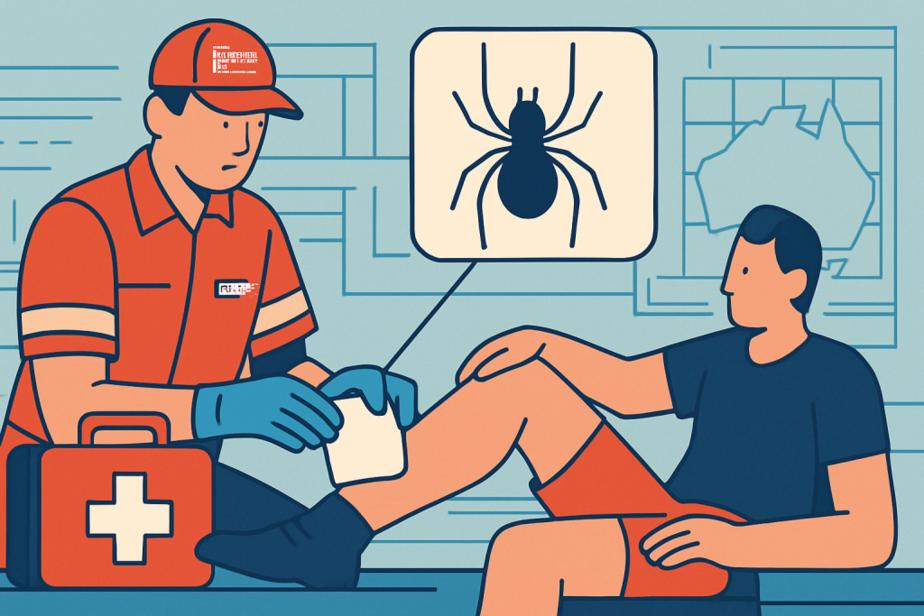
It’s important to remember that many spider species are not aggressive and only bite in self-defence. Understanding their habits and habitats can help you avoid accidental encounters. For example, funnel-web spiders tend to hide under rocks and logs, whereas redback spiders prefer sheltered, dry places like garden sheds and outdoor furniture.
Downloadable A4 Checklist
Print this and keep it somewhere visible. Tick items as you go, it helps under pressure.
Additionally, many spiders play important roles in controlling insect populations and maintaining ecological balance, so coexistence is beneficial when possible. However, respecting their space and being cautious in areas of high spider activity is crucial for safety.
Spider Bite Identification and Symptoms
Recognising a spider bite can be challenging, as symptoms vary widely. The bite site may develop redness, swelling, or a small blister. Pain can range from mild discomfort to intense burning or throbbing. Some dangerous spider bites cause systemic effects such as sweating, muscle pain, nausea, headache, or difficulty breathing.
If you suspect a funnel-web spider bite, symptoms can develop quickly and be severe. Redback spider bites may cause delayed pain and muscle spasms. Mouse spider bites can resemble funnel-web bites but are less common.
In addition to these symptoms, some bites may cause localized necrosis or ulceration, particularly from certain spider species. However, this is rare in Australia compared to other parts of the world. Identifying the spider responsible can be difficult, so treatment focuses on symptom management and preventing complications.
It’s also important to differentiate spider bites from other insect bites or skin conditions, as misdiagnosis can delay appropriate treatment. If the bite area worsens rapidly or shows signs of infection such as pus, fever, or spreading redness, medical evaluation is necessary.
Step-by-Step Spider Bite First Aid in Australia
1. Stay calm and reassure the person bitten
Panic can worsen symptoms. Keep the person still and calm. Encourage slow, deep breaths to reduce anxiety.
2. Clean the bite area carefully
Wash the affected area gently with soap and water to remove dirt and reduce infection risk. Avoid scrubbing or applying harsh substances.
3. Apply a pressure immobilisation bandage if advised
For bites from funnel-web and some other dangerous spiders, apply a broad pressure bandage firmly around the bitten limb starting from the bite site and wrapping upwards. Immobilise the limb with a splint or sling to slow venom spread. Do not cut off circulation.
Redback spider bites do not usually require a pressure bandage but may benefit from pain relief measures.
It’s essential to avoid cutting open the bite or attempting to suck out venom, as these actions are ineffective and can increase infection risk. Also, avoid applying ice directly on the skin; instead, use a cold compress wrapped in cloth to reduce swelling and pain.
4. Monitor vital signs and symptoms
Watch for signs of shock, difficulty breathing, or worsening pain. Note any changes in consciousness or muscle stiffness. Keep the person lying down if possible.
Record the time of the bite and any symptom progression to inform medical personnel. If the person experiences nausea, vomiting, or muscle twitching, these may indicate systemic envenomation requiring urgent care.
5. Seek professional medical help immediately
Call 000 for ambulance assistance if the bite is from a funnel-web spider, the person has severe symptoms, or if you are unsure about the spider type. Provide clear information about the location and condition.
In remote areas, it may be necessary to transport the person safely to the nearest medical facility while maintaining immobilisation and monitoring symptoms closely.
Additional Safety Tips and Precautions
Wear gloves and long clothing when working in gardens or sheds. Shake out shoes and clothing before use. Keep areas clean and free of spider webs. Educate children about avoiding spiders and how to alert adults if bitten.
Follow any warnings or advice from local emergency services like Fire/Rescue NSW or SES about spider activity or first aid procedures. Staying informed helps you prepare for seasonal changes in spider behaviour.
It’s also wise to store firewood and other materials away from the home to reduce spider habitats near living spaces. Regularly inspect and maintain outdoor furniture and play areas to minimise spider presence.
When camping or hiking, use tents with fine mesh and avoid disturbing logs or rocks where spiders may reside. Using insect repellents and keeping sleeping areas tidy can further reduce bite risks.
If you only do five things
First, keep the person calm and still to prevent venom spread. Second, clean the bite area gently with soap and water. Third, apply a pressure immobilisation bandage for funnel-web bites. Fourth, watch for serious symptoms like breathing difficulty or severe pain. Fifth, call 000 immediately for ambulance help if symptoms worsen or the spider is dangerous.
Who does what in Australia?
Fire and Rescue services provide emergency response to fires, rescues, and often assist with hazardous situations including snake and spider bites in public locations.
Police support public safety, control emergency scenes, and coordinate with other services to ensure community protection.
Ambulance services are the primary medical responders for spider bites, providing on-site care and transport to hospitals.
State Emergency Service (SES) helps with community support during disasters and may assist where spider infestations impact homes or public areas.
When to Seek Emergency Help
Call 000 if the person bitten shows signs of an allergic reaction such as difficulty breathing, swelling of the face or throat, or loss of consciousness. Immediate medical help is crucial for funnel-web spider bites or any bite causing severe, unexplained symptoms.
If unsure about the spider or severity, it is always safer to seek professional advice. Early treatment reduces complications and hospital stays.
Even if symptoms seem mild initially, monitor the person closely for several hours, as some spider venom effects can be delayed. Do not hesitate to seek medical attention if new symptoms develop.
Also, if the bite site shows signs of infection such as spreading redness, increasing pain, or discharge, consult a healthcare provider promptly to avoid further complications.
Aftercare and Recovery
Most spider bites heal well with basic first aid. Keep the bite area clean and watch for infection signs like increasing redness or pus. Pain relief with paracetamol or ibuprofen may help, but avoid aspirin as it can worsen bleeding.
Follow any medical instructions and report worsening symptoms immediately. Document the spider if safely possible by taking a photo or catching it for identification by medical professionals.
It’s important to rest and avoid strenuous activity after a bite to allow the body to recover. Some people may experience fatigue or mild flu-like symptoms during recovery, which typically resolve without complications.
In rare cases, allergic reactions or secondary infections can prolong recovery, so maintaining hygiene and monitoring health is key. If scarring or persistent skin changes occur, dermatological advice may be necessary.
Community Preparedness and Fire Rescue Considerations
Fire and Rescue crews may be called to spider bite incidents, especially in rural or remote areas. Being familiar with pressure immobilisation first aid techniques benefits not just individuals but emergency responders as well.
In bushfire-prone regions, spider bites may increase as animals move closer to inhabited areas. Staying alert and prepared with first aid knowledge helps reduce the impact on community health and safety.
Community education programs often include spider bite awareness during high-risk seasons. FireRescue and other agencies collaborate to distribute information and training to help residents respond effectively.
Finally, keeping a well-stocked first aid kit that includes materials for pressure immobilisation bandaging and antiseptics can make a significant difference in managing spider bites promptly and correctly.
Regular drills and community workshops help reinforce best practices, ensuring that both residents and emergency personnel are ready to act efficiently. Sharing knowledge about local spider species and their risks empowers communities to stay safe.
FireRescue Training Hub
Access practical fire and emergency study support resources, downloads, checklists, audio guides, and member-only course content.
- Course library
- PDF downloads
- Audio guides
- Checklists
Study support only. Not accredited training or a replacement for workplace procedures.
About the author and safety review
Ken Walker
Former Station Officer and fire service educator
Former career firefighter with extensive career and volunteer fire service experience.
Qualifications: Associate Diploma of Applied Science in Fire Technology; Institute of Fire Engineers studies.
Author profilehttps://www.firerescue.com.au/about-us/