Flood Rescue Insights
Flood Rescue Risk Modelling
Effective flood rescue risk modelling is an essential tool for emergency services and communities across Australia, helping to anticipate hazards, allocate resources, and improve responder and public safety. By integrating hydrological data, geographic information systems, and human factors, these models support better decision-making before and during flood events.
Understanding the complexities of flood rescue scenarios through risk modelling ensures emergency response teams are prepared to act swiftly and efficiently, reducing harm and saving lives.
Key takeaways
Flood rescue risk modelling combines scientific data and emergency response experience to identify high-risk zones and vulnerable populations. This enables tailored rescue plans that improve outcomes during flood emergencies.
Coordination between Fire/Rescue, Police, Ambulance, and the SES is vital, with each agency playing distinct roles informed by risk analysis. Clear communication and role understanding reduce confusion and optimise rescue efforts.
Community education on flood risks and safety measures, including when and how to call 000, forms a critical part of risk mitigation, helping individuals make informed decisions before and during floods.
Background and context
Flood events are a frequent natural hazard in many parts of Australia, driven by seasonal weather patterns, geographic features, and increasingly variable climate conditions. Flood rescue operations often occur under high pressure and hazardous circumstances, where rapid decision-making and risk understanding are crucial.
Flood rescue risk modelling has evolved as a scientific discipline that blends hydrology, meteorology, and emergency management. It utilises historical flood data, real-time monitoring, terrain analysis, and population distribution to forecast potential flood impacts and operational challenges.
In Australia, the State Emergency Service (SES) typically leads flood rescue efforts, with Fire and Rescue agencies providing specialised support for swift water rescues and technical operations. Police assist with traffic management and community safety, while Ambulance services handle medical emergencies and triage.
Principles of flood rescue risk modelling
Data integration and analysis
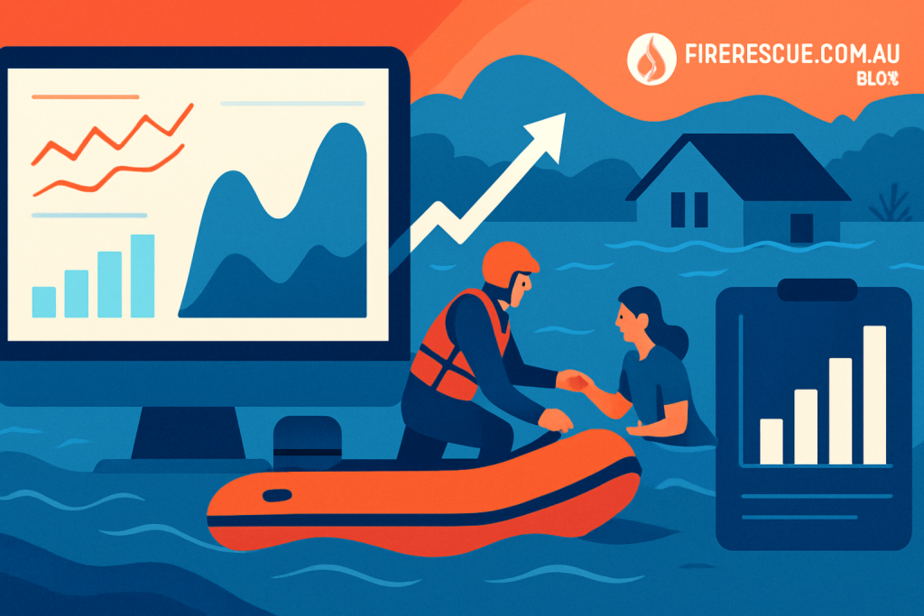
At the core of flood rescue risk modelling is the integration of various data sets. Hydrological models predict flood extents and depths based on rainfall, river flow, and land surface conditions. Geographic Information Systems (GIS) map these predictions against infrastructure, transport routes, and population centres.
Human factors such as demographic vulnerabilities, evacuation routes, and available emergency resources are incorporated to assess risk levels and identify critical rescue points. This comprehensive approach allows agencies to prioritise areas requiring immediate attention.
Scenario planning and simulations
Modelling also enables scenario planning, where emergency services can simulate different flood conditions and their operational impacts. These simulations help to test response strategies, resource deployment, and communication plans.
Through repeated drills and virtual exercises informed by risk models, responders build familiarity with potential challenges and improve coordination protocols. This preparedness reduces response times and enhances safety for both rescuers and those affected.
Roles and responsibilities during flood rescues
In Australia, flood rescue operations involve multiple agencies working collaboratively. The SES is the lead agency for flood response, specialising in community rescue and flood mitigation efforts. They conduct evacuations, provide flood warnings, and assist with property protection.
Fire and Rescue services bring expertise in swift water rescues, technical rescue operations, and managing hazardous environments during floods. Their role is often critical in urban and suburban areas where floodwaters can trap residents in buildings or vehicles.
Police support flood rescue by managing traffic control, enforcing evacuation orders, and maintaining public order. Ambulance services provide medical assessment and treatment on site and coordinate patient transport to hospitals.
For anyone caught in a flood emergency, calling 000 is the primary step. Operators will dispatch the appropriate combination of SES, Fire/Rescue, Police, and Ambulance resources based on the situation. Understanding these roles helps the public provide accurate information and remain calm during rescues.
Practical implications for emergency management
Flood rescue risk modelling informs emergency management planning by highlighting vulnerabilities in infrastructure, communication networks, and community preparedness. Agencies can use this insight to improve flood warning systems, pre-position resources, and enhance inter-agency coordination.
Community engagement is a key element. Educating residents about flood risks, evacuation procedures, and the importance of early warnings reduces the demand on rescue services and increases survival rates. Clear messaging on when to call 000 and what information to provide supports efficient response.
Additionally, modelling encourages investment in resilient infrastructure and adaptive land use planning to mitigate flood impacts over time. Emergency services can refine training programs and equipment procurement aligned with identified risk profiles.
Safety considerations for flood rescues
Flood rescues are inherently dangerous, with risks including strong currents, debris, contamination, and unstable structures. Risk modelling helps responders anticipate these hazards and prepare suitable personal protective equipment and rescue techniques.
For the public, the best safety advice is to avoid entering floodwaters, never drive through flooded roads, and follow official instructions. If trapped, individuals should call 000, provide their location, and wait for trained rescuers rather than attempting self-rescue in dangerous conditions.
Emergency services continuously review and update their flood rescue risk models to incorporate lessons learned and emerging technology. This ongoing process strengthens Australia’s resilience to flooding and helps preserve lives and property.
Beyond immediate rescue operations, flood rescue risk modelling also plays a crucial role in post-flood recovery and resilience building. By analysing the outcomes of previous flood events, agencies can identify gaps in response, areas of repeated damage, and community needs for support services. This data-driven approach informs long-term strategies such as improved land zoning regulations, infrastructure upgrades, and community preparedness initiatives.
Moreover, technological advancements like drone surveillance and remote sensing are increasingly integrated into risk modelling frameworks. These tools provide real-time situational awareness during floods, allowing responders to assess inaccessible or hazardous areas quickly and safely. Enhanced data feeds improve the accuracy of flood extent predictions and assist in dynamic resource allocation.
Training and professional development for emergency personnel also benefit from sophisticated risk models. Virtual reality simulations and interactive scenario planning enable responders to experience complex flood rescue scenarios in controlled environments. This experiential learning enhances decision-making skills, teamwork, and familiarity with equipment under simulated pressure conditions.
Community resilience programs that incorporate flood rescue risk modelling data can tailor messaging and resources to specific demographics. For example, areas with higher populations of elderly residents or people with disabilities may require specialised evacuation plans and support networks. Understanding these nuances helps emergency managers allocate resources more equitably and effectively.
Finally, collaboration with academic institutions and research organisations strengthens flood rescue risk modelling by incorporating the latest scientific findings and innovative methodologies. Partnerships foster continuous improvement in modelling accuracy, risk communication, and operational integration, ultimately enhancing public safety outcomes.
FireRescue Training Hub
Access practical fire and emergency study support resources, downloads, checklists, audio guides, and member-only course content.
- Course library
- PDF downloads
- Audio guides
- Checklists
Study support only. Not accredited training or a replacement for workplace procedures.
About the author and safety review
Ken Walker
Former Station Officer and fire service educator
Former career firefighter with extensive career and volunteer fire service experience.
Qualifications: Associate Diploma of Applied Science in Fire Technology; Institute of Fire Engineers studies.
Author profilehttps://www.firerescue.com.au/about-us/