Fire & Rescue Insights
Hospital Evacuation During Fire Or Disaster
Key takeaways: Effective hospital evacuation during fire or disaster hinges on meticulous planning, multidisciplinary coordination, and practical training tailored to the unique vulnerabilities of healthcare settings. Understanding the roles of emergency services, including Fire and Rescue, Police, Ambulance, and the State Emergency Service (SES), is essential for smooth operations and patient safety.
Early risk assessment and clear communication channels can significantly reduce evacuation times and mitigate harm. Australian hospitals must incorporate local emergency protocols and maintain readiness to adapt to varied disaster scenarios, from fire outbreaks to floods or structural failures.
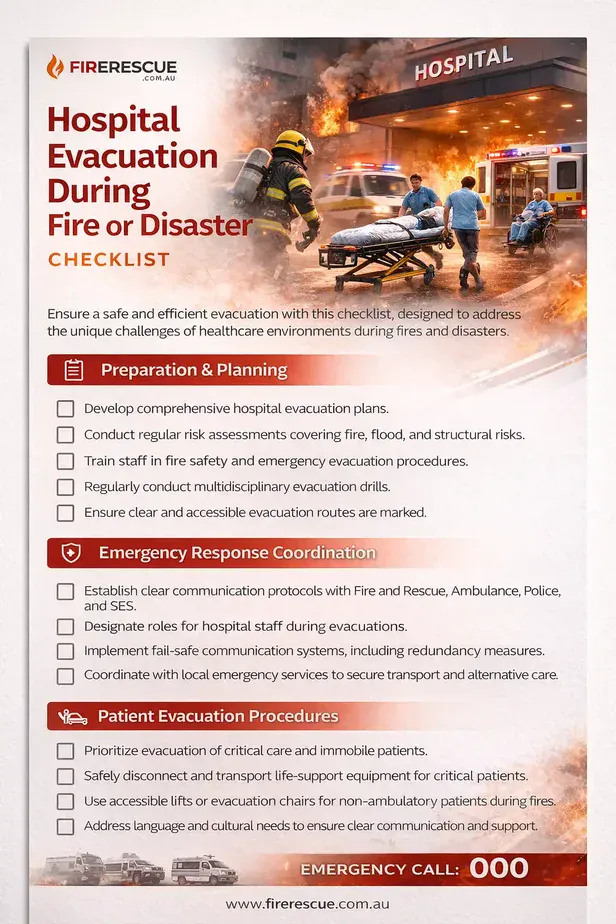
Hospital Evacuation During Fire or Disaster
A practical guide covering evacuation planning, patient movement priorities, emergency coordination, and key safety points for healthcare settings during fire or disaster.
Background and context
Hospitals represent complex environments where the safety of vulnerable patients must be balanced with the challenges of limited mobility, critical medical equipment, and continuous care requirements. Whether facing a rapidly spreading fire, a natural disaster, or other emergencies, the evacuation of a hospital is a high-stakes operation that demands strategic foresight and operational precision.
Australian hospitals operate within a framework of national and state emergency response plans that prioritise patient safety and the continuity of care. Fire and Rescue services typically lead fire-related emergencies, while Ambulance services focus on patient transport and care during evacuation. Police manage scene security and traffic control, and the SES may provide additional support, especially during natural disasters such as floods or storms.
The importance of hospital evacuation planning has grown as healthcare facilities become more technologically advanced and patient populations more diverse. Hospitals now cater to a wide range of patient needs, including neonatal care, intensive care units, and outpatient services, each with distinct evacuation challenges. This diversity requires tailored evacuation strategies that consider the specific requirements of each department.
In addition to the physical and logistical challenges, cultural and language differences among patients and staff can complicate evacuation procedures. Hospitals increasingly serve multicultural communities, necessitating communication strategies that are inclusive and accessible. This may involve multilingual signage, translation services, and culturally sensitive training for emergency situations to ensure that all individuals understand evacuation instructions and feel supported during crises.
Furthermore, many hospitals are situated in urban areas with limited access routes, which can be congested during emergencies. Coordinating patient transport under these conditions requires close liaison with local authorities and transport services to secure clear paths for ambulances and support vehicles. Planning must also consider the availability of alternative locations for patient transfer, including temporary shelters or mobile medical units if nearby hospitals are at capacity or affected by the disaster.
Understanding the challenges of hospital evacuation
Evacuating a hospital during a fire or disaster involves unique complexities. Patients range from those in critical care who rely on life-support machines to ambulatory patients who can move independently. Staff must coordinate the safe and efficient relocation of all patients without compromising ongoing treatments.
The physical layout of hospitals, with multiple floors, specialised wards, and restricted access zones, can impede evacuation efforts. Additionally, the presence of hazardous materials and medical gases requires careful handling to prevent secondary incidents. Communication breakdowns or unclear protocols can exacerbate risks, highlighting the need for regular, scenario-based training exercises.
Moreover, the psychological impact on both patients and staff during evacuation cannot be underestimated. Patients may experience heightened anxiety or confusion, especially those with cognitive impairments or mental health conditions. Staff must be trained not only in physical evacuation procedures but also in providing reassurance and maintaining calm under pressure. This holistic approach supports both safety and emotional well-being during emergencies.
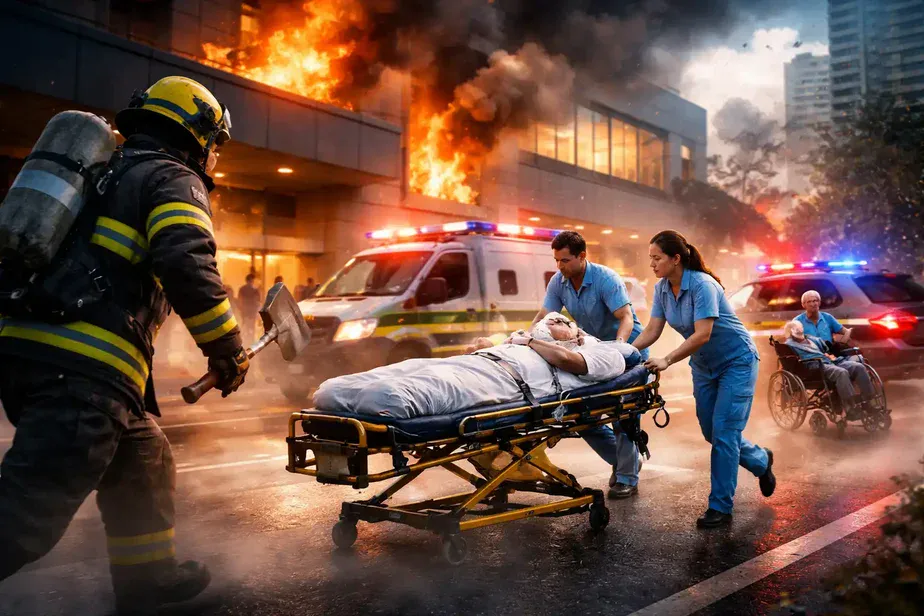
Another significant challenge lies in maintaining the integrity of medical records and ensuring continuity of care throughout the evacuation process. Electronic health records and vital medical equipment must be secured and transported safely to avoid loss of critical patient information. This requires robust IT disaster recovery plans integrated into evacuation protocols, allowing medical teams to access necessary data even in temporary or off-site locations.
Evacuation timing is also crucial. Decisions must balance the urgency of the threat with the risks of moving vulnerable patients prematurely. Delays can increase exposure to hazards, but rushing evacuation can cause physical strain or medical complications. This delicate balance necessitates clear criteria and decision-making frameworks embedded in hospital emergency plans.
Coordinating multidisciplinary teams
Successful evacuation relies on a coordinated approach involving hospital staff, Fire and Rescue personnel, Ambulance officers, Police, and the SES. Each agency has distinct roles that complement one another. Fire and Rescue lead fire suppression and hazard containment, Ambulance services manage patient transport and medical care in transit, Police secure perimeters and manage public safety, while the SES assists with logistics and support during large-scale or natural disasters.
Within the hospital, incident command structures must be clear, with designated evacuation coordinators responsible for prioritising patient movement based on medical need and mobility. This includes triaging which patients can be moved first and ensuring that critical equipment is safely transferred or shut down.
Inter-agency drills and joint training exercises enhance the ability of all parties to work seamlessly during real events. These exercises allow teams to familiarise themselves with each other’s protocols and capabilities, identify gaps in communication or resources, and develop shared strategies. Such collaboration is vital for overcoming the logistical and emotional challenges that hospital evacuations present.
Importantly, the inclusion of specialised personnel such as clinical engineers and biomedical technicians in evacuation planning ensures that medical devices and infrastructure are managed appropriately during emergencies. Their expertise helps prevent equipment failures and supports the rapid re-establishment of critical services at receiving facilities.
Community engagement also plays a role in coordinated evacuation efforts. Public awareness campaigns and partnerships with local organisations can foster resilience and support networks for patients and families affected by hospital evacuations. This community involvement aids in resource mobilisation and provides additional layers of assistance during large-scale incidents.
Practical implications for hospital staff and emergency responders
Preparation is the cornerstone of effective hospital evacuation. Hospitals should maintain up-to-date evacuation plans that are regularly reviewed and tested through drills. Staff must be familiar with evacuation routes, assembly points, and their roles during an emergency. Training should emphasise safe patient handling and the use of evacuation aids such as evacuation chairs and portable stretchers.
Emergency responders benefit from understanding hospital layouts and potential hazards unique to healthcare environments. Early engagement between hospitals and local fire services, Ambulance, Police, and SES allows for tailored response plans that address local risks and resources.
Staff training should also incorporate psychological preparedness, ensuring personnel can manage stress and make rapid decisions in chaotic environments. Familiarity with the hospital’s communication systems, including public address and emergency notification tools, is critical for disseminating clear instructions swiftly.
In addition to routine drills, scenario-based simulations using virtual reality or augmented reality technologies are emerging as valuable tools to prepare staff for complex evacuation scenarios. These immersive training methods can replicate stressful conditions and help personnel practice decision-making, coordination, and communication in a controlled environment, enhancing overall readiness.
Hospitals should also establish clear protocols for the management of medications, ensuring that essential drugs accompany patients during transfer and that supply chains are maintained post-evacuation. Coordination with pharmaceutical providers and emergency stockpiles can mitigate shortages during prolonged incidents.
Who to call and when
In an emergency requiring hospital evacuation, the primary call should be to 000, Australia’s emergency services number. Fire and Rescue will respond to fires and hazardous situations, Ambulance services will assist with patient care and transport, Police will coordinate security and traffic management, and SES can be called upon for additional support during natural disasters or complex evacuations.
Clear communication with emergency services ensures rapid mobilization and appropriate resource allocation. Hospitals should also have internal alert systems to notify staff immediately and commence evacuation protocols without delay.
It is important for hospital administrators to establish pre-arranged agreements with neighbouring healthcare facilities to receive evacuated patients if required. This network can prevent bottlenecks during transfer and ensure continuity of care post-evacuation.
Furthermore, hospitals should maintain updated contact lists of all relevant emergency agencies and key personnel, ensuring that communication lines remain open and effective during crises. Redundancies in communication, such as backup radios and satellite phones, are essential to mitigate failures in conventional systems.
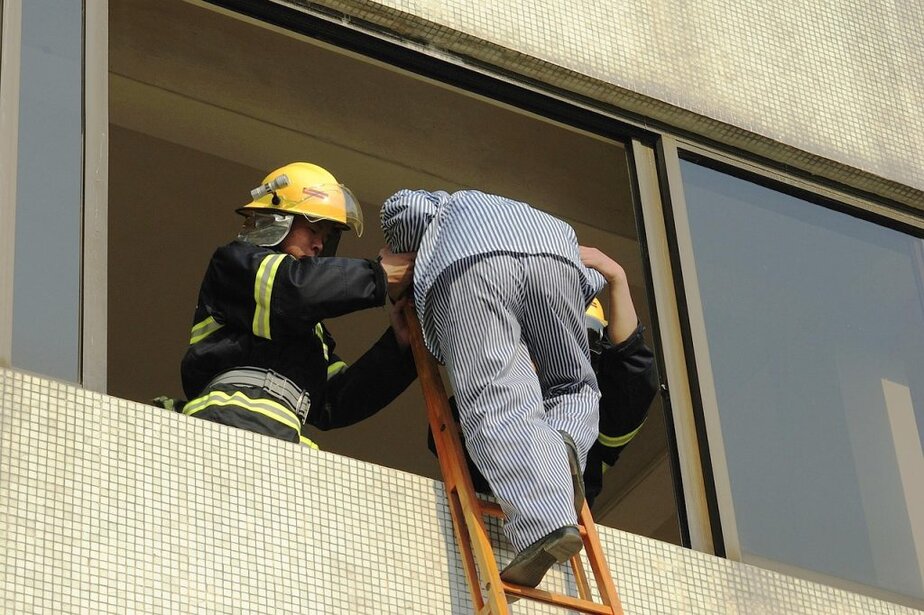
Photo by MRI via Pixabay
Advanced emergency context and future considerations
As climate change increases the frequency of extreme weather events, hospitals must be prepared for a wider range of disaster scenarios beyond fire, including floods, storms, and heatwaves. Investment in resilient infrastructure, such as fire-resistant building materials and reliable backup power, is increasingly important.
Technological advances, including real-time patient tracking systems and improved communication platforms, can enhance evacuation efficiency and patient safety. Future planning should integrate these tools alongside traditional emergency response methods.
Additionally, incorporating data analytics and simulation modelling into evacuation planning can help hospitals anticipate bottlenecks and optimise resource allocation during emergencies. These innovations enable decision-makers to test various scenarios virtually and develop more robust contingency plans.
Emerging trends also include the integration of smart building technologies that monitor environmental conditions such as smoke, temperature, and structural integrity in real-time. These systems can trigger automated alerts and activate safety measures, providing early warnings that facilitate quicker, more informed evacuation decisions.
Ultimately, hospital evacuation during fire or disaster is a complex, high-pressure operation that demands clear leadership, thorough preparation, and strong collaboration between healthcare providers and emergency services. By focusing on these areas, Australian hospitals can better protect patients and staff when it matters most.
FireRescue Training Hub
Access practical fire and emergency study support resources, downloads, checklists, audio guides, and member-only course content.
- Course library
- PDF downloads
- Audio guides
- Checklists
Study support only. Not accredited training or a replacement for workplace procedures.
About the author and safety review
Ken Walker
Former Station Officer and fire service educator
Former career firefighter with extensive career and volunteer fire service experience.
Qualifications: Associate Diploma of Applied Science in Fire Technology; Institute of Fire Engineers studies.
Author profilehttps://www.firerescue.com.au/about-us/