Tsunami Safety Essentials
Understanding tsunami warning signs in Australia is vital for coastal safety. Recognising natural signs and following official alerts can save lives. This guide offers practical advice tailored for Australians living near the coastline.
Tsunamis can be sudden and powerful, but knowing what to look for and how to respond will help you prepare effectively. Always prioritise official advice from services like Fire/Rescue NSW, Police, SES and the Bureau of Meteorology.
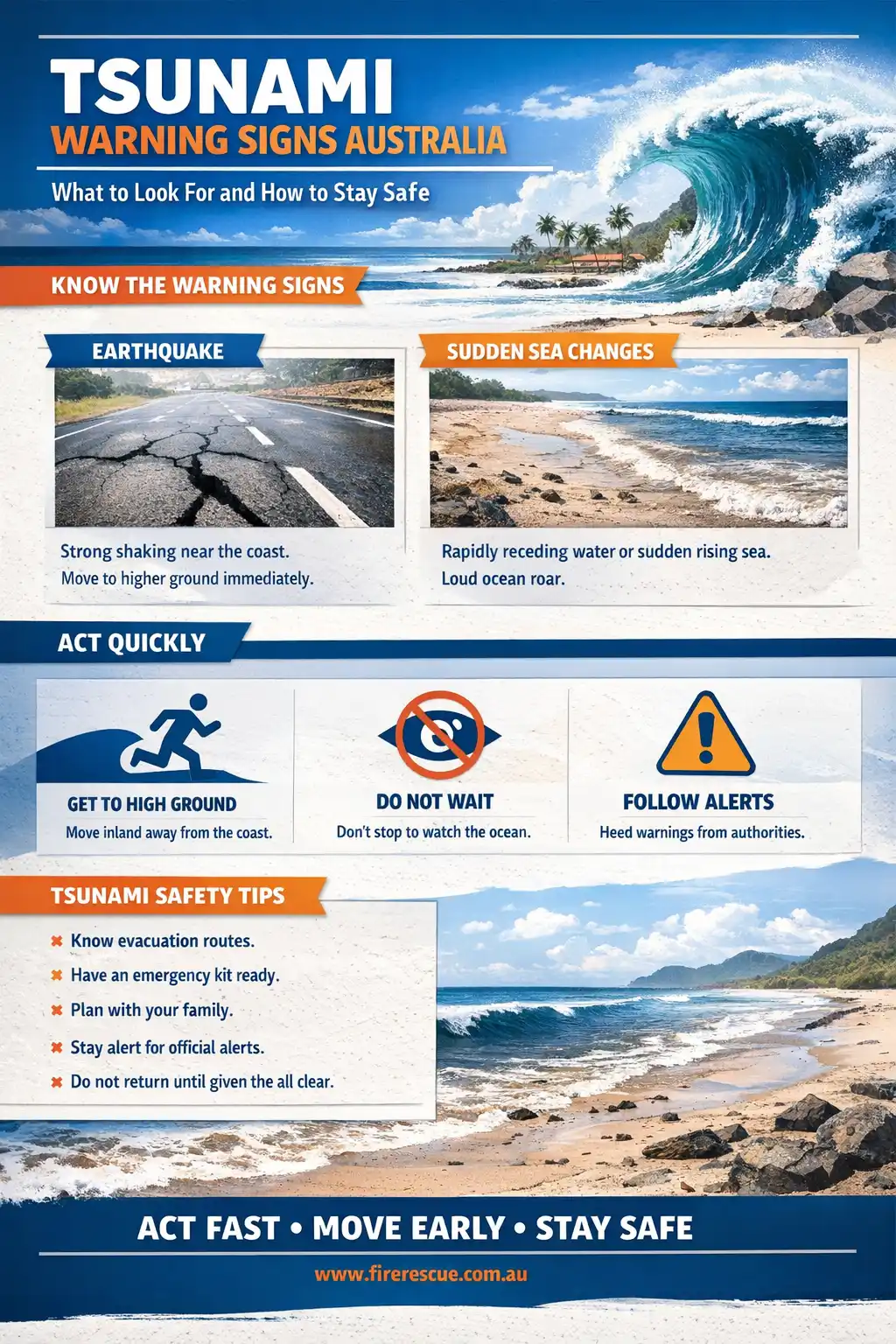
Tsunami Warning Signs Australia
What to look for and how to stay safe.
Recognising Tsunami Warning Signs in Australia
Tsunamis in Australia are rare but possible, especially on the eastern and northern coasts. Knowing the warning signs can give you crucial extra time to act. The most common natural sign is a sudden and unusual retreat of the ocean, exposing the sea floor, reefs, and fish. This phenomenon is often described as the ocean ‘pulling back’ dramatically.
Another sign may be an unexpected, very strong earthquake felt near the coast. If you feel shaking that makes it hard to stand, and you are close to the shoreline, prepare to move to higher ground immediately. Tsunamis often follow such seismic events within minutes to hours.
Sometimes loud, unusual roaring noises coming from the ocean can signal an incoming tsunami. This warning is less common but still important to heed. Importantly, do not wait for official alerts if you notice these natural signs — start moving inland or uphill right away.
In addition to these immediate natural signs, it is also important to understand the broader environmental context that could indicate increased tsunami risk. For instance, Australia’s proximity to the Pacific ‘Ring of Fire’ means that seismic activity in neighbouring countries such as Indonesia, Papua New Guinea, or the Solomon Islands can potentially generate tsunami waves reaching Australian shores. While the warning times might be short, awareness of seismic events in the region can provide valuable preparation time.
Furthermore, the Australian coastline varies greatly in geography, which affects local tsunami impact. Low-lying beaches, estuaries, and river mouths are particularly vulnerable to tsunami inundation. Residents in these areas should be especially vigilant for warning signs and maintain readiness to evacuate. Understanding your local terrain and potential evacuation routes ahead of time is a key part of tsunami preparedness.
How Official Warnings Work in Australia
The Australian Tsunami Warning System is managed by the Bureau of Meteorology (BoM) in partnership with Geoscience Australia and emergency services. When a tsunami threat is detected, warnings are issued via multiple channels including radio, TV, smartphone alerts, and emergency apps like the SES App and FireReady.
Local authorities such as Fire/Rescue NSW, Police, State Emergency Service (SES), and Ambulance services will also provide guidance on evacuations or sheltering. It is critical to follow their instructions promptly and avoid returning to the coast until officially declared safe.
Remember that warnings might vary depending on distance from the tsunami’s origin, so even if you don’t see immediate signs, stay alert to official updates. If you receive a tsunami warning, act as if it is real and move to safety.
The warning system also incorporates real-time monitoring of seismic activity and sea level changes through a network of tide gauges and sensors around the Australian coastline. This advanced technology allows for rapid assessment and dissemination of tsunami threat levels, helping to reduce false alarms and ensure timely alerts.
In some cases, regional tsunami alerts may be issued for distant events where wave arrival times provide more lead time for evacuation. Conversely, local tsunamis generated by nearby earthquakes can arrive within minutes, underscoring the importance of recognising natural warning signs and acting immediately.
Common Mistakes to Avoid During a Tsunami Threat
Ignoring Natural Signs
Some people hesitate or disbelieve the natural signs of a tsunami, such as the ocean withdrawing or a strong earthquake. Delaying evacuation puts you at severe risk. Always trust these signs and move to higher ground immediately, even before official alerts arrive.
Waiting for Vehicles or Public Transport
Do not wait for cars, buses, or others to evacuate. Traffic jams can trap you in dangerous zones. It’s safer to leave on foot as early as possible and follow designated evacuation routes.
Returning Too Soon to the Coast
Tsunami waves often come in a series and the first wave is not always the largest. Returning before authorities confirm it’s safe can expose you to serious harm. Wait for official all-clear messages.
Using Unsafe Routes or Ignoring Evacuation Signs
Follow official evacuation routes designated by your local council or SES. Avoid shortcuts or unknown paths that might bring you closer to danger zones or get you stuck.
Not Preparing an Emergency Kit
Lack of basic supplies can make evacuation and recovery harder. Have an emergency kit ready with essentials like water, food, medications, a torch, and a portable phone charger.
Ignoring Community Alerts and Preparedness Efforts
Sometimes residents disregard community drills or fail to register for local alert systems. Active participation in community preparedness programs greatly enhances safety and facilitates coordinated responses during tsunami events.
If You Only Do Five Things
First, know the natural warning signs: if the ocean suddenly pulls back or you feel a strong coastal earthquake, start evacuation immediately.
Second, listen to official warnings via the Bureau of Meteorology and SES alerts. These provide vital information on tsunami risks and safe zones.
Third, move quickly on foot or by car to higher ground, avoiding low-lying coastal areas and known flood zones.
Fourth, prepare a basic emergency kit in advance, so you have water, food, and first aid supplies ready to grab.
Finally, never return to the coast until emergency services confirm it is safe, as tsunami waves can continue for hours and vary in strength.
Who Does What in Australia
Fire/Rescue Services respond to emergencies including fires following natural disasters, assist with rescues, and help manage evacuation centres.
Police maintain public order during evacuations, enforce road closures, and provide safety information.
State Emergency Service (SES) leads community education, supports evacuations, and provides flood and storm rescue.
Ambulance Services provide medical care and transport people injured during emergencies.
Call 000 immediately for any life-threatening emergencies.
Preparing Your Home and Family
Even if you live outside immediate tsunami zones, it’s wise to prepare an emergency plan and kit. Identify the nearest high ground location and discuss evacuation routes with your family. Practice a quick evacuation drill at least once a year.
Secure outdoor items that could be swept away in floods or strong waves. If you live in a coastal property, consider simple fire safety measures too, as bushfires can sometimes occur in nearby areas after storms.
Stay informed by registering for local warning systems through your council or SES. Many councils now offer smartphone apps or SMS alerts for natural disasters.
In addition to physical preparedness, ensure you have a communication plan with friends and relatives. Share your evacuation plan and emergency contacts to help coordinate support during a disaster. Also, consider the needs of pets and livestock, making arrangements to evacuate or secure them safely.
What to Do During a Tsunami Warning
When an official tsunami warning is issued, act without delay. Leave the beach, marina, and any low-lying areas immediately. Move inland and uphill as far as possible, aiming for at least 10 metres above sea level or 1 kilometre from the coast if possible.
Do not go to the shoreline to watch the waves. Tsunami waves travel faster than a person can run. Stay away from rivers and streams connected to the ocean, as water may surge upstream.
Once you reach safety, stay tuned to local radio, mobile alerts, or official social media channels for updates. Keep your emergency kit nearby and be ready for further waves or instructions.
If you are unable to reach higher ground quickly, seek shelter in sturdy, multi-storey buildings and move to upper floors. Avoid basements or ground floors that could flood. Remember that personal vehicles may become trapped in traffic, so plan your evacuation route ahead of time to avoid congestion.
After a Tsunami: Safety and Recovery
Do not return to affected areas until emergency services declare it safe. The aftermath can involve contaminated water, damaged infrastructure, and unstable ground. Avoid downed power lines and report hazards to the authorities.
Check in with family and neighbours, especially vulnerable people like the elderly or those with disabilities. Follow local council advice on clean-up and rebuilding processes.
You can contact your local SES for assistance with damage or emergency shelter, and Fire/Rescue if there is any fire risk from damaged infrastructure.
Recovery after a tsunami can be a lengthy process. Psychological impacts such as trauma and anxiety are common, so seek support from community services or mental health professionals if needed. Volunteer organisations often provide valuable assistance with cleanup and rebuilding efforts.
Final Thoughts
Tsunami warning signs in Australia require serious attention. Natural signs like ocean withdrawal and strong earthquakes are your first clues, but official warnings remain essential. Preparing your family, home and knowing who to call will help you stay safe.
Stay calm, act quickly, and always follow advice from Fire/Rescue, Police, SES and Bureau of Meteorology. Together, we can reduce risk and protect coastal communities from tsunami threats.
FireRescue Training Hub
Access practical fire and emergency study support resources, downloads, checklists, audio guides, and member-only course content.
- Course library
- PDF downloads
- Audio guides
- Checklists
Study support only. Not accredited training or a replacement for workplace procedures.
About the author and safety review
Ken Walker
Former Station Officer and fire service educator
Former career firefighter with extensive career and volunteer fire service experience.
Qualifications: Associate Diploma of Applied Science in Fire Technology; Institute of Fire Engineers studies.
Author profilehttps://www.firerescue.com.au/about-us/