Fire & Rescue Insights
Hazardous Materials Plume Dispersion: A Critical Safety Consideration
Understanding how hazardous materials disperse in the atmosphere during an incident is a vital aspect of emergency response planning and operational safety. Dispersion patterns directly influence evacuation zones, firefighting tactics, and medical preparedness.
Recent advances in fire research have enhanced modelling techniques, enabling responders to anticipate plume behaviour more accurately and make informed decisions to protect lives and property.
This article explores the science behind hazardous materials plume dispersion, the roles of various emergency services in Australia, and practical guidance for managing such incidents effectively.
Background and Context
Hazardous materials (HazMat) incidents involve the accidental or intentional release of substances that pose a risk to health, safety or the environment. These substances can be chemical, biological, radiological or nuclear in nature and often form plumes — visible or invisible clouds or vapours — as they disperse through the air.
Plume dispersion depends on multiple factors including the chemical properties of the substance, release rate, meteorological conditions like wind speed and temperature, and topography. Understanding these factors is essential for emergency services to delineate exclusion zones, identify downwind risk areas and deploy resources optimally.
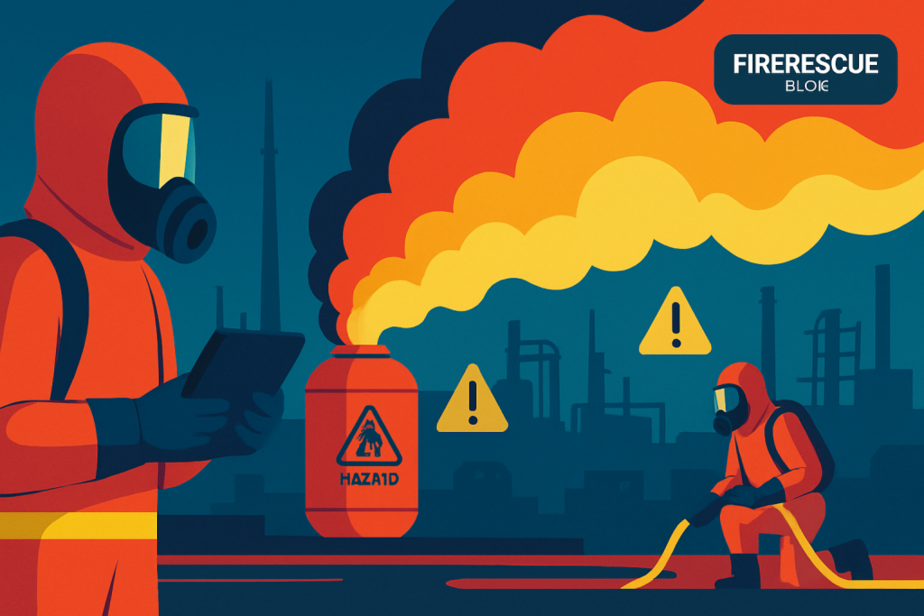
The nature of the hazardous material itself greatly influences the plume’s characteristics. For instance, heavier-than-air gases such as chlorine or ammonia tend to stay closer to the ground, flowing along terrain depressions and posing a significant inhalation hazard. Conversely, lighter gases like hydrogen can rise rapidly, dispersing more quickly but potentially affecting a larger vertical atmospheric column. Liquids that evaporate create vapour plumes that may be flammable or toxic, requiring different containment strategies. The physical state and reactivity of the material also determine whether the plume will persist, dissipate, or transform chemically in the atmosphere.
Topographical features such as hills, valleys, urban structures and vegetation impact how plumes move and settle. Urban canyons formed by buildings can channel or trap plumes, creating hotspots of concentration. Valleys may funnel hazardous gases over longer distances, increasing risk to downwind populations. Emergency responders must consider these environmental influences when establishing control zones and planning evacuations.
Science and Research in Plume Dispersion
Advanced Modelling Techniques
Fire research agencies and environmental scientists use computational fluid dynamics and atmospheric dispersion models to simulate how hazardous plumes behave under varied conditions. These models incorporate real-time weather data, chemical characteristics and physical barriers to project plume trajectories and concentrations with increasing accuracy.
Australian research institutions collaborate closely with fire and emergency services to refine these models, integrating them into operational decision support systems. This enhances situational awareness during incidents and supports safer containment strategies.
Recent developments in sensor technology have also contributed significantly to understanding plume dynamics. Portable gas detectors and remote sensing equipment can now provide near real-time data on hazardous substance concentrations in the field. This data feeds directly into modelling platforms, allowing dynamic updates of plume predictions as conditions evolve. The integration of drones equipped with chemical sensors offers an additional vantage point for assessing plume spread without exposing personnel to danger.
Impact of Meteorological Conditions
Wind speed and direction are primary drivers of plume behaviour, often dictating the shape, spread and dilution of hazardous clouds. Temperature inversions can trap plumes close to the ground, increasing exposure risk, while turbulent airflows can disperse plumes unpredictably.
Understanding these atmospheric influences allows emergency managers to anticipate changes and adjust containment perimeters dynamically. Fire and rescue teams rely on weather monitoring equipment and meteorological expertise to inform their operational tactics.
Beyond wind and temperature, humidity levels can also affect plume behaviour. High humidity may enhance the formation of corrosive or toxic aerosols when certain chemicals interact with moisture in the air. Rainfall can influence plume dispersion by washing out airborne contaminants, but it can also cause hazardous runoff, creating secondary environmental hazards. Seasonal variations in atmospheric stability further complicate predictions, requiring responders to be vigilant in continually assessing conditions throughout an incident.
Roles and Responsibilities of Emergency Services
Fire and Rescue Services
Fire and rescue agencies are typically the lead responders for HazMat incidents. Their responsibilities include identifying the hazardous materials involved, establishing safe exclusion zones based on plume dispersion, conducting containment and suppression efforts, and coordinating with specialised HazMat units.
They also provide critical information to police and ambulance services regarding risk areas, ensuring public safety and effective triage of casualties if exposure occurs.
Firefighters undergo rigorous training in the use of personal protective equipment (PPE) tailored for chemical exposure, including respiratory protection and chemical-resistant suits. They employ specialised containment tools such as foam agents to suppress vapours and neutralise certain chemicals. Additionally, fire services often maintain hazardous materials response teams with expertise in decontamination procedures and chemical identification, ensuring an effective and safe approach to plume incidents.
Police Services
Police play a key role in managing perimeter security, traffic control and public evacuation in affected areas. They work closely with fire and rescue to enforce exclusion zones and facilitate the movement of emergency vehicles and responders.
In certain instances, police may also be involved in incident investigation and intelligence gathering, particularly if the HazMat release is deliberate or suspicious.
Their responsibility extends to managing communication with the public, ensuring that evacuation orders are clear and that misinformation does not spread. Police officers also coordinate with local government and emergency management agencies to maintain order and support community resilience during and after the incident.
Ambulance and Medical Services
Ambulance personnel provide emergency medical care to those affected by hazardous material exposure. They must be informed of plume dispersion patterns to avoid entering contaminated zones without appropriate personal protective equipment.
Medical teams coordinate with hospitals to prepare for potential mass casualty incidents and manage decontamination processes effectively.
Paramedics are trained to recognise symptoms of chemical exposure such as respiratory distress, chemical burns, or neurological effects, enabling prompt treatment and triage. Facilities may establish specialised decontamination units to prevent secondary contamination and protect healthcare workers. The integration of pre-hospital care and hospital readiness is critical to improving patient outcomes following hazardous materials incidents.
State Emergency Service (SES)
The SES often supports large-scale evacuations, shelter management and community liaison during hazardous material incidents. They provide logistical support and assist vulnerable populations affected by plume dispersion events.
Their role includes coordinating transport for individuals with limited mobility, establishing temporary accommodation facilities, and disseminating information to affected communities. SES volunteers work alongside other agencies to ensure that evacuation and recovery efforts are inclusive and efficient.
Practical Implications for Emergency Planning and Response
For communities and emergency responders alike, preparedness for hazardous materials plume dispersion means integrating scientific understanding into planning and on-scene operations. Early recognition of plume formation and direction can dramatically improve response outcomes.
Incident commanders should utilise available dispersion modelling tools and consult with environmental health experts to define safe evacuation zones and communicate risks clearly to the public. Evacuation routes should avoid predicted plume paths, and public information must be timely and accurate.
In the event of a hazardous materials release, the first action for anyone nearby is to call emergency services by dialling 000 immediately. Providing clear details about the location, nature of the incident and visible effects helps dispatchers coordinate an appropriate multi-agency response.
Responders should remember that fire and rescue services lead containment and hazard assessment, police manage security and public order, ambulance services handle medical treatment, and the SES assists in community support. Close collaboration between these agencies is essential.
Incorporating community education into emergency planning is equally important. Public awareness campaigns about hazardous materials risks and appropriate responses can empower individuals to act safely during incidents. This includes recognising warning signs, understanding evacuation procedures, and knowing how to shelter in place if evacuation is not feasible.
Regular multi-agency exercises simulating hazardous materials plume scenarios improve coordination and readiness. These drills allow responders to practice communication protocols, test equipment, and refine operational tactics in a controlled environment, reducing response times and enhancing safety during real events.
In summary, understanding hazardous materials plume dispersion is fundamental to reducing harm during chemical incidents. Continued investment in research, training and inter-agency coordination enhances Australia’s resilience and public safety in these challenging scenarios.
FireRescue Training Hub
Access practical fire and emergency study support resources, downloads, checklists, audio guides, and member-only course content.
- Course library
- PDF downloads
- Audio guides
- Checklists
Study support only. Not accredited training or a replacement for workplace procedures.
About the author and safety review
Ken Walker
Former Station Officer and fire service educator
Former career firefighter with extensive career and volunteer fire service experience.
Qualifications: Associate Diploma of Applied Science in Fire Technology; Institute of Fire Engineers studies.
Author profilehttps://www.firerescue.com.au/about-us/