Fire & Rescue Update
Understanding Thermal Imaging for Live Fire Assessment
Thermal imaging cameras are revolutionising the way firefighters assess live fire environments, providing vital information that is often invisible to the naked eye. This technology helps crews make informed decisions on the ground, improving safety and operational effectiveness.
By detecting heat signatures through smoke, walls, and darkness, thermal imaging assists in locating hotspots, trapped victims, and structural weaknesses. Its practical use in Australian fire and rescue operations is increasingly critical amid evolving fire risks.
Thermal Imaging for Live Fire Assessment
A practical Australian guide covering thermal imaging use on scene, hotspot detection, search support, and safer fireground decision-making.
Practical, visual, and easy to follow — ideal for readers wanting a quick overview before opening the full guide.
Background and Context
Thermal imaging technology has been adopted worldwide to support firefighting efforts, but its integration into everyday Australian fire response continues to grow. Live fire assessment requires rapid, accurate information to ensure firefighter safety and to protect life and property. Traditional visual methods can be hindered by smoke, darkness, and structural barriers, which is where thermal imaging cameras come into their own.
These devices detect infrared radiation emitted by objects, converting it into an image that highlights temperature differences. This capability enables firefighters to see through smoke and identify the hottest areas of a fire, areas of potential flare-up, or even locate people who may be trapped inside a building.
How Thermal Imaging Supports Live Fire Assessment
Enhancing Situational Awareness
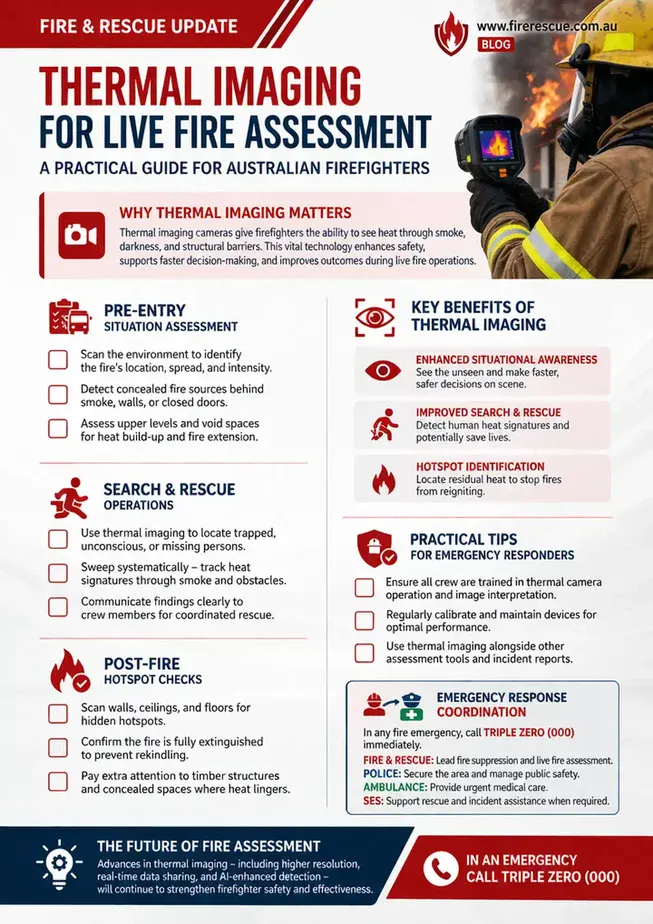
On arrival at a fire scene, one of the primary challenges for firefighters is to quickly understand the scale and intensity of the fire. Thermal imaging cameras provide a real-time heat map of the environment, revealing concealed fire sources and enabling crews to prioritise areas requiring immediate attention. This enhanced situational awareness reduces guesswork and supports safer entry and movement inside hazardous structures.
Supporting Search and Rescue Operations
Locating trapped or unconscious victims is one of the most urgent tasks during live fire scenarios. Thermal imaging assists firefighters by detecting human heat signatures even through thick smoke or behind obstacles. This capability can save crucial minutes and potentially lives, especially in residential or complex commercial fires.
Identifying Hotspots and Preventing Rekindling
After the main fire has been extinguished, hidden hotspots inside walls, ceilings or floors can reignite if left undetected. Thermal imaging allows firefighters to conduct thorough checks to identify these residual heat sources, ensuring the fire is fully out and reducing the risk of rekindling. This is especially important in timber-framed buildings or older constructions common in many Australian suburbs.
Practical Implications for Emergency Responders
For Australian emergency services, understanding the role of thermal imaging in live fire assessment is key to maximising its benefits. Fire and Rescue NSW, CFA in Victoria, and other state fire services increasingly equip frontline firefighters with handheld thermal imaging cameras as standard issue. Training on effective use and interpretation of thermal images ensures crews can quickly make decisions in the heat of the moment.
In an emergency, the first step is always to call Triple Zero (000) to alert Fire and Rescue, Police, and Ambulance as needed. Fire and Rescue are primarily responsible for fire suppression and live fire assessment using tools like thermal imaging. Police may secure the scene and manage public safety, while Ambulance provides medical support. The State Emergency Service (SES) may assist with rescue and support roles depending on the incident.
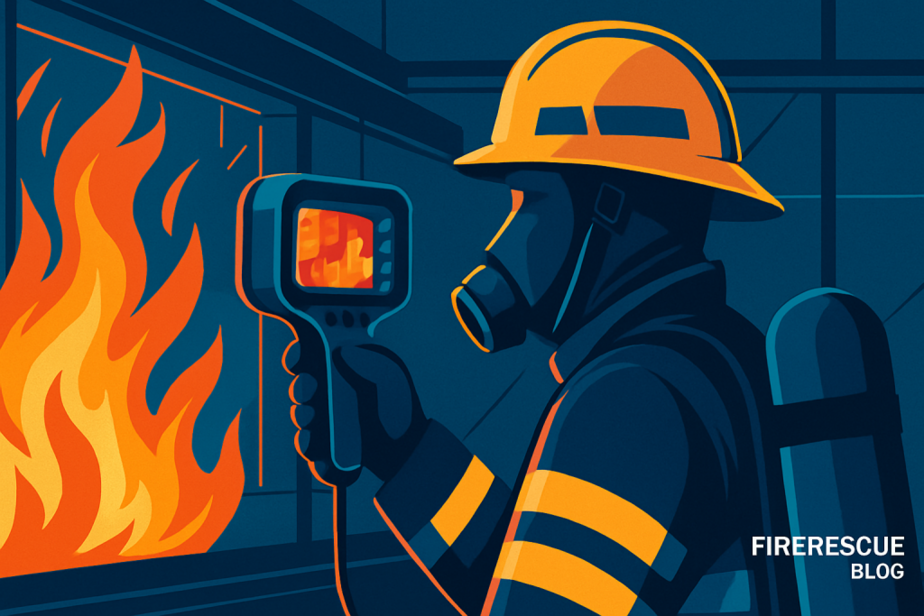
From a practical standpoint, thermal imaging also assists incident commanders in allocating resources efficiently, monitoring firefighter safety, and coordinating ventilation or suppression tactics. Its ability to provide objective data complements traditional observation techniques and enhances overall incident management.
Limitations and Considerations
While thermal imaging is a powerful tool, it is not without limitations. The technology detects surface temperature and may not always reveal hidden fires behind thick insulation or certain materials. Interpreting thermal images requires training and experience to avoid misreading reflections or false hotspots.
Additionally, battery life, camera durability, and environmental conditions such as heavy rain or fog can affect performance. Therefore, thermal imaging should be used as a supplement to, not a replacement for, established firefighting and safety protocols.
Future Directions in Thermal Imaging for Firefighting
Advancements in thermal imaging technology continue to emerge, including integration with drones and robotics for remote fire assessment in hazardous or inaccessible locations. These developments hold promise for Australian fire services to further enhance safety and operational effectiveness, particularly as climate change increases the frequency and intensity of bushfires and structural fires.
Investment in ongoing training and technology upgrades will be vital to ensure responders can extract maximum value from thermal imaging capabilities. Collaboration between fire agencies, technology providers, and research institutions will drive innovation tailored to Australia’s unique fire environments.
Moreover, the integration of thermal imaging data with other emerging technologies such as augmented reality (AR) and artificial intelligence (AI) is beginning to transform firefighting strategies. AR can overlay thermal images directly onto firefighters’ helmets or visors, providing hands-free, real-time guidance inside smoke-filled environments. AI algorithms can analyse thermal patterns to predict fire behaviour and identify potential structural failures before they occur, enabling preemptive action.
Community education is also an important aspect of utilising thermal imaging advancements. Fire services are increasingly engaging with the public to demonstrate how technology enhances operational safety and effectiveness. This transparency helps build trust and encourages support for funding and resource allocation necessary to maintain cutting-edge equipment.
Furthermore, thermal imaging is proving useful beyond fire suppression. It assists in hazardous material incidents, vehicle accidents, and search and rescue operations in challenging terrains. Its versatility reinforces why investment in this technology is essential for comprehensive emergency response capabilities.
In addition to its immediate operational benefits, thermal imaging technology contributes significantly to post-incident analysis and training. High-resolution thermal data collected during fire events can be reviewed to assess fire spread patterns, evaluate the effectiveness of suppression tactics, and identify potential improvements in response strategies. This feedback loop enhances organisational learning and prepares crews better for future incidents.
The psychological impact on firefighters is another important consideration. By providing clearer visibility in dangerous conditions, thermal imaging reduces stress and uncertainty, fostering greater confidence and decision-making ability under pressure. This can lead to improved morale and reduced risk of injury or fatality.
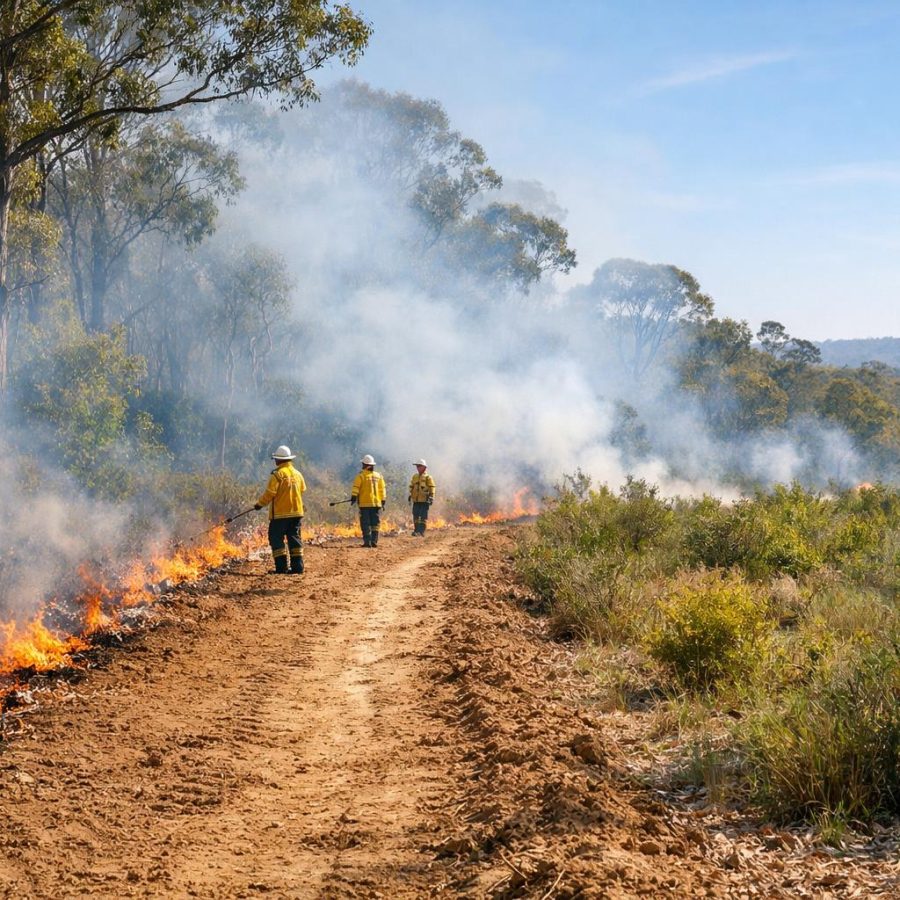
Thermal imaging’s role is also expanding in wildland firefighting, where it assists in detecting smouldering embers and monitoring fire fronts over large, rugged terrains. This capability supports early intervention and containment efforts, which are critical in mitigating catastrophic bushfires that have increasingly affected Australia in recent years.
Moreover, the cost-effectiveness of thermal imaging is becoming more apparent as the technology matures. Initial investment in quality equipment and training is offset by the reduction in property damage, firefighter injuries, and operational inefficiencies. This economic perspective encourages wider adoption across smaller regional and volunteer fire brigades, enhancing overall community resilience.
In summary, thermal imaging for live fire assessment represents a vital advancement in firefighting technology. Its ability to enhance situational awareness, support search and rescue, prevent rekindling, and assist in operational decision-making makes it indispensable for modern emergency response. Continued innovation, training, and community engagement will ensure this technology remains at the forefront of fire safety in Australia.
FireRescue Training Hub
Access practical fire and emergency study support resources, downloads, checklists, audio guides, and member-only course content.
- Course library
- PDF downloads
- Audio guides
- Checklists
Study support only. Not accredited training or a replacement for workplace procedures.
About the author and safety review
Ken Walker
Former Station Officer and fire service educator
Former career firefighter with extensive career and volunteer fire service experience.
Qualifications: Associate Diploma of Applied Science in Fire Technology; Institute of Fire Engineers studies.
Author profilehttps://www.firerescue.com.au/about-us/