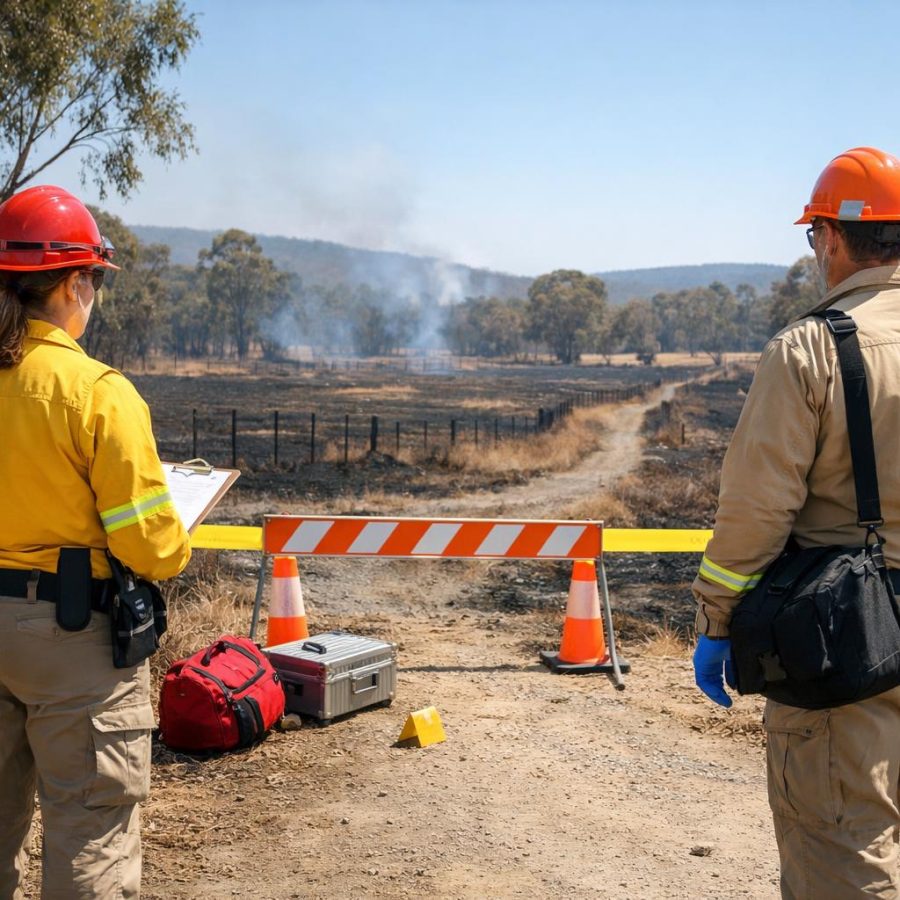
Public Safety Team Leadership: The Foundation for Leading, Managing and Developing Teams
Strong public safety teams do not happen by accident. They are built through clear leadership, fair management, ongoing development and a workplace culture where people understand the mission, contribute with confidence and grow in capability.
Mark each section as refreshed
The foundation of team leadership
PUATEA003 focuses on achieving organisational objectives and working relationships by leading, managing and developing individuals and teams. In practical terms, this means a leader must help people understand their role, encourage useful contribution, support development, guide performance and maintain conditions where productive work can occur.
This first lesson sets the foundation for the full series. Before exploring feedback, delegation, training, conflict and workplace conditions in later parts, we need a clear picture of what capable team leadership looks like in a public safety environment.
What PUATEA003 is really about
Leadership is not only about directing people. It is about helping a team work well, improve steadily and support the organisation’s purpose.
The unit PUATEA003 Lead, manage and develop teams applies to public safety personnel who hold a management or leadership role with responsibility for team development and basic human resource functions. This matters because public safety work depends on more than technical skill. It also depends on clear communication, trust, shared standards, sound judgement and a leader who can help people perform effectively together.
In this unit, the leader is expected to support organisational objectives while also maintaining working relationships. That balance is important. A team cannot be effective if it is friendly but unfocused, and it also cannot be effective if it delivers tasks while damaging trust, confidence or cooperation. Good leadership brings both sides together: the work is achieved, and the people remain supported and capable.
The unit does not treat leadership as a single action. It presents leadership as a continuing responsibility. A leader develops and maintains a team, communicates objectives and standards, improves performance, supports training, provides direction, manages difficulties and helps create productive working conditions. Across this 8-part series, each of those responsibilities will become a practical lesson.
A capable team leader does not only ask, “Was the task completed?” They also ask, “Was it completed safely, to the required standard, with the team stronger for the next task?”
The three connected duties: lead, manage and develop
The title of the unit gives a simple but powerful leadership model.
Lead
Leading means setting direction, communicating goals, modelling standards and helping people understand how their role fits the team and the organisation.
Manage
Managing means organising work, monitoring standards, addressing performance, handling difficulties and ensuring tasks are supported by appropriate systems and procedures.
Develop
Developing means recognising strengths and weaknesses, identifying training needs, coaching, mentoring and helping individuals and teams build capability over time.
These three duties work together. A leader who only directs may miss development needs. A manager who only watches compliance may fail to build team trust. A supportive mentor who avoids performance issues may leave standards unclear. PUATEA003 brings these duties together so that leadership is practical, fair and connected to organisational outcomes.
For public safety personnel, this is especially useful because work is often carried out in structured environments where teams must follow procedures, meet standards and remain ready for changing conditions. The leader must be able to communicate with clarity, respond constructively to issues and help people continue improving within the organisation’s expectations.
Thinking leadership is only about authority
Authority matters, but this unit makes clear that leadership also includes consultation, acknowledgement, training, mentoring, constructive feedback and positive work conditions.
Use authority to build capability
Direction should help the team understand the task, the standard, the reason and the pathway for improvement.
The TEAM LEAD Cycle
A practical refresher framework for the full 8-part series.
To make the unit easier to remember and apply, this series uses the TEAM LEAD Cycle. It is a learning framework built directly around the themes of PUATEA003. Each letter represents a leadership habit that supports better team performance and healthier workplace function.
Part 1 introduces the whole cycle. Part 2 will focus strongly on the first “T”: Team contribution and trust. Later posts will work through the remaining stages in order. By Part 8, the reader will apply the full TEAM LEAD Cycle in a complete leadership challenge.
This framework is not intended to replace organisational policy or formal training. Instead, it is a refresher tool that helps learners organise the unit’s key ideas into a clear leadership sequence that can be reviewed and discussed.
TEAM LEAD reminds us that effective leadership starts with people, stays aligned to standards and ends in practical demonstration.
Why team leadership matters in public safety work
Public safety leadership supports both operational purpose and working relationships.
The PDF makes it clear that the purpose of this unit is to help personnel achieve organisational objectives and working relationships through team leadership. This tells us that leadership is not a separate activity sitting outside the work. Leadership is part of how the work is completed properly.
A team leader may need to guide people through changed work practices, ensure required standards are understood, support training needs, identify developing problems, address conflict, allocate suitable tasks and maintain productive conditions. These are not side issues. They directly influence whether the organisation can rely on the team to work safely, fairly and effectively.
This also means that leadership is visible in ordinary daily behaviour. The way a leader receives suggestions, acknowledges effort, speaks about organisational standards, checks understanding, manages concerns and responds to difficulties all shape the team’s culture. Over time, those small repeated actions can support a stronger team or weaken one.
For new leaders, this is reassuring. Leadership is not about having a perfect answer for every situation. It is about using sound habits, following organisational procedures, involving people appropriately and responding in a way that supports both the work and the team.
“The leader’s role is to keep the team connected to the task, the standard and each other.”
The first leadership habit: create room for contribution
Before a team can improve, its members need to know that useful contributions are welcome.
Although Part 2 will explore this in depth, the first element of PUATEA003 is important enough to introduce now. Leaders are expected to continually seek and encourage work contributions or suggestions from team members, acknowledge contributions to team operations and deal with suggestions constructively.
This creates an important starting point. A team is not simply a group of people waiting for instructions. It is a working unit that contains experience, observations and practical knowledge. A leader who encourages appropriate contribution is more likely to notice emerging issues, identify better ways of working and support shared responsibility for outcomes.
Constructive handling of suggestions does not mean every suggestion must be accepted. It means people are heard respectfully, ideas are considered properly and the outcome is communicated in a way that supports trust. A leader can say no to an idea while still strengthening the relationship, provided the response is fair, clear and aligned with organisational requirements.
This matters because poor handling of contributions can quietly discourage people from speaking up. Once team members stop raising concerns or offering suggestions, leaders may receive less information than they need. The unit therefore treats contribution as part of team maintenance, not as an optional courtesy.
Only asking for input after a problem grows
Input should be encouraged continually, not only when a leader needs help solving an urgent issue.
Build contribution into routine work
Short check-ins, debrief points and respectful questions help teams share useful observations early.
Leadership foundations in one workplace scenario
Use the scenario below to test the leadership mindset introduced in this lesson.
The new routine
A team leader is asked to introduce a new daily equipment readiness routine. Several team members have suggestions about how the routine could fit better into existing work patterns. One member seems unsure about the change but says little. The leader wants the routine implemented properly without creating unnecessary resistance or confusion.
Which response best reflects the foundation of PUATEA003?
The strongest response is the one that keeps the team connected to both the organisational requirement and the working relationship. It communicates the task, welcomes useful contribution and checks understanding. This reflects the leadership approach that runs across PUATEA003.
Check your understanding
1. PUATEA003 mainly focuses on:
2. Which statement best fits the TEAM LEAD Cycle?
3. Encouraging team suggestions is important because:
Say it in one minute
Use this quick drill to summarise the lesson aloud or in your own notes:
- PUATEA003 is about leading, managing and developing teams to support organisational objectives and working relationships.
- A leader must balance the task, the standard and the people.
- Leadership includes guidance, management and development, not authority alone.
- The TEAM LEAD Cycle gives a practical structure for the whole series.
- Strong teams are supported when contribution is welcomed and dealt with constructively.
FireRescue Training Hub
Access practical fire and emergency study support resources, downloads, checklists, audio guides, and member-only course content.
- Course library
- PDF downloads
- Audio guides
- Checklists
Study support only. Not accredited training or a replacement for workplace procedures.
About the author and safety review
Ken Walker
Former Station Officer and fire service educator
Former career firefighter with extensive career and volunteer fire service experience.
Qualifications: Associate Diploma of Applied Science in Fire Technology; Institute of Fire Engineers studies.
Author profilehttps://www.firerescue.com.au/about-us/