
June 9, 2026
Western Australia Emergency Services: City Bases and Remote Response Coverage Explained
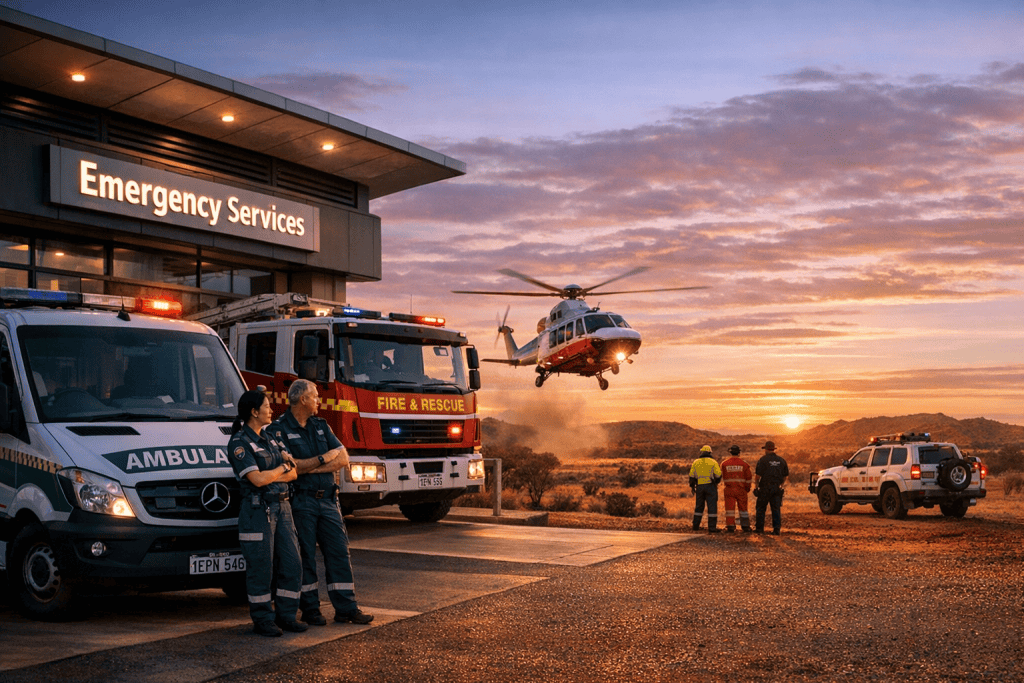
How Western Australia’s Emergency Services Keep Cities and Remote Communities Safe
A clear guide to city-based hubs, remote response units, and the coordination that delivers lifesaving services across WA’s vast landscape.
Overview: The Structure of Emergency Services in Western Australia
Western Australia (WA) covers an enormous landmass with highly varied population density — from the metropolitan expanse of Perth to tiny, isolated communities scattered across the Kimberley, Pilbara and Goldfields regions. To deliver timely and effective emergency care, the state operates a layered, adaptive system that combines professional agencies, volunteers and inter-agency coordination.
Key organisations include WA Police, the Department of Fire and Emergency Services (DFES), St John Ambulance WA, and the State Emergency Service (SES). These agencies work alongside volunteer brigades, community first responders and private operators (such as aeromedical contractors) to form a resilient network. Responsibility is organised around metropolitan and regional command centres, which tailor resource deployment to population needs and geography.
- Professional agencies (Police, DFES, St John Ambulance WA, SES) lead operations and provide specialist capabilities.
- Regional command centres adapt service delivery to local realities — balancing on-the-ground assets and aerial or road retrieval options.
- The State Emergency Coordination Centre serves as a central hub for large-scale incidents and complex multi-agency responses.
Effective emergency coverage in WA depends as much on coordination and information-sharing as on individual vehicle or station locations.
Key point
Systems + people = coverage. The blend of metropolitan hubs, regional bases, volunteers and aeromedical services is what allows WA to respond across huge distances.
City Bases: How Metropolitan Hubs Operate in Perth and Major Towns
Perth and other population centres host the most fully resourced emergency facilities in the state. These metropolitan hubs are intentionally designed to meet high call volumes and provide rapid specialist interventions. Typical features include 24/7 staffed police, ambulance and fire stations, centralised dispatch functions and specialist teams positioned for immediate deployment.
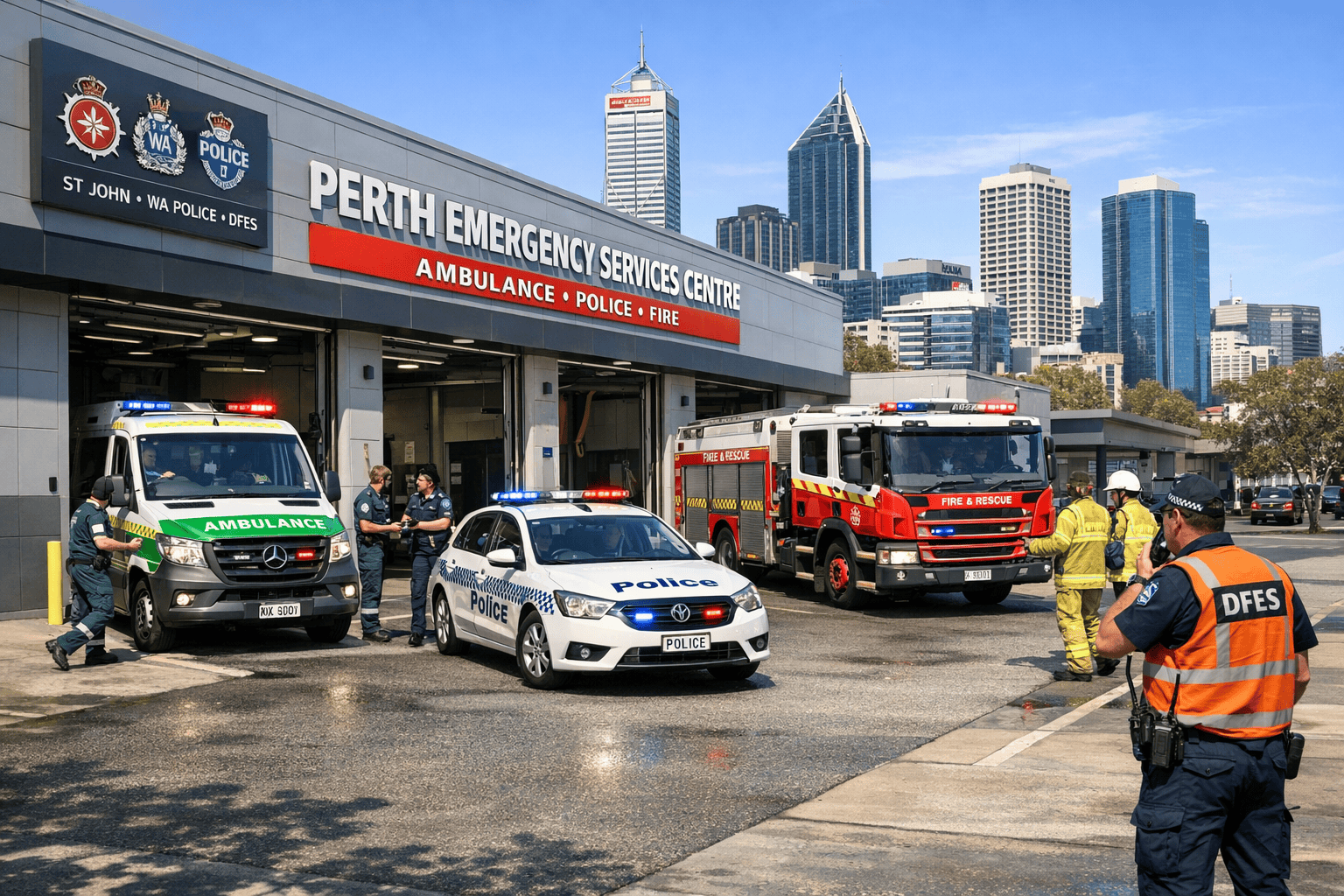
Because metropolitan areas concentrate specialist resources, you’ll often find:
- Advanced dispatch centres that coordinate nearest-unit response and multi-agency escalation.
- Specialist units such as hazardous-materials teams, urban search-and-rescue squads and critical care paramedics.
- Direct access to aviation support — either through police aviation, contracted providers or the Royal Flying Doctor Service for rapid transfers.
What metropolitan hubs prioritise
Metropolitan hubs prioritise speed, specialist skills and interoperability. High-density areas have higher incident rates per square kilometre, making concentration of specialist capabilities both efficient and necessary. Urban incident management systems are also designed to integrate rapidly with hospitals, trauma centres and public health units.
Remote and Regional Response: Meeting Challenges Across the Outback
Outside the urban footprint, WA’s geography demands creative, flexible approaches. Remote and regional coverage combines fixed regional bases, volunteer brigades, fly-in/fly-out (FIFO) responders and contracted aeromedical services. The goal is to provide timely initial stabilisation and, when needed, fast transport to higher-level care.
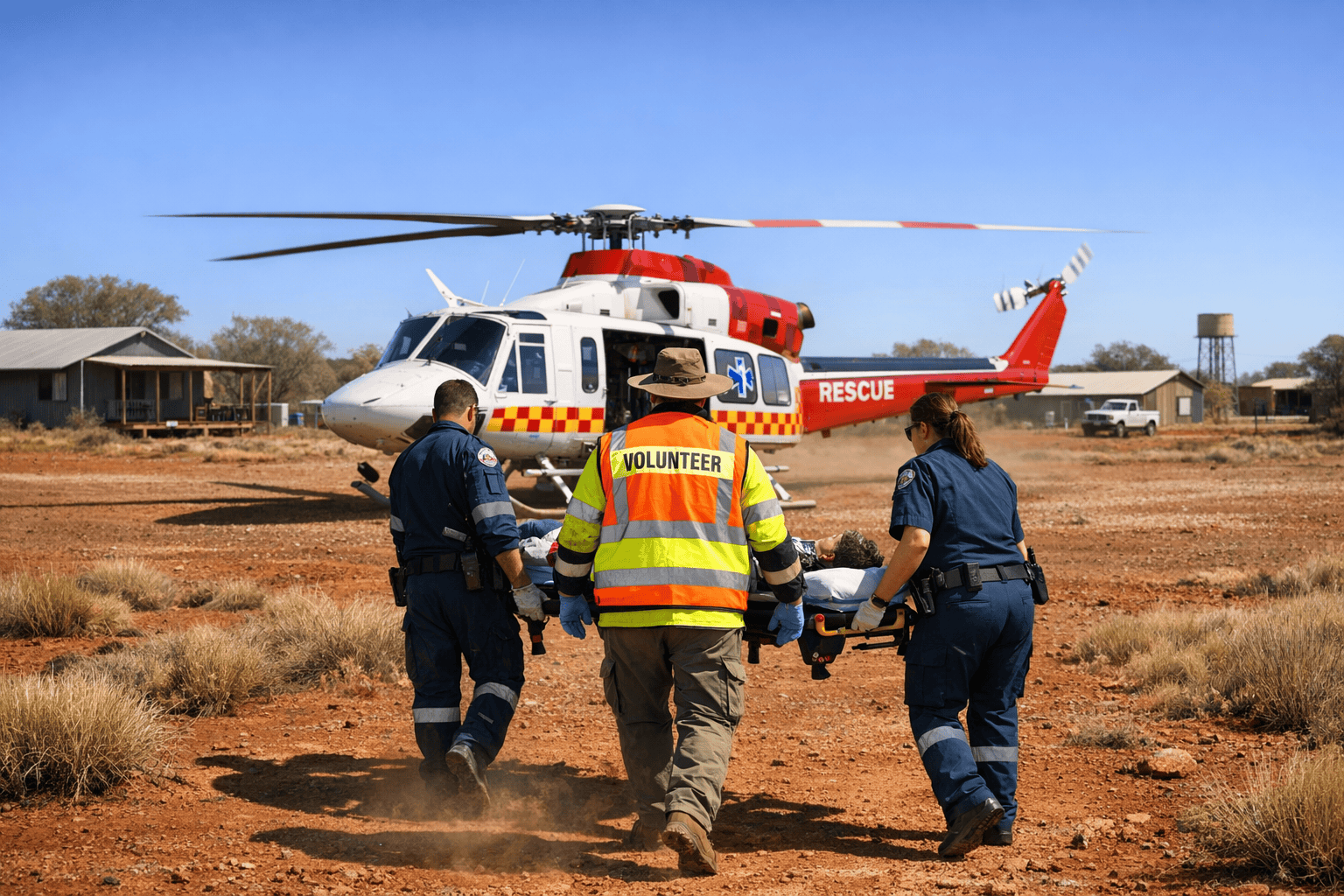
Several mechanisms make this possible:
- Regional bases positioned to balance coverage and logistics — often located in regional towns that serve wide catchment areas.
- Volunteer brigades and community responders that provide the crucial immediate response in very remote places.
- Aeromedical services, including the Royal Flying Doctor Service and contracted air ambulances, that bridge the distance to tertiary hospitals.
Volunteer and community roles
Local volunteers, pastoralists and community emergency teams are the first line of defence. They conduct initial firefighting, basic stabilisation, search operations and scene management. Their local knowledge — of roads, airstrip locations and cultural considerations — often makes the difference during the critical first hour after an incident.
Regional reality
In the outback, response time is a function of distance and resource availability. Aeromedical retrievals and community first responders are essential to bridge gaps between remote locations and metropolitan hospitals.
How Dispatch and Coordination Work: From Triple-0 Calls to Multi-Agency Responses
Every emergency journey begins with a call. In WA, triple-zero (000) remains the gateway to critical response. Calls are triaged by trained dispatchers who evaluate risk, determine the appropriate response level and mobilise resources accordingly. In many incidents, multiple agencies are required and a coordinated command structure is activated.
Core elements of dispatch and coordination:
- Centralised triage that matches incident priority with the nearest suitable asset (ambulance, police, fire, or combined response).
- Shared communications platforms — radio networks and digital incident-management systems — that provide real-time situational awareness.
- Predefined incident action plans for predictable large-scale events (bushfires, floods, multi-vehicle crashes) that specify roles and handover procedures.
What callers should know
To help dispatchers and arriving crews, callers should provide concise, accurate information: exact location (or GPS coordinates), number and condition of casualties, immediate hazards (fire, dangerous goods), and whether anyone is performing basic first aid. Following dispatcher instructions can stabilise a situation before crews arrive and significantly improve outcomes.
“Your call is the first link in the chain. Clear information and calm responses give dispatchers the capacity to send the right resources faster.”
Special Considerations: Aboriginal Communities, Mining Sites, and Remote Tourism
Delivery of emergency services in WA must account for social, cultural and operational differences across communities and industries.
Aboriginal and remote community engagement
Culturally informed engagement is essential. Successful responses rely on respectful communication with elders and health services, recognition of community protocols and provision of culturally appropriate aftercare. Building trust improves reporting, cooperation during operations and long-term resilience.
Mining and industry sites
Major mining and industrial sites typically maintain on-site medics and first-response teams. These resources stabilise patients and coordinate handovers to state services or aeromedical retrievals. Clear industry protocols and regular joint exercises with state agencies improve handover efficiency and patient outcomes.
Tourism and seasonal surges
Tourist hotspots such as the Kimberley or Ningaloo see seasonal spikes in visitors, which can strain local emergency services. Authorities plan for surge capacity through temporary patrols, volunteer augmentation and targeted public education on remote-area safety to reduce preventable incidents.
Consideration
Tailored responses save lives. Cultural competency, industry coordination and seasonal planning all affect the speed and effectiveness of emergency services in WA.
Community Preparedness: What Residents and Visitors Should Know
Preparedness is the most reliable way to improve outcomes when incidents occur. Whether you’re a local resident, a seasonal worker or a visitor exploring remote landscapes, a few practical steps dramatically increase your safety and the efficiency of emergency response.
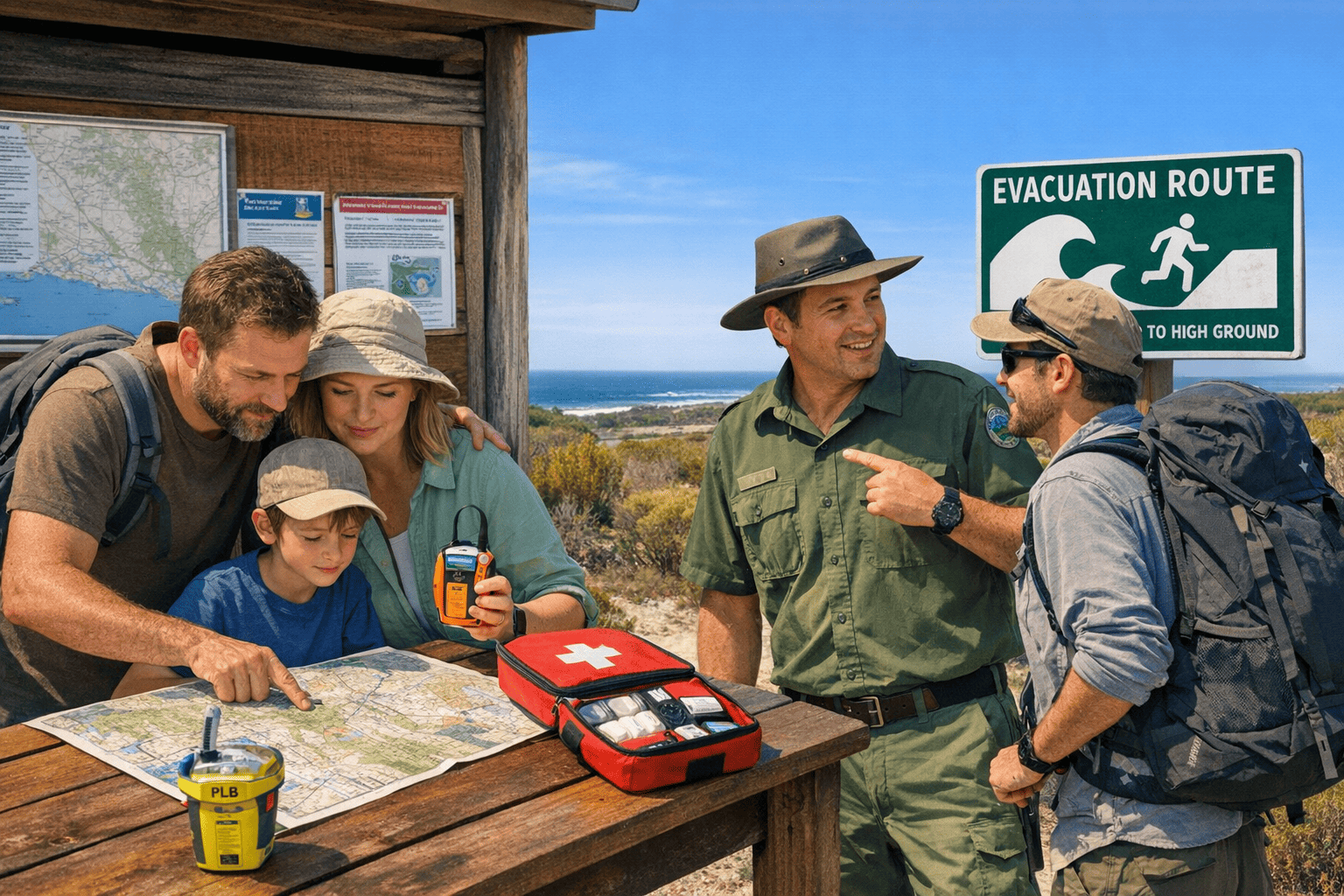
Five essentials for remote travel and living
- Memorise the emergency number: triple-zero (000) and know alternative contact methods for areas without mobile coverage.
- Carry a personal locator beacon (PLB) or satellite communicator when venturing beyond mobile range.
- Bring a well-stocked first aid kit and learn basic first aid; consider accredited wilderness first-aid training for extended remote trips.
- Know the nearest town base, aerodrome or landing strip that responders might use for retrievals.
- Register for local emergency warning systems and monitor DFES and council alerts during high-risk seasons.
Local DFES pages, council sites and St John WA provide region-specific checklists, evacuation routes and contact details. For visitors, park rangers and visitor centres are valuable sources of current conditions and recommended precautions.
Practical Examples: How a Typical Remote Retrieval Works
Understanding the sequence of events helps demystify how response works in remote WA:
- A local calls 000 (or uses a PLB/satellite device). The dispatcher confirms location, condition and available local resources.
- Local volunteers and on-site responders provide immediate care and prepare a landing zone if aeromedical retrieval is required.
- Dispatch coordinates an aeromedical asset (Royal Flying Doctor Service or contracted helicopter) and arranges receiving hospital capacity.
- Patient is stabilised, transported to the nearest suitable facility, and care is handed over to the receiving team for definitive treatment.
Timely preparation (clear landing zones, pre-arranged access and accurate coordinates) can reduce retrieval times by 30–50% in some cases.
Takeaway
Clear communication and simple preparations — like marking a landing zone and knowing GPS coordinates — materially improve patient outcomes in remote retrievals.
Conclusion — Staying Safe and Supporting Effective Responses in WA
Western Australia’s emergency services blend metropolitan concentration with adaptive regional and remote arrangements. City-based hubs provide specialist resources and rapid urban response, while volunteer brigades, regional bases and aeromedical services close the gap in the outback. Coordination through centralised dispatch, shared communications and community engagement is the backbone of an effective statewide system.
For residents and visitors, the most impactful actions are straightforward: know the emergency number (000), carry appropriate communication and safety equipment when travelling remote, and register for local alerts. Respect community protocols and work with local services — particularly in Aboriginal communities and industry sites — to ensure culturally safe and operationally effective responses.
Final points
Remember: preparation, information and local knowledge are the most reliable tools for safety in WA. Support your local brigades, stay informed through official channels, and take sensible precautions before remote travel.
Useful resources: DFES, St John Ambulance WA and local council emergency pages contain region-specific advice, evacuation plans and alert sign-ups. Bookmark them and check updates during high-risk seasons.